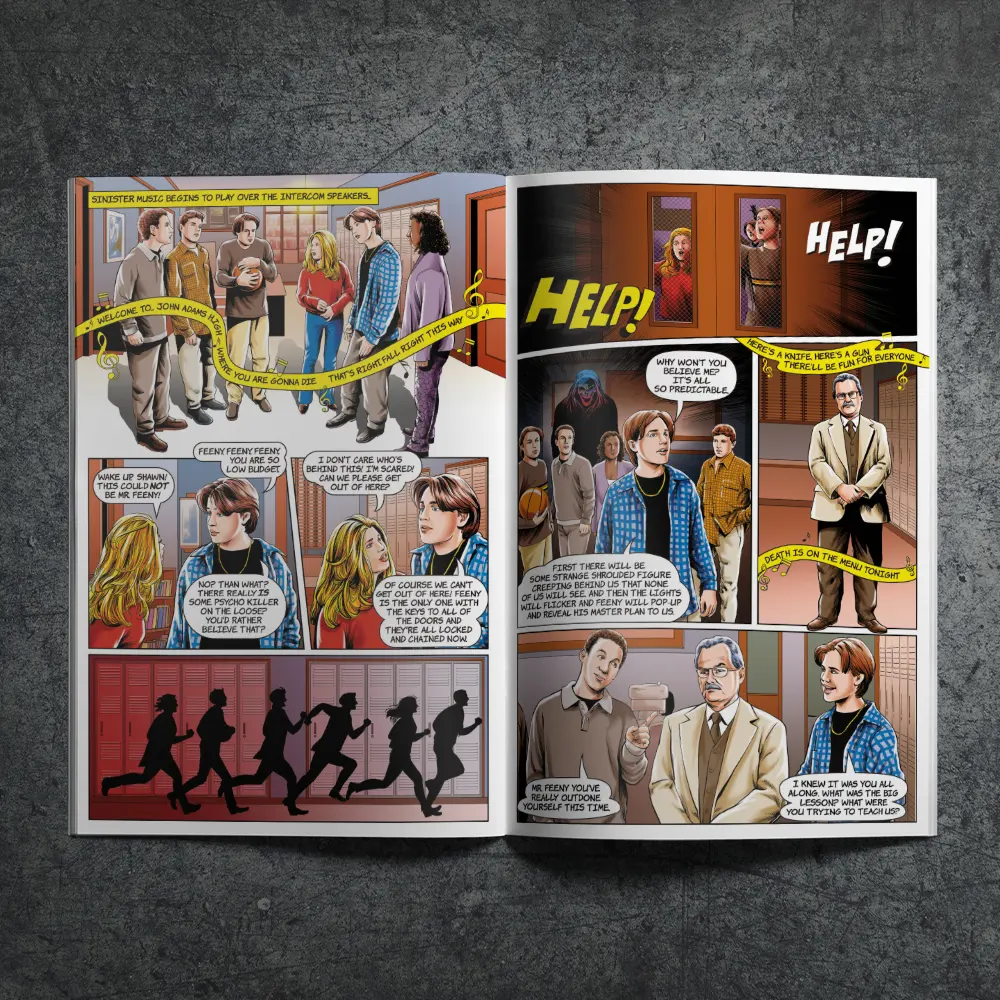
How do you write a short story?
Short answer
Writing a short story involves crafting a focused narrative that centers on a single conflict or realization. By establishing a compelling character, placing them in a specific setting, and driving the plot toward a decisive resolution, you create an immersive experience. Success requires careful editing to ensure every word serves the story.
On this page
How to structure a short story for beginners
A short story typically follows a classic narrative arc, which provides a roadmap for your plot. This structure ensures that your narrative has a clear beginning, middle, and end, preventing the story from wandering aimlessly. Most successful stories rely on a central conflict that forces the protagonist to change or make a difficult choice.
To build your story, follow these foundational steps:
- Exposition: Introduce your protagonist and the setting within the first few paragraphs.
- Inciting Incident: Present the specific problem or event that disrupts the character's status quo.
- Rising Action: Develop the tension as the protagonist attempts to solve the problem.
- Climax: Reach the turning point where the conflict is at its peak.
- Resolution: Show the aftermath and the final state of the protagonist.
Keep the scope narrow. Because short stories are brief, you cannot explore a character's entire life. Focus on a single, pivotal moment that reveals their personality or shifts their perspective.
How long should a short story be
The definition of a short story is flexible, but most fall between 1,000 and 7,500 words. Anything shorter than 1,000 words is often classified as flash fiction, while stories exceeding 10,000 words drift into the territory of novelettes. The length should be dictated by the complexity of your idea rather than an arbitrary target.
If you are just starting, aim for 2,000 to 3,000 words. This length is substantial enough to build a scene and a character arc, yet short enough to manage during the drafting process. Consider these factors when determining your length:
- The number of characters: More characters require more space to establish distinct voices.
- The setting: A complex world needs more descriptive prose than a simple, singular location.
- The pacing: A fast-paced thriller often requires fewer words than a character-driven drama.
Avoid the temptation to include unnecessary subplots. Every scene must propel the narrative forward toward the climax. If a section does not contribute to the central conflict, it is likely filler that should be removed.
Best techniques for character development
Characters are the heart of any story. In a short format, you do not have the luxury of hundreds of pages to reveal a character's history. Instead, use "show, don't tell" to reveal personality through actions, dialogue, and reactions to the environment. A character’s internal motivation must be clear, even if it is not explicitly stated.
To create a memorable character, focus on these elements:
- A specific desire: What does the character want more than anything else?
- A visible flaw: What internal or external hurdle prevents them from achieving their goal?
- A unique voice: How does their vocabulary, tone, or speech pattern reflect their background?
Place your character in a situation that tests their resolve. When a character is forced to make a difficult decision, the reader gains immediate insight into their values. By the end of the story, the character should be different than they were at the beginning, even if that change is subtle.
Common mistakes when writing fiction
The most frequent error is starting the story too early. Many writers spend pages describing the weather or the protagonist's morning routine before the actual conflict begins. Readers lose interest if the story lacks momentum, so start as close to the inciting incident as possible. Another common pitfall is the "info dump," where the author pauses the action to explain the history of the world or the character's past.
Avoid these common traps to improve your prose:
- Passive voice: Use strong, active verbs to make your sentences more dynamic.
- Over-explaining: Trust the reader to infer meaning from the subtext rather than spelling out every emotion.
- Weak endings: Ensure your resolution feels earned based on the events that preceded it, rather than relying on a sudden, unrelated twist.
If you find yourself stuck, re-examine your protagonist’s goal. If the character does not want something badly, the reader will not care if they succeed or fail.
How to edit and refine your draft
The first draft is merely the foundation. Professional writers often spend more time editing than drafting, as this is where the story truly comes to life. Start by reading your story aloud to identify awkward phrasing, repetitive words, or pacing issues. If a sentence sounds clunky when spoken, it will likely feel clunky to the reader.
Follow this checklist during your revision process:
- Cut unnecessary adjectives and adverbs that weaken your verbs.
- Tighten dialogue by removing small talk that does not reveal character or advance the plot.
- Check for consistency in tone and perspective throughout the narrative.
- Verify that the climax provides a satisfying answer to the initial conflict.
Once you have finished your edits, set the story aside for a few days. Returning with fresh eyes allows you to spot errors you previously missed. Consistent refinement is the most effective way to transform a rough idea into a polished, professional piece of writing.
Key facts
- A short story typically ranges from 1,000 to 7,500 words, though flash fiction can be as brief as 500 words.
- Focus on a single primary conflict or event rather than a sprawling narrative spanning years or multiple locations.
- Start as close to the climax or the inciting incident as possible to hook the reader immediately.
- Limit your cast to two or three essential characters to ensure emotional depth and narrative clarity.
- Show, don't tell: use specific sensory details and actions to convey character traits instead of stating them directly.
- Edit ruthlessly; every sentence must either advance the plot or reveal something meaningful about a character.
The bottom line
Writing a short story requires discipline and a sharp focus on brevity. By centering your narrative on a single conflict, limiting your characters, and starting deep within the action, you create a compelling experience for the reader. Prioritize sensory details and meaningful dialogue during your revisions, and remember that every word must serve the story’s core purpose. Effective storytelling is ultimately about clarity and emotional impact.
People also ask
How do I overcome writer's block?
Start by setting a timer for 15 minutes and writing without stopping, even if the prose feels unpolished. Focus on a single sensory detail, such as a smell or a sound, to anchor your scene in reality.
Should I outline my story before writing?
Outlining is helpful for structure, but not mandatory. Many writers prefer to know their ending before they begin to ensure the narrative arc remains focused and purposeful throughout the drafting process.
How do I create believable dialogue?
Read your dialogue aloud to check for natural rhythm and flow. Avoid using dialogue solely for information dumping; instead, use it to reveal character motivations or create tension between the speakers.
What is the most common mistake in short stories?
The most frequent error is starting the story too early with unnecessary backstory or mundane daily routines. Begin at the moment the character’s status quo is disrupted to keep the reader engaged.
How do I end a short story effectively?
A strong ending often provides a moment of realization or a shift in the protagonist's perspective. It does not need to resolve every plot point, but it should feel earned and resonant.
How many drafts should I write?
Most professional writers complete at least three drafts: one for getting the story down, one for structural refinement, and a final pass for word choice and grammatical precision.
This answer was created with the help of AI research tools and reference sources. Spotted an error? Let us know — we correct mistakes quickly. See our editorial policy.