How do you make a comic book?
Short answer
Creating a comic book involves a structured workflow: conceptualizing a script, sketching layouts, finalizing pencils, inking, and coloring. Professionals typically work on standard 11-by-17-inch bristol board. Success requires balancing narrative pacing with visual clarity, ensuring each panel serves the story while maintaining a consistent artistic style throughout the entire project.
On this page
How to write a comic book script
The foundation of any comic book is the script, which acts as a blueprint for the artist. Unlike a novel, a comic script must focus on visual descriptions and dialogue. Writers often use the "Full Script" format, where each page is broken down into panels, detailing exactly what appears in each frame. You should clearly describe the setting, the characters' actions, and the specific dialogue or captions for each panel.
When writing, keep your panel count manageable. A standard comic page usually contains between five and seven panels; exceeding this number can make the page feel cluttered and difficult to read. Focus on the "show, don't tell" rule, allowing the artwork to convey information that does not require wordy exposition.
- Develop a premise and a clear beginning, middle, and end.
- Draft a page-by-page breakdown of the action.
- Write dialogue that sounds natural when spoken aloud.
- Revise the script to ensure the pacing feels consistent.
How to layout a comic book page
Once the script is finished, you must plan the visual flow of the page. This process, known as "thumbing," involves drawing small, rough sketches to determine where panels, speech bubbles, and characters will be placed. The goal is to guide the reader’s eye naturally from the top-left corner to the bottom-right corner of the page.
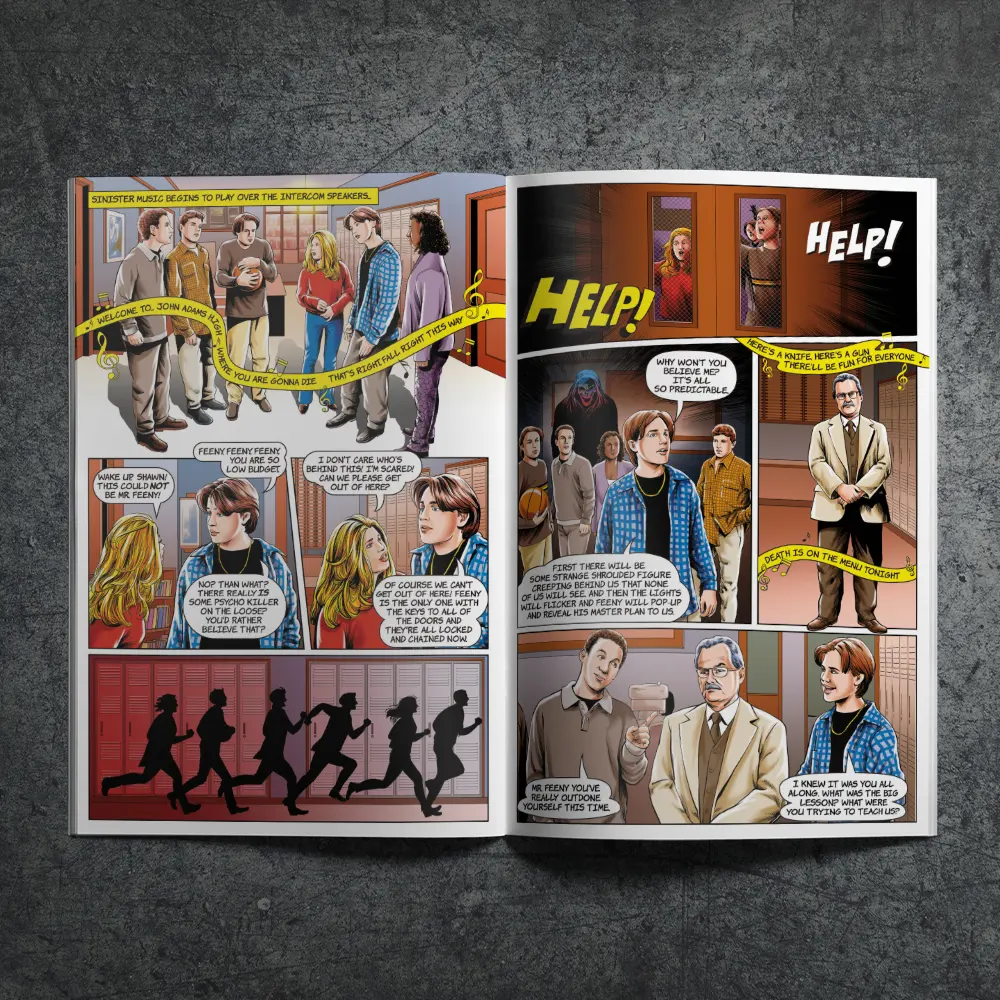
Effective layouts use varying panel sizes to dictate the rhythm of the story. Large, splashy panels are ideal for significant reveals or high-action moments, while smaller panels can be used for rapid dialogue or subtle character reactions. Avoid placing speech bubbles where they obscure important facial expressions or action.
- Use a grid system to maintain structural consistency.
- Keep the "gutter" (the space between panels) uniform for a clean look.
- Ensure that the sequence of panels clearly indicates the order of events.
- Test your layout by having someone else read it to see if they get lost.
Best art supplies for beginners
You do not need expensive equipment to start creating comics. Many professionals begin with basic tools that allow for precision and durability. High-quality bristol board is the industry standard because it handles ink and erasers without tearing or bleeding. For pencils, a simple 2H lead is excellent for light initial sketches, while a 2B or HB lead is better for refining details.
Inking is the process of tracing your pencil lines with permanent ink to prepare the page for scanning or printing. Beginners should experiment with fine-liner pens or a brush pen, which offers varying line weights depending on the pressure applied. A good white-out pen or opaque white ink is also essential for correcting minor mistakes or adding highlights to the finished artwork.
- Bristol board (smooth or vellum finish).
- Mechanical pencils with 0.5mm or 0.7mm lead.
- Archival-quality ink pens in various tip sizes.
- A kneaded eraser that lifts graphite without damaging the paper surface.
How to ink and color a comic
Inking transforms rough pencil sketches into a professional, high-contrast image. Start by outlining the main figures and background elements, then add "spot blacks," which are large areas of solid ink used to create depth and mood. Vary your line thickness to emphasize foreground objects, making them appear closer to the reader than the background.
Coloring adds another layer of storytelling, setting the tone and atmosphere of the scene. You can use traditional markers, watercolors, or digital software to apply color. If using digital tools, layers are your best friend; keep your line art on a separate layer from your colors to ensure you can edit them independently. Focus on a consistent color palette to help the reader identify locations and emotional shifts throughout the narrative.
- Clean up your pencil lines with a kneaded eraser before inking.
- Use a consistent light source to determine where shadows fall.
- Apply flat colors first to establish the base tones.
- Add gradients and highlights to provide volume and texture.
Common mistakes when making a comic book
One frequent error is failing to leave enough room for lettering. Beginners often draw beautiful panels only to realize there is no space for speech bubbles, forcing them to cover up crucial artwork. Always plan your text placement during the thumbnail stage to ensure the bubbles feel integrated into the composition rather than like an afterthought.
Another common pitfall is inconsistent character design. If a character’s costume or facial features change significantly from page to page, the reader will become disoriented. Create a "character sheet" that shows your main characters from the front, side, and back to serve as a reference while you draw. Finally, avoid over-complicating your panels with excessive detail; if the reader cannot tell what is happening at a glance, the storytelling has failed. Keep your focus on clarity and flow to ensure your comic is engaging and accessible to your audience.
Key facts
- A standard comic book page is typically drawn at 11 by 17 inches on bristol board to allow for high-quality detail.
- The "script" phase requires writing dialogue and panel descriptions before any artwork begins.
- Thumbnails are miniature sketches used to plan the flow, pacing, and composition of a page.
- Inking is the process of tracing pencil lines with permanent ink to create the final, high-contrast image.
- Lettering is performed last to ensure that speech bubbles do not obscure essential character expressions or action.
- Most professional comics use a "gutter" space between panels to signify the passage of time or movement.
The bottom line
Creating a comic book is a disciplined process that blends narrative writing with sequential visual art. By starting with a clear script, mapping out your story through rough thumbnails, and refining your work through penciling, inking, and lettering, you can produce a professional-grade product. Focus on clarity and pacing to ensure your story resonates with readers, and remember that consistency is more important than immediate perfection.
People also ask
Do I need to be a professional artist to make a comic book?
You do not need formal training, as many successful creators are self-taught. Focus on clear visual storytelling and character consistency rather than achieving perfect anatomical realism.
What is the difference between a graphic novel and a comic book?
A comic book is typically a serialized, thin pamphlet, while a graphic novel is a longer, self-contained story published in a book format. Both mediums utilize the same fundamental techniques of panel layout and sequential art.
How long should a comic book script be?
A standard 22-page comic book script usually contains about 1,500 to 2,000 words. Keep descriptions concise so the artist has enough room to interpret the visual action.
What tools do I need to get started?
You only need paper, a pencil, an eraser, and a black ink pen to begin. Digital creators often use a tablet and software like Clip Studio Paint, which is an industry standard.
How do I avoid "cluttered" panels?
Limit each panel to one primary action or piece of dialogue to prevent reader confusion. If a scene requires too much information, break it into two or three separate panels.
How do I get my comic published?
You can self-publish through platforms like Gumroad or Comixology, or seek representation from independent publishers like Image Comics. Building an online audience via social media is a common way to attract potential publishers.
This answer was created with the help of AI research tools and reference sources. Spotted an error? Let us know — we correct mistakes quickly. See our editorial policy.