What is a limerick?
Short answer
A limerick is a humorous, five-line poem characterized by a strict AABBA rhyme scheme and a specific rhythmic structure known as anapestic meter. Typically lighthearted or nonsensical in tone, it features lines one, two, and five that rhyme and share three beats, while lines three and four rhyme and share two beats.

On this page
What are the rules of a limerick?
The defining characteristic of a limerick is its rigid structural framework. It consists of five lines that follow a specific rhyme scheme, denoted as AABBA. This means the first, second, and fifth lines must rhyme with one another, while the third and fourth lines form a separate rhyming couplet. This pattern creates a predictable, bouncy cadence that is essential to the poem's comedic effect.
Beyond the rhyme, the meter is equally vital. Limericks are written in anapestic meter, which consists of two short, unstressed syllables followed by one long, stressed syllable. Lines one, two, and five generally contain three of these metrical feet, while lines three and four contain only two. Adhering to this rhythm is what gives the limerick its characteristic "da-da-DUM, da-da-DUM" musicality.
How to write a limerick for beginners
Writing a limerick is an accessible exercise in wordplay. To begin, follow these structured steps to ensure your poem flows correctly and maintains the intended humor:
- Choose a subject that is slightly absurd or lighthearted, as limericks are rarely serious in nature.
- Draft the first line, ensuring it ends with a word that has many potential rhymes, such as "cat," "town," or "bright."
- Compose the second line to rhyme with the first, establishing the rhythmic beat.
- Write the shorter third and fourth lines, which should introduce a twist or a shift in the narrative.
- Conclude with the fifth line, which must rhyme with the first two and provide a punchline or resolution.
When selecting your rhymes, focus on clarity. Avoid forced rhymes that feel unnatural or obscure, as the humor relies on the audience recognizing the connection between the words instantly. Keep the vocabulary simple and punchy to maintain the poem's brisk pace.
Why the limerick became popular
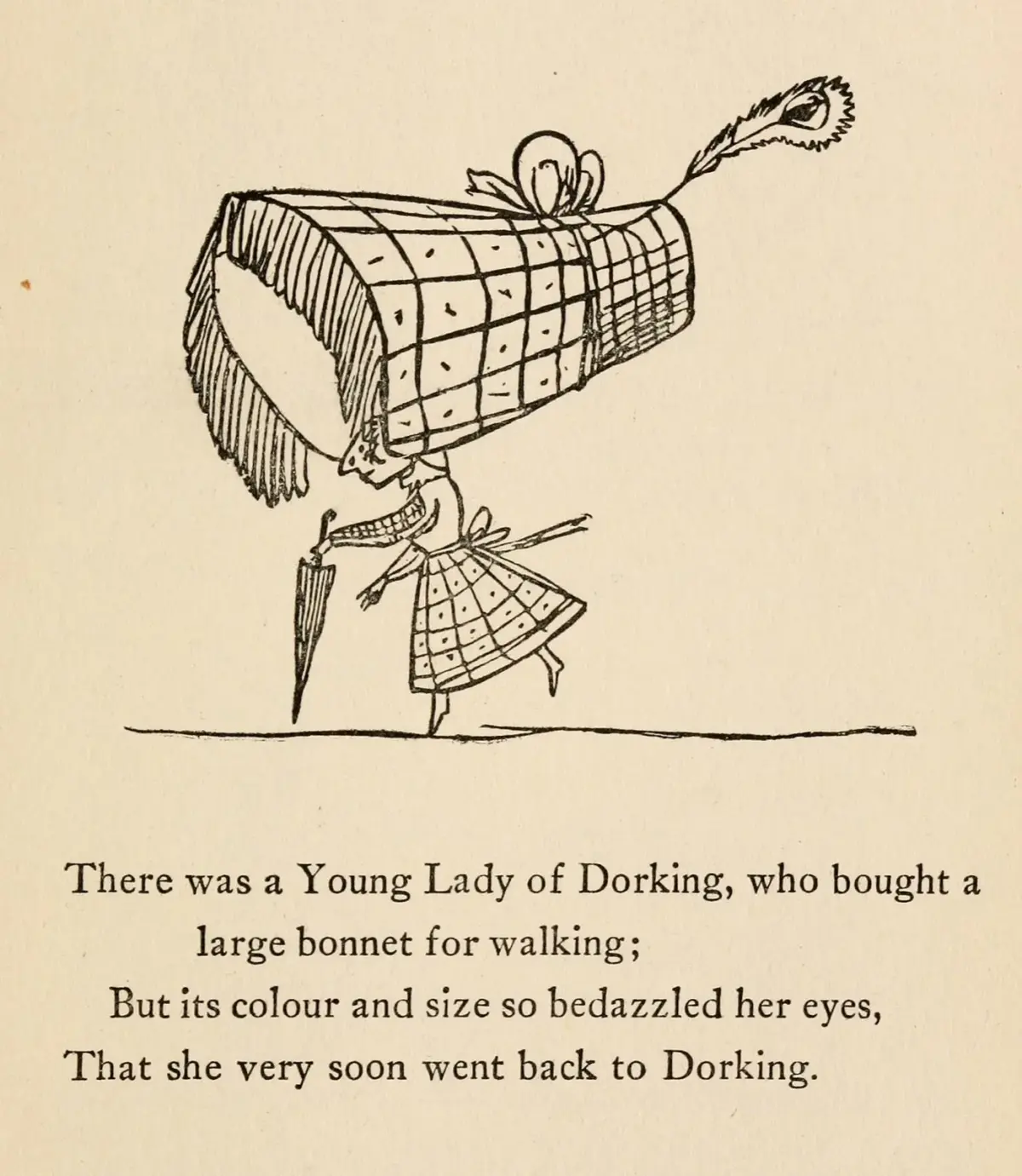
The limerick gained widespread fame in the 19th century, largely due to the work of English writer Edward Lear. In his 1846 publication, A Book of Nonsense, Lear popularized the form by pairing his whimsical verses with his own illustrations. While he did not invent the form, his influence cemented the limerick as a staple of English light verse and humorous literature.
Following Lear, the form evolved to include more satirical and sometimes bawdy content. It became a popular medium for social commentary and witty observations in newspapers and social circles. Because the structure is short and easy to memorize, it was perfectly suited for oral traditions and parlor games. Today, the limerick remains a favorite for greeting cards, humorous contests, and educational exercises in poetry, proving that brevity and rhythm are timeless tools for effective storytelling.
Common mistakes when writing limericks
One of the most frequent errors is failing to maintain the anapestic rhythm. When a writer forces too many syllables into a line, the meter breaks, causing the reader to stumble. To avoid this, read your poem aloud. If you find yourself tripping over the words or pausing awkwardly, the syllable count is likely inconsistent.
Another common mistake is neglecting the punchline. A limerick that ends without a surprising or funny conclusion often falls flat. The fifth line should act as a release for the tension built in the first four lines. If the ending is predictable or dull, the poem loses its purpose. Additionally, avoid using the same word to rhyme with itself, as this is considered poor form. Instead, look for unique word pairings that enhance the wit of the poem rather than merely completing the rhyme scheme.
Best examples of classic limericks
The history of the limerick is filled with memorable verses that highlight the versatility of the form. Many of these examples demonstrate how to balance the AABBA structure with clever wordplay. Studying these established poems can help you understand how to pace your own writing effectively.
- "There was an Old Man with a beard, / Who said, 'It is just as I feared! / Two Owls and a Hen, / Four Larks and a Wren, / Have all built their nests in my beard!'" — Edward Lear
- "A flea and a fly in a flue / Were caught, so what could they do? / Said the fly, 'Let us flee,' / 'Let us fly,' said the flea. / So they flew through a flaw in the flue." — Anonymous
These examples illustrate the importance of narrative economy. In just five lines, a complete scene is set, a conflict is introduced, and a resolution is achieved. By observing how these authors use internal repetition and clever word choices, you can improve your ability to craft engaging, rhythmic, and humorous poetry that adheres to the traditional standards of the limerick.
Key facts
- A limerick is a five-line poem characterized by a specific AABBA rhyme scheme.
- The first, second, and fifth lines typically contain three stressed beats, while the third and fourth lines contain two.
- The form is traditionally humorous, often relying on puns, irony, or absurd situations to entertain the reader.
- Edward Lear popularized the form in the 19th century with his 1846 publication, A Book of Nonsense.
- The rhythm of a limerick is usually anapestic, meaning two short syllables are followed by one long, stressed syllable.
- Avoid forcing rhymes that do not fit naturally, as the charm of the poem relies on its lighthearted and conversational flow.
The bottom line
The limerick is a distinct five-line poetic form defined by its strict AABBA rhyme scheme and bouncy anapestic rhythm. By pairing longer, three-beat lines with shorter, two-beat lines, it creates a unique cadence perfect for humor and wit. Mastering this form requires careful attention to meter and rhyme, ensuring the final line delivers a punchy, satisfying conclusion that resonates with the reader’s expectations of nonsense verse.
People also ask
Who is credited with inventing the limerick?
While the form existed in various folk traditions, Edward Lear is credited with popularizing it. His collection of nonsense verse established the structural conventions that define the modern limerick.
Why are the last two lines of a limerick shorter?
The shorter third and fourth lines create a rhythmic shift that builds anticipation for the final punchline. This variation in meter helps emphasize the comedic resolution of the poem.
Are all limericks supposed to be funny?
Traditionally, limericks are intended to be humorous or lighthearted. While they can be used for satire, their structure is generally considered ill-suited for serious or somber subject matter.
What is an anapestic meter?
Anapestic meter consists of two unstressed syllables followed by a stressed syllable, creating a "da-da-DUM" rhythm. This galloping pace is essential for the bouncy, musical quality of a classic limerick.
Can a limerick have more than five lines?
No, the five-line structure is a defining feature of the limerick. Adding extra lines would violate the established rhyme scheme and disrupt the expected rhythmic payoff.
What is a common mistake when writing a limerick?
A common error is failing to maintain the AABBA rhyme scheme or losing the rhythmic beat. If the syllable count varies too wildly, the poem loses its signature cadence and becomes difficult to recite.
This answer was created with the help of AI research tools and reference sources. Spotted an error? Let us know — we correct mistakes quickly. See our editorial policy.