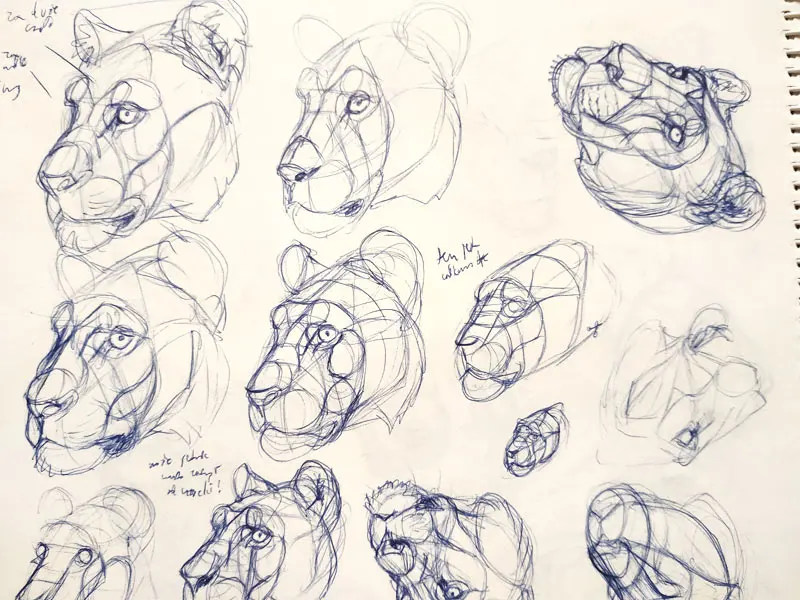
What is a gesture line?
Short answer
A gesture line is a fluid, expressive mark used in drawing to capture the essential movement, energy, and directional flow of a subject. Rather than focusing on outlines or anatomical details, it acts as the structural spine of a pose, conveying the weight and dynamic intent of a figure in motion.
On this page
What is the purpose of a gesture line?
The primary goal of a gesture line is to translate the life and "feeling" of a subject onto paper before adding structural details. By prioritizing movement over static accuracy, an artist can establish a sense of weight, balance, and tension. It serves as the foundational map for the entire drawing, ensuring that the final result feels alive rather than stiff or robotic.
This technique is rooted in the idea that a pose is not merely a collection of parts, but a unified action. Whether a subject is reaching, sitting, or running, the gesture line represents the primary force driving that action. By identifying this single, sweeping curve, you create a narrative for the body. This approach is essential for animators, illustrators, and fine artists who want to move beyond rigid, mannequin-like representations to create figures that appear to exist in three-dimensional space.
How to draw a gesture line effectively
To begin, observe your subject for a few seconds to identify the primary axis of movement. Look for the longest, most continuous curve that follows the spine or the primary limb engagement. Do not worry about the contours of the muscles or the clothing; focus entirely on the rhythm of the pose.
- Identify the head, as its tilt often dictates the direction of the entire body.
- Trace the spine from the neck down to the hips, noting the curve.
- Extend the line through the weight-bearing leg to ground the figure.
- Add secondary lines for the limbs to suggest the extremities' orientation.
- Keep your marks loose and light, allowing for multiple overlapping lines to find the "true" flow.
By treating the body as a series of connected, energetic arcs, you avoid the common trap of drawing individual limbs in isolation. The goal is to maintain the connection between the torso and the limbs, which keeps the figure feeling cohesive and intentional.
Best tools for gesture drawing
While you can use any medium, some tools are better suited for the fast, fluid nature of gesture work. Soft, dark materials that respond to pressure are ideal because they allow you to vary the weight of your line instantly. This variation helps emphasize parts of the pose that carry the most tension or weight, adding depth to a simple sketch.
- Charcoal sticks: Excellent for broad, sweeping marks and tonal variations.
- Graphite pencils (4B or softer): Offers control while still allowing for expressive, dark lines.
- Conte crayons: Provides a rich, consistent texture that is perfect for rapid, bold mark-making.
- Newsprint paper: Inexpensive and smooth, allowing the drawing tool to glide without resistance.
Avoid using hard pencils like 2H or 4H, as they require too much pressure and create thin, scratchy lines that inhibit the flow of movement. Using a soft, responsive medium encourages you to draw with your entire arm rather than just your wrist, which is crucial for achieving smooth, sweeping curves.
Common mistakes when drawing gesture lines
One of the most frequent errors is focusing too much on the outline or the "skin" of the figure. When artists get distracted by fingers, facial features, or clothing folds too early, the underlying energy of the pose is lost. This results in a drawing that looks like a static cutout rather than a living, breathing entity.
Another common mistake is drawing "broken" lines. Beginners often use short, choppy strokes to build a shape, which kills the momentum of the gesture. Instead, aim for long, continuous marks that travel from one end of the figure to the other. If you make a mistake, simply draw over it with a darker, more confident line rather than erasing. The goal is to capture the essence of the moment, and a few extra lines on the page are far less distracting than a drawing that lacks a clear sense of direction or purpose.
How to practice gesture drawing daily
Consistent practice is the only way to internalize the ability to see and translate gesture. Many artists use timed sessions to force themselves to be decisive. Start with short intervals, such as 30-second or one-minute poses, which prevent you from overthinking the details and force you to focus on the essential flow.
- Set a timer for 30 seconds and draw a series of rapid sketches from reference photos.
- Focus on the "line of action" first, then add the torso and limb attachments.
- Try drawing from live subjects in public spaces, such as parks or cafes, to capture natural, unposed movement.
- Review your work after each session to see if the figures look balanced or if they appear to be falling over.
As you become more comfortable, you can extend the time to two or five minutes, but always maintain the same level of urgency and focus on the gesture. By making this a daily habit, you will develop an intuitive sense of anatomy and movement that will significantly improve the quality of all your figurative artwork.
Key facts
- A gesture line is a single, fluid stroke that captures the primary movement, weight, and direction of a subject.
- Artists typically spend no more than 30 to 60 seconds on a single gesture drawing to prioritize intuition over detail.
- The technique focuses on the "line of action," which is the imaginary curve running through the spine or limbs that defines the pose.
- Beginners should use their entire arm rather than just their wrist to create sweeping, confident marks across the page.
- Gesture lines are intended to be skeletal frameworks, meaning they should ignore clothing, facial features, and textures.
- Regular practice with gesture drawing improves an artist's ability to depict dynamic motion and anatomical proportion in finished works.
The bottom line
The gesture line serves as the vital foundation for all dynamic figurative art. By prioritizing the essence of movement over static accuracy, artists can imbue their work with life and energy. Mastering this technique requires consistent, rapid practice and a willingness to embrace imperfection. Ultimately, the gesture line acts as a roadmap, guiding the viewer's eye through the composition and establishing a compelling sense of narrative action.
People also ask
How does a gesture line differ from a contour line?
A gesture line captures the energy and movement of a subject, whereas a contour line focuses on the precise edges and outlines of an object. Gesture is about the "feeling" of the pose, while contour is about the physical boundaries.
Should I use an eraser when practicing gesture lines?
It is best to avoid using an eraser during gesture sessions. Keeping your mistakes visible helps you analyze your spatial judgment and encourages you to commit to your initial marks.
What materials are best for capturing gesture lines?
Soft charcoal, graphite sticks, or thick markers are ideal because they allow for varied line weights. These tools encourage bold, fast movements that are difficult to achieve with a fine-point pen.
Why do my gesture drawings look stiff?
Stiffness usually occurs when you focus on drawing individual body parts rather than the overall flow of the pose. Try to visualize a single, continuous curve that connects the head, torso, and legs before adding any secondary details.
How can I improve my speed when drawing gestures?
Use a timer set to short intervals, such as 30 seconds per pose, to force your brain to simplify. This constraint prevents overthinking and trains your eye to identify the most essential lines immediately.
Can gesture drawing help with non-human subjects?
Absolutely, as gesture lines are essential for capturing the movement of animals, vehicles, or even inanimate objects. Any subject that possesses a sense of direction or tension can be distilled into a gesture line.
This answer was created with the help of AI research tools and reference sources. Spotted an error? Let us know — we correct mistakes quickly. See our editorial policy.