What does the tree of life symbolize in art?
Short answer
The tree of life symbolizes the interconnectedness of all existence, representing growth, immortality, and the cycle of life. Across diverse cultures, it acts as a bridge between heaven, earth, and the underworld. Its roots signify stability and ancestral heritage, while its branches reach toward divine knowledge, renewal, and eternal cosmic wisdom.
On this page
What does the tree of life symbolize in art?
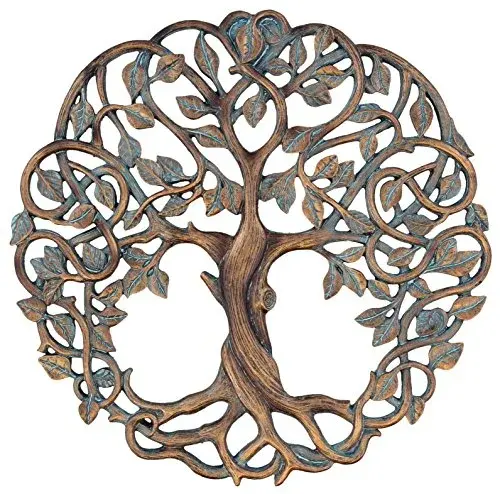
In art history, the tree of life serves as a universal archetype for the vitality and complexity of the natural world. It often functions as a visual metaphor for the connection between the terrestrial realm and the spiritual plane. By depicting a central trunk that anchors the composition, artists emphasize the idea that all living things share a common origin and are bound together in a vast, unified system.
The symbolism frequently centers on the cyclical nature of existence. Through the imagery of budding leaves, shedding bark, and seasonal decay, artists illustrate the inevitability of change. This motif encourages viewers to contemplate their own place within the wider tapestry of time. Whether rendered in ancient stone carvings or modern digital illustrations, the tree remains a potent emblem of endurance, resilience, and the persistent drive of life to flourish despite environmental challenges.
How do different cultures interpret the tree of life?
The interpretation of this symbol varies significantly across global traditions, reflecting the unique values of different societies. In ancient Mesopotamia, the tree represented the source of life and fertility, often depicted alongside deities. Norse mythology features Yggdrasil, a massive ash tree that connects the nine worlds of the cosmos, serving as the literal axis of the universe. These historical variations demonstrate how the symbol adapts to fit specific cultural mythologies.
Common cultural associations include:
- The Tree of Knowledge in Judeo-Christian tradition, symbolizing the duality of wisdom and human fallibility.
- The Bodhi tree in Buddhism, representing the attainment of enlightenment and spiritual awakening.
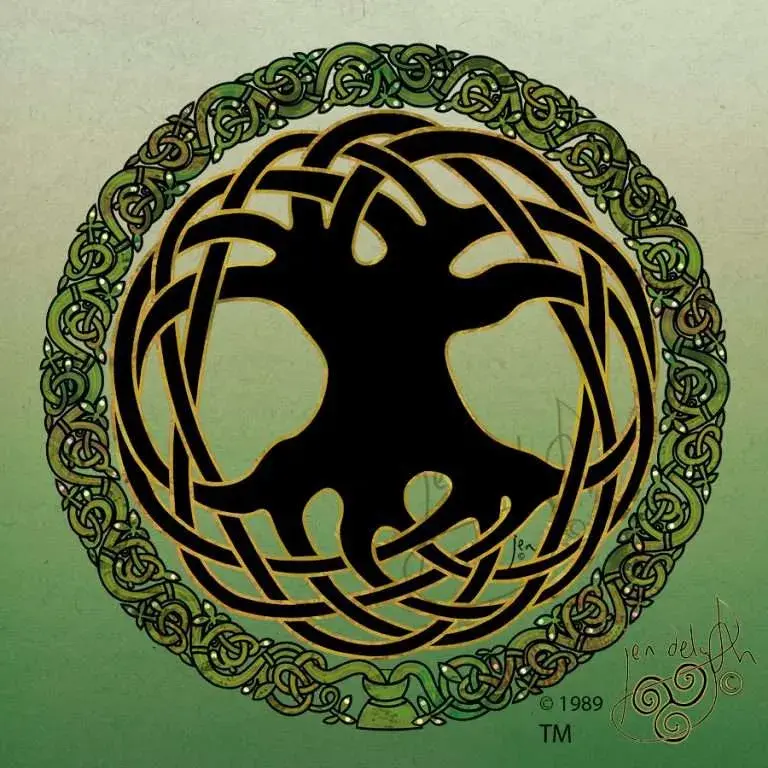
- The Celtic Crann Bethadh, which emphasizes the balance between the physical world and the spiritual afterlife.
- The Egyptian Ished tree, which was believed to record the names of pharaohs and signify divine favor.
Why is the tree of life used in modern design?
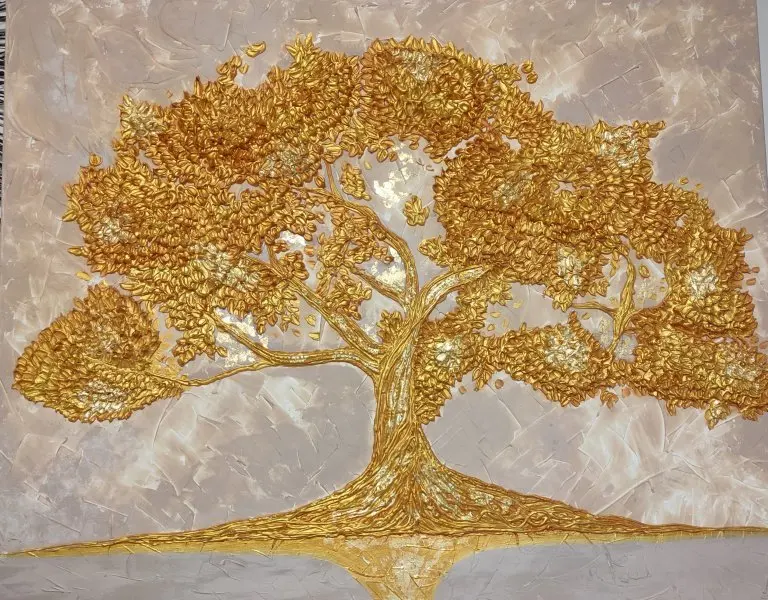
Modern artists and designers utilize the tree of life to evoke feelings of stability, heritage, and environmental consciousness. Because the image is instantly recognizable, it provides a strong visual shorthand for concepts like family lineage or ecological sustainability. It is frequently employed in branding to suggest longevity and organic growth, appealing to consumers who value nature and ethical practices.
Beyond commercial use, the motif remains a staple in contemporary fine art. Artists often deconstruct the traditional form, using abstract shapes or unconventional materials to challenge the viewer’s perception of nature. By stripping away realistic details, they focus on the underlying structure of the tree, highlighting the mathematical beauty found in fractal patterns. This approach bridges the gap between ancient symbolic tradition and modern scientific understanding of biological connectivity.
Common mistakes when depicting the tree of life
When creating art featuring this symbol, artists sometimes fall into the trap of over-complicating the composition. A common error is cluttering the branches with too much detail, which can obscure the central message of unity. To maintain the symbolic power of the work, focus on the balance between the roots and the canopy. If the roots are too small, the tree appears unstable; if the branches are too dense, the sense of growth is lost.
To ensure your artistic representation remains impactful, follow these steps:
- Establish a clear focal point, such as the intersection of the trunk and the first major branches.
- Maintain symmetry to represent harmony, or use intentional asymmetry to depict dynamic movement.
- Limit your color palette to emphasize the organic nature of the wood and the vitality of the leaves.
- Consider the negative space around the tree to ensure the silhouette remains distinct and recognizable.
How to use the tree of life in personal projects
If you wish to incorporate the tree of life into your own creative work, start by identifying the specific meaning you want to convey. Are you interested in the concept of family ancestry, or are you more focused on the theme of spiritual growth? Defining your intent helps determine the style of the piece, whether you choose a minimalist line drawing or a complex, layered painting.
When working on a personal project, avoid relying solely on generic stock imagery. Instead, observe real trees in your local environment to capture unique textures and structural quirks. By integrating personal observations with the traditional archetype, you create a piece that feels authentic and deeply resonant. Remember that the tree of life is a living symbol; it should reflect your individual perspective while honoring the long history of this powerful, enduring icon.
Key facts
- The tree of life represents the interconnectedness of all living things, emphasizing that all life shares a common origin and evolutionary path.
- Ancient Mesopotamian art frequently depicted the tree as a stylized plant flanked by guardians, symbolizing fertility and the divine order of the universe.
- In Norse mythology, Yggdrasil, the world tree, connects the nine realms and serves as a central axis for the cosmos.
- Modern artists often use the motif to explore themes of ancestry, personal growth, and the cyclical nature of life, death, and rebirth.
- To incorporate this symbol in your own art, focus on the symmetry of the roots and branches to represent the balance between the physical and spiritual worlds.
- A common mistake is overcrowding the composition; keep the central trunk clear to ensure the viewer immediately recognizes the structure as a tree.
The bottom line
The tree of life remains one of humanity's most enduring symbols because it elegantly captures the complexity of existence. Whether representing biological evolution, spiritual enlightenment, or ancestral heritage, the motif provides a universal language for connection. By balancing the depth of the roots with the height of the branches, artists create a powerful visual reminder that every living being is part of a larger, unified whole.
People also ask
What is the difference between the tree of life and a family tree?
A family tree is a genealogical chart showing specific ancestral lineages and descendants of a particular person or group. In contrast, the tree of life is a broader, symbolic concept representing the unity and interconnectedness of all biological life or cosmic existence.
Which religions use the tree of life as a primary symbol?
The tree of life appears in many traditions, including Christianity, where it symbolizes eternal life in the Garden of Eden. It is also central to the Kabbalah in Judaism, where it represents the ten sephirot or attributes through which God reveals himself.
How did Gustav Klimt use this symbol in his work?
Gustav Klimt’s 1909 painting The Tree of Life is a masterpiece of the Art Nouveau movement. He used swirling, golden branches to represent the complexity of human life and the connection between the earth and the heavens.
Is the tree of life symbol only found in Western art?
No, the motif is global and appears in diverse cultures, including ancient Egyptian, Chinese, and Mayan art. Each culture adapts the symbol to reflect its specific cosmology, such as the Chinese Kunlun tree or the Mayan world tree connecting the underworld to the sky.
What materials are best for creating tree of life art?
Metal wire is a popular choice for three-dimensional sculptures because it mimics the flexibility of branches and roots. For two-dimensional work, ink or charcoal provides the high contrast needed to highlight the intricate detail of the tree's structure.
Why are roots often emphasized in tree of life depictions?
Roots symbolize the foundation, heritage, and the hidden aspects of life that sustain the visible growth above ground. Including prominent roots in art serves to ground the composition and provides a visual metaphor for stability and history.
This answer was created with the help of AI research tools and reference sources. Spotted an error? Let us know — we correct mistakes quickly. See our editorial policy.