How long do orangutans live?
Short answer
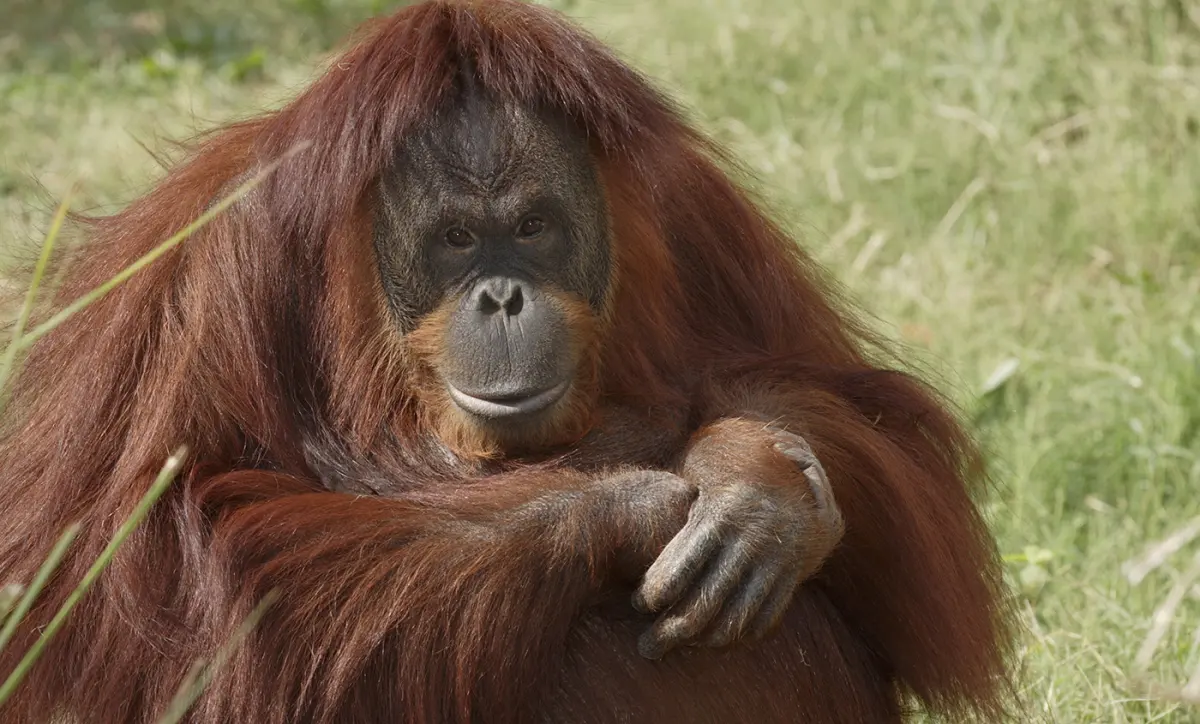
Orangutans typically live between 30 and 45 years in the wild, though individuals in managed care often reach their 50s. The oldest recorded orangutan, a female named Nonja, lived to be 55 years old. Their longevity is primarily determined by habitat quality, food availability, and the absence of human-driven threats like poaching.
On this page
How long do orangutans live in the wild?
In their natural rainforest habitats of Borneo and Sumatra, orangutans generally have a lifespan of 30 to 45 years. These great apes develop slowly, with females not reaching reproductive maturity until they are about 15 years old. Because they have such long intervals between births—often eight years or more—their survival depends heavily on the stability of their environment. When food sources like wild figs are abundant, orangutans maintain better health, which directly correlates to a longer life expectancy.
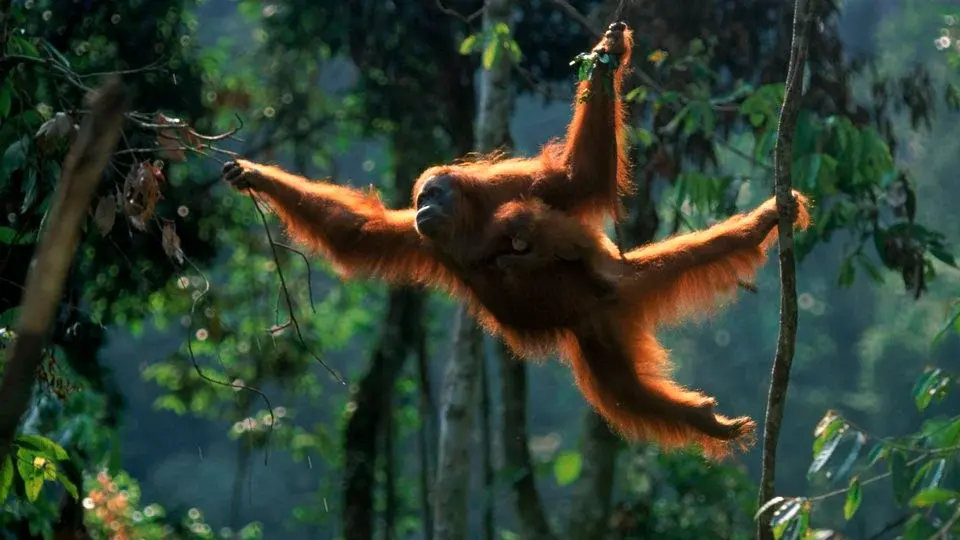
However, wild populations face significant challenges that can shorten these natural lifespans. Habitat loss due to palm oil plantations and illegal logging forces orangutans into smaller, fragmented territories. This leads to increased competition for resources and higher stress levels, which can leave them vulnerable to disease. While they have few natural predators, such as clouded leopards or tigers, the primary threat to their longevity remains the destruction of the forest canopy, which they rely on for movement and foraging.
How long do orangutans live in captivity?
Orangutans living in zoos or specialized sanctuaries often outlive their wild counterparts, frequently reaching 50 years or older. This increase in longevity is attributed to consistent access to high-quality nutrition, regular veterinary checkups, and the absence of environmental stressors. In managed care, experts can treat infections or injuries that would otherwise be fatal in the wild. This controlled environment removes the risks of starvation and predation, allowing these primates to reach their biological potential.
Despite these advantages, captivity presents its own set of unique health concerns. Without the need to forage for miles, some captive orangutans are prone to obesity and related metabolic issues. Modern husbandry practices now focus on:
- Providing complex enrichment activities to stimulate natural foraging behaviors.
- Designing enclosures that mimic the verticality of the rainforest.
- Implementing specialized diets that include high-fiber vegetation to support digestive health.
- Conducting regular dental screenings to prevent infections that could impact overall wellness.
Why do orangutans have such long lifespans?
The extended lifespan of an orangutan is a direct result of their "slow" life history strategy. Unlike smaller mammals that reproduce quickly and die young, orangutans invest massive amounts of energy into the growth and development of their offspring. A juvenile orangutan remains dependent on its mother for up to seven or eight years, the longest childhood of any non-human primate. This prolonged period of learning ensures that the young learn the complex skills required to survive in the canopy.
This slow pace of life is an evolutionary adaptation to the unpredictable nature of rainforest fruit cycles. By having a long lifespan, female orangutans have more opportunities to successfully raise offspring over several decades. Their physiological systems are built for endurance rather than rapid turnover. This biological investment in long-term survival allows them to maintain stable populations, provided that their environment remains intact and their slow reproductive cycle is not interrupted by external pressures.
Common mistakes when estimating orangutan age
Determining the exact age of an orangutan in the wild is notoriously difficult because researchers rarely observe the same individual from birth to death. A common mistake is to assume that size is a direct indicator of age. While young orangutans are obviously smaller, adult size can be misleading due to variations in diet and genetics. Researchers often rely on dental wear patterns or the development of secondary sexual characteristics, such as the prominent cheek pads or "flanges" found on dominant males.
When assessing the health or age of an orangutan, experts avoid several common pitfalls:
- Assuming all individuals in a group are the same age based on social hierarchy.
- Ignoring the effects of chronic illness, which can make a younger animal appear significantly older.
- Overlooking the impact of past injuries that may have stunted growth.
- Relying solely on photographic evidence without considering the specific environmental context of the observation.
How to support orangutan longevity
Protecting the future of orangutans requires a multi-faceted approach that focuses on habitat preservation and the mitigation of human-wildlife conflict. Because these animals are so long-lived, the loss of even a single breeding female can have a devastating impact on a population's growth for decades to come. Conservation efforts must prioritize the protection of large, contiguous forest tracts that allow these apes to roam and find adequate food throughout their long lives.
Individuals interested in supporting these efforts can contribute to the longevity of the species through several practical actions:
- Supporting organizations that certify sustainable palm oil, which helps reduce deforestation.
- Participating in or donating to reforestation projects that restore wildlife corridors.
- Advocating for stricter enforcement of anti-poaching laws in Indonesia and Malaysia.
- Spreading awareness about the slow reproductive cycle of orangutans to emphasize why population recovery is a long-term, multi-generational process.
By ensuring that their natural habitat remains healthy and connected, we provide the best possible chance for these intelligent primates to reach their full, natural lifespan in the wild.
Key facts
- Wild orangutans typically live between 35 and 45 years in their natural forest habitats.
- Individuals in human care, such as zoos or sanctuaries, often live into their 50s due to consistent medical attention.
- Female orangutans have a longer average lifespan than males, partly due to the lower physical risks associated with territorial defense.
- Orangutans are the longest-lived of all the great apes, excluding humans.
- Habitat loss and illegal poaching remain the primary threats that prevent many wild orangutans from reaching their full biological potential.
- Providing high-quality medical care and a balanced diet is the most effective way to extend the lifespan of orangutans in captivity.
The bottom line
Orangutans are remarkably resilient creatures, often living into their fifth decade when provided with a stable, protected environment. While wild populations face severe threats from deforestation and poaching, those in managed care demonstrate the species' true longevity. Understanding their slow reproductive cycle and specific habitat needs is essential for conservation efforts, ensuring these intelligent primates continue to thrive in their native Southeast Asian rainforests.
People also ask
What is the primary cause of death for wild orangutans?
The most significant threats to wild orangutans are habitat destruction from palm oil plantations and illegal hunting. These factors drastically reduce their life expectancy compared to those in protected environments.
Do male and female orangutans have different lifespans?
Yes, females generally live longer than males. Males are often involved in aggressive territorial disputes and travel more extensively, which increases their risk of injury and exhaustion.
How can I help protect orangutan populations?
You can support conservation efforts by purchasing products certified by the Roundtable on Sustainable Palm Oil (RSPO). Avoiding items that contribute to deforestation helps preserve the natural habitat necessary for their survival.
At what age do orangutans reach maturity
Female orangutans typically reach sexual maturity around 12 to 15 years of age. Males develop their characteristic cheek pads and reach full physical maturity between 15 and 20 years.
How often do orangutans reproduce?
Orangutans have the slowest reproductive rate of any mammal, with females giving birth only once every seven to nine years. This low birth rate makes it difficult for populations to recover from premature deaths.
Can orangutans live in human homes as pets?
No, keeping orangutans as pets is illegal and highly unethical. They require specialized social structures and vast forest environments that cannot be replicated in a domestic setting.
This answer was created with the help of AI research tools and reference sources. Spotted an error? Let us know — we correct mistakes quickly. See our editorial policy.