How do you use a T-square?
Short answer
A T-square is a technical drawing tool used to draw precise horizontal lines and serve as a guide for triangles. To use one, press the head firmly against the left edge of your drafting board, slide the blade to your desired position, and draw along the top edge with a pencil.
On this page
How to set up a drafting board for a T-square
The accuracy of your T-square depends entirely on the stability of your workspace. You must use a drafting board or a smooth, flat table with a perfectly straight left edge. The T-square relies on the "head" of the tool maintaining constant, flush contact with this edge to ensure that every horizontal line drawn is perfectly parallel. If the edge of your table is nicked, warped, or rounded, your lines will inevitably be crooked.
Before you begin, secure your paper to the board using drafting tape or clips. Place the paper so that the top edge is roughly parallel to the T-square blade. When you slide the head of the T-square along the side of the board, the blade should move smoothly without wobbling. If you are left-handed, you may prefer to use the right side of the board, though most T-squares are designed for right-handed use on the left side.
- Ensure the board surface is clean and free of debris.
- Align the paper squarely on the board.
- Tape the top corners first, then the bottom, to keep the paper taut.
- Verify the blade is perpendicular to the board's edge.
How to draw horizontal lines with a T-square
Drawing a horizontal line requires consistent pressure and proper hand placement. Hold the head of the T-square against the side of the board with your non-dominant hand. With your dominant hand, hold your pencil at a slight angle, leaning it away from the blade to prevent graphite buildup from smudging your work. Slide the blade to the desired vertical position and draw the line from left to right.
To maintain precision, keep your pencil lead sharp. Use a lead holder or a mechanical pencil with a consistent lead grade, such as HB or 2H. If you press too hard against the blade, you risk pushing the T-square away from the edge of the board, which will cause your line to deviate from the horizontal. Always maintain a firm, steady grip on the head of the T-square throughout the entire stroke.
- Keep the pencil at a 60-degree angle to the paper.
- Rotate the pencil slightly as you draw to keep the point sharp.
- Do not let the blade lift off the paper during the stroke.
- Use a light touch to avoid indenting the paper surface.
How to use a T-square with triangles
The T-square serves as a foundation for other drafting tools, specifically triangles. By placing a 45-degree or 30/60-degree triangle on top of the T-square blade, you can draw perfectly vertical or angled lines. This combination is essential for creating complex geometric shapes, architectural floor plans, or isometric projections. The T-square acts as the horizontal anchor, while the triangle provides the precise angle required for the secondary lines.
When using this method, ensure that the T-square remains stationary while you move the triangle along the blade. If you need to draw a vertical line, place the vertical edge of the triangle against the T-square blade and draw upward. If you are drawing multiple parallel lines at an angle, hold the triangle firmly against the T-square and slide both tools together as a single unit across the board.
- Place the T-square at the required vertical position.
- Set the triangle on the blade, ensuring the base is flush.
- Hold both tools firmly to prevent shifting.
- Draw your lines using the edge of the triangle.
Common mistakes when using a T-square
The most frequent error is failing to keep the head of the T-square pressed firmly against the board's edge. Even a tiny gap between the head and the board will cause the blade to tilt, resulting in lines that are not parallel. Beginners often focus so much on the pencil that they forget to monitor the position of the head. Always check that the head is flush before starting every single line.
Another common mistake is using a T-square on a surface that is not perfectly square. If your drafting board is rectangular but not "true," your horizontal lines will not be parallel to the edges of your paper. Additionally, avoid using the T-square as a straightedge for cutting paper with a utility knife. The plastic or wooden blades can be easily nicked by blades, which will ruin the tool's ability to provide a smooth, straight line in the future.
- Forgetting to check the head contact before every line.
- Using a dull pencil lead, which creates thick, imprecise lines.
- Pressing the pencil too hard, causing the blade to shift.
- Allowing the T-square to hang off the edge of the board unsupported.
Best practices for maintaining your T-square
To keep your T-square accurate for years, store it by hanging it vertically from a hook or laying it perfectly flat on a shelf. Never lean it against a wall at an angle, as this can cause the blade to warp or the head to lose its squareness over time. If you use a wooden T-square, keep it away from extreme humidity, which can cause the wood to expand or contract and compromise the 90-degree angle.
Periodically check your T-square for damage. You can test for squareness by drawing a horizontal line, flipping the T-square over, and drawing another line over the first one. If the lines do not align perfectly, your T-square is no longer square. While some high-end metal T-squares have adjustable heads, most standard models cannot be repaired once they lose their precision. Treat the tool with care, and it will remain a reliable companion for all your technical drawing projects.
Key facts
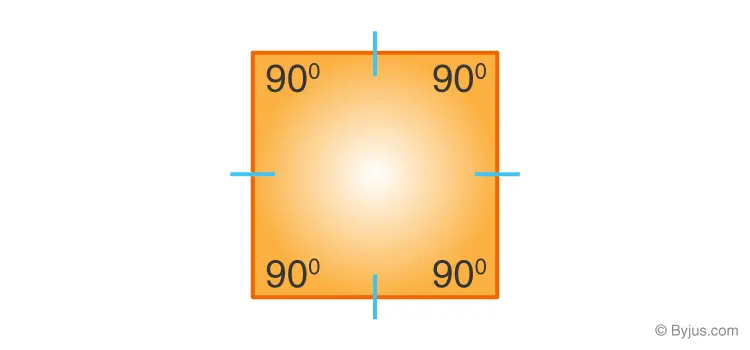
- A T-square consists of a long "blade" attached to a shorter "head" at a 90-degree angle.
- Always keep the head of the T-square pressed firmly against the left edge of your drafting board or table.
- Use the top edge of the blade to draw perfectly horizontal lines across your paper.
- Never use the bottom edge of the blade for drawing, as it is often slightly beveled or uneven.
- Secure your paper to the drafting surface with drafting tape before placing the T-square.
- Clean the blade regularly with a soft cloth to prevent graphite smudges from transferring to your work.
The bottom line
The T-square is an essential manual drafting tool designed to provide a stable, horizontal reference for technical drawing. By maintaining constant pressure against the board's edge, you ensure precise, parallel lines across your workspace. Always pair it with a triangle for vertical accuracy and store it hanging to preserve its shape. Mastering this simple tool remains the foundation for professional-grade drafting and architectural layout work.
People also ask
Can I use a T-square on a standard desk?
You can, but it will only work if the desk has a perfectly straight, square edge. If the edge is rounded or uneven, the T-square will not remain perpendicular, resulting in slanted lines.
Are T-squares made of wood or metal?
They are manufactured in both materials, as well as clear plastic. Wood is traditional but can warp, while metal and plastic are generally more durable and resistant to humidity.
How do I draw vertical lines with a T-square?
You cannot draw vertical lines with a T-square alone. You must place a triangle—typically a 30/60 or 45-degree tool—on top of the T-square blade to create a 90-degree vertical guide.
What is the purpose of the hole at the end of the blade?
That hole is primarily for hanging the tool on a hook for storage. Storing a T-square vertically helps prevent the blade from bending or warping over time.
How do I know if my T-square is accurate?
Place the head against a known straight edge and draw a line. Flip the T-square over; if the blade does not align perfectly with your original line, the tool is out of square.
Do I need a special drafting board to use a T-square?
While not strictly required, a drafting board provides a consistent, smooth surface and a factory-straight edge. This ensures the T-square slides easily and maintains alignment across the entire width of the paper.
This answer was created with the help of AI research tools and reference sources. Spotted an error? Let us know — we correct mistakes quickly. See our editorial policy.