How do you make cheesecake?
Short answer
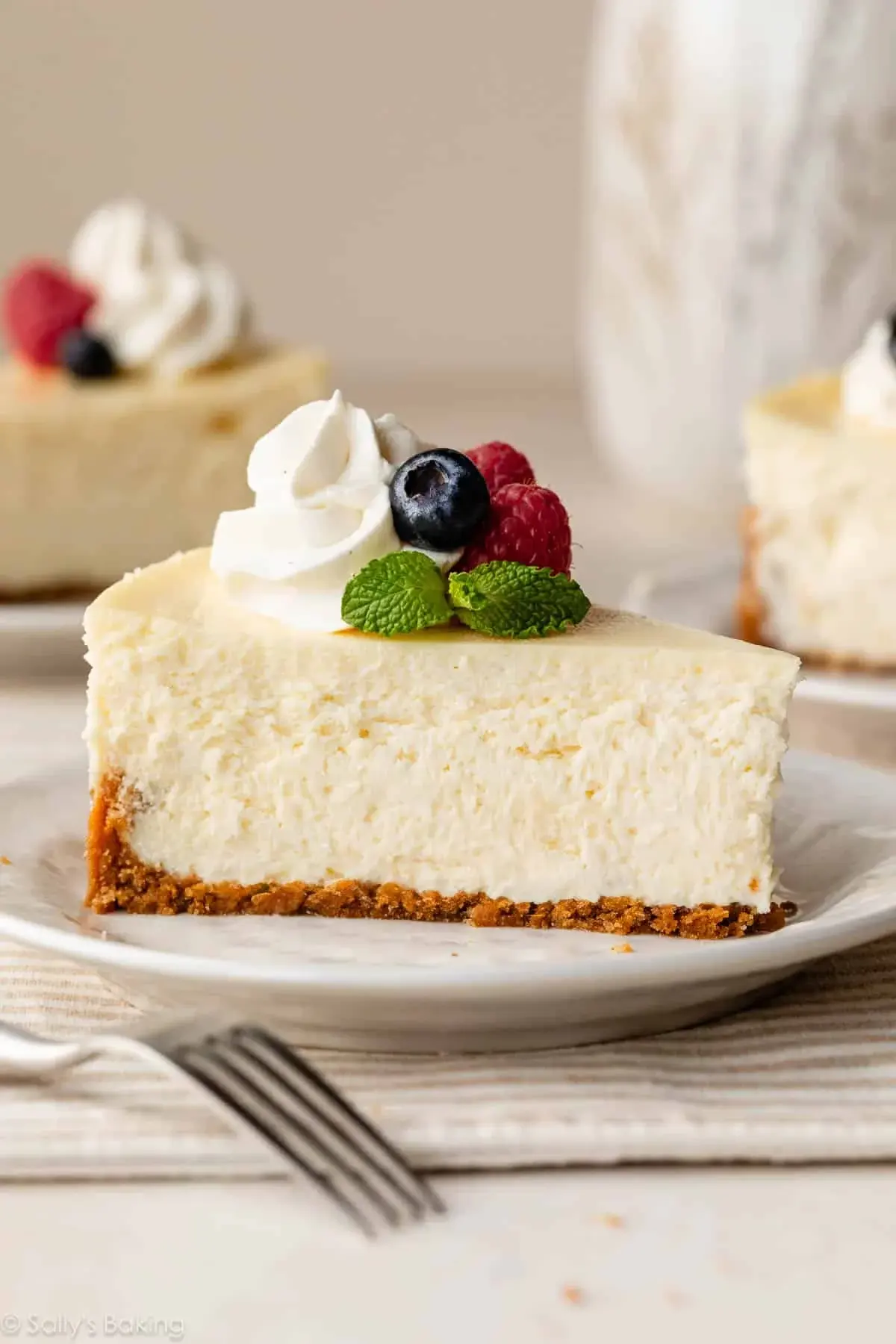
Making a cheesecake involves creating a crust from crushed graham crackers, then baking a rich filling of cream cheese, sugar, eggs, and sour cream. The process requires a water bath to ensure even cooking and a slow cooling period to prevent the surface from cracking before chilling the cake until firm.
On this page
How to prepare the crust and filling
The foundation of a classic cheesecake is a simple crumb crust. Combine 1.5 cups of finely crushed graham crackers with 6 tablespoons of melted unsalted butter and 2 tablespoons of sugar. Press this mixture firmly into the bottom of a 9-inch springform pan, ensuring it is level. Bake the crust at 350°F (175°C) for 10 minutes to set it before adding the filling.
For the filling, use 32 ounces of room-temperature cream cheese. Beat the cheese with 1.25 cups of granulated sugar until completely smooth, then add 1 teaspoon of vanilla extract. Incorporate 4 large eggs one at a time, mixing on low speed to avoid adding too much air. Finally, fold in 1 cup of sour cream to provide a creamy texture and slight tang.
How long does it take to bake and cool
Baking a cheesecake is a slow process that typically requires 60 to 75 minutes in a 325°F (160°C) oven. The cake is done when the edges are set and slightly puffed, but the center still wobbles like gelatin when the pan is gently shaken. Overbaking is the primary cause of a dry or rubbery texture.
The cooling process is equally important and takes several hours. Follow these steps to ensure the best results:
- Turn off the oven and leave the door slightly ajar for one hour.
- Remove the pan to a wire rack and let it cool completely at room temperature.
- Run a thin knife around the edge of the pan to loosen the cake.
- Refrigerate the cheesecake for at least 6 hours, preferably overnight, before serving.
Why cheesecake cracking happens
Cracks in a cheesecake are usually caused by rapid temperature changes or over-mixing the batter. When cold ingredients are used, they do not emulsify properly, leading to air pockets that expand and collapse during baking. Additionally, baking the cake at a temperature that is too high causes the proteins in the eggs to tighten too quickly, pulling the cake away from the center.
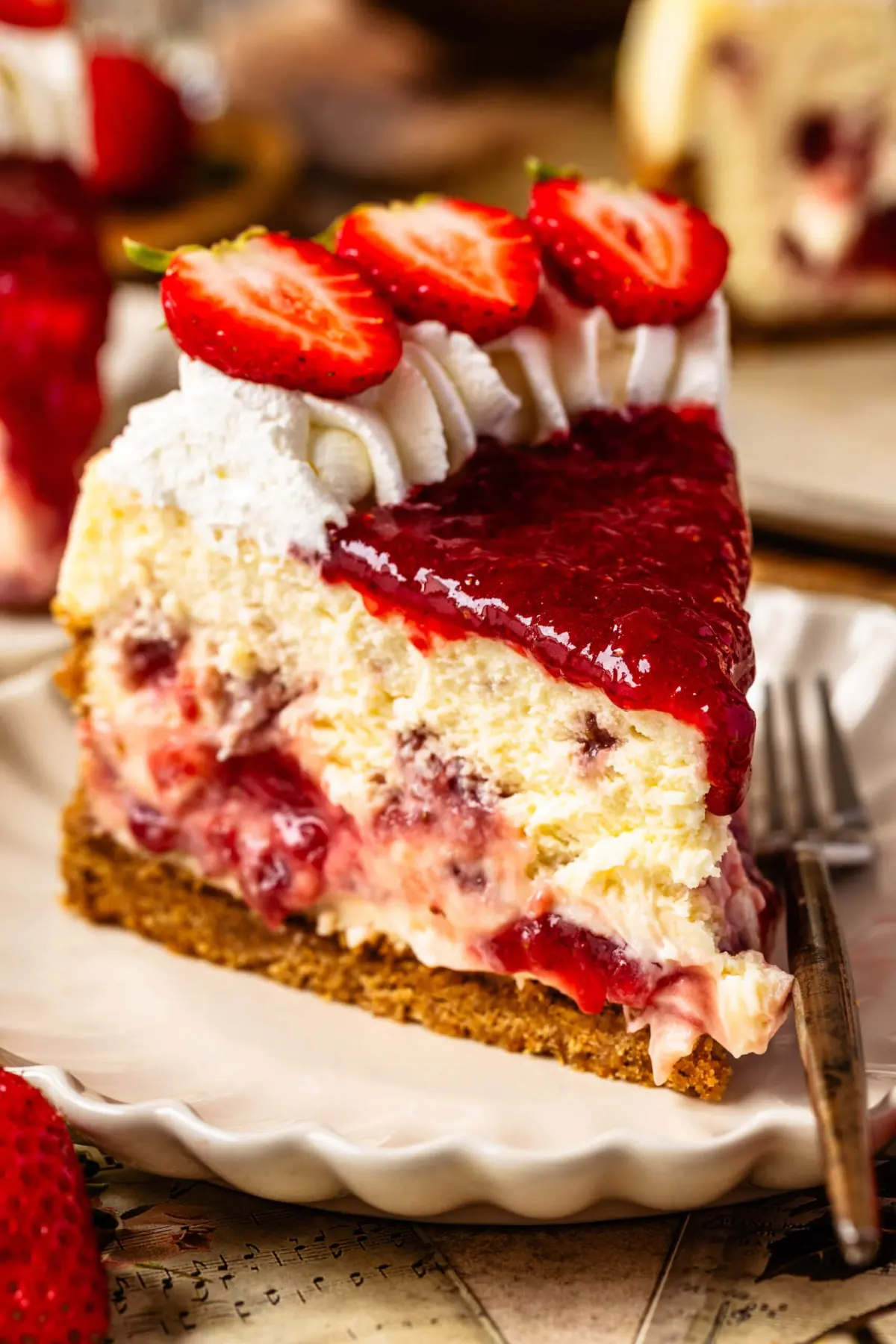
Using a water bath, or bain-marie, is the most effective way to prevent cracking. By placing the springform pan inside a larger roasting pan filled with an inch of hot water, you insulate the delicate custard from direct heat. This ensures the edges do not cook faster than the middle. If you notice a crack forming despite these precautions, it can easily be hidden with a layer of sour cream topping or fresh fruit.
Best cheesecake tips for beginners
Beginners often struggle with the consistency of the batter. Always ensure your cream cheese, eggs, and sour cream are at room temperature before you begin. Cold ingredients create lumps that are nearly impossible to remove without over-mixing the batter, which introduces excess air. If your batter looks lumpy, pass it through a fine-mesh sieve before pouring it into the crust.
When preparing your equipment, remember that springform pans are not naturally watertight. To protect your cake from the water bath, wrap the exterior of the pan in two layers of heavy-duty aluminum foil. Alternatively, place the springform pan inside a slightly larger cake pan before setting it in the water. These simple preparations prevent water from seeping into the crust and turning it soggy during the long bake time.
Common mistakes when making cheesecake
One of the most frequent errors is opening the oven door too often during the baking process. Every time the door opens, the oven temperature drops, which disrupts the delicate setting of the custard. Keep the door closed until the final 10 minutes of the suggested baking time to check for the required wobble. Avoid the temptation to use a knife to check for doneness, as this can cause the surface to split.
Another common mistake involves rushing the chilling phase. A cheesecake needs time for the fats to solidify and the flavors to meld. Cutting into the cake before it has been properly refrigerated will result in a messy, soft slice that lacks the characteristic dense, velvety mouthfeel. Always store the finished cake in an airtight container in the refrigerator for up to five days to maintain its quality and prevent it from absorbing other refrigerator odors.
Key facts
- Use room-temperature cream cheese to ensure a smooth, lump-free batter.
- A water bath, or bain-marie, prevents the cheesecake from cracking by providing gentle, even heat.
- Never overbeat the eggs, as incorporating too much air causes the cake to rise and then collapse.
- A graham cracker crust should be pre-baked for 8–10 minutes to ensure it remains crisp under the filling.
- Cheesecake is fully cooked when the edges are set but the center still has a slight, gelatinous jiggle.
- Always chill a cheesecake in the refrigerator for at least 6–8 hours before slicing to allow the structure to firm up.
The bottom line
Making a perfect cheesecake requires patience and attention to temperature. By using room-temperature ingredients, employing a water bath to maintain consistent moisture, and allowing the cake to cool slowly, you can achieve a professional, creamy texture. Avoid the temptation to rush the process; the essential final step is a long, undisturbed chill in the refrigerator, which ensures the structure sets properly for clean, beautiful slices.
People also ask
Why did my cheesecake crack on top?
Cracking usually occurs due to overbaking or a sudden temperature change. Using a water bath provides humidity and insulation, while cooling the cake slowly inside the oven with the door cracked helps prevent surface fissures.
Can I substitute low-fat cream cheese in a recipe?
Low-fat cream cheese contains more water and less fat, which significantly alters the texture and density of the final product. For the best results, use full-fat block cream cheese rather than whipped or spreadable versions.
How do I know when the cheesecake is done?
The center of the cheesecake should wobble slightly like Jell-O when you gently shake the pan. If the center is liquid, it needs more time, but if it is completely firm, it is likely overbaked.
Is it necessary to use a springform pan?
A springform pan is highly recommended because its removable sides allow you to release the delicate cake without damaging the edges. If you use a standard cake pan, you will not be able to remove the cheesecake without flipping it over.
How long can I store leftover cheesecake?
Properly wrapped in plastic wrap or an airtight container, cheesecake will stay fresh in the refrigerator for up to five days. You can also freeze individual slices for up to two months if wrapped tightly in foil.
Should I grease the pan before adding the crust?
You should lightly grease the sides of a springform pan to ensure the cheesecake releases cleanly as it shrinks during cooling. However, you do not need to grease the bottom if you are pressing a crumb crust directly into it.
This answer was created with the help of AI research tools and reference sources. Spotted an error? Let us know — we correct mistakes quickly. See our editorial policy.