How do you draw an eagle?
Short answer
Drawing an eagle requires breaking its complex anatomy into basic geometric shapes before refining the details. Focus on the sharp, hooked beak, the intense brow ridge, and the powerful wing span. By establishing a solid skeletal framework first, you can accurately capture the majestic posture and predatory nature of this raptor.
On this page
How to structure the basic eagle anatomy
Begin your drawing by sketching a large oval for the body and a smaller circle for the head. Place these shapes so they overlap slightly to create the neck area. Use a light pencil stroke, as these lines will eventually be erased or covered by feathers. Position the head circle higher than the body oval to give the eagle its characteristic alert stance.
Once the main masses are placed, add a triangular shape for the tail and two long, curved lines extending from the back for the wings. Ensure the proportions reflect the eagle's heavy build; the body should be roughly twice the size of the head. Keep these initial lines loose and fluid to maintain a sense of movement.
- Draw a circle for the head and a larger oval for the torso.
- Connect them with two gentle curves to form the neck.
- Add a wedge shape at the base of the torso for the tail feathers.
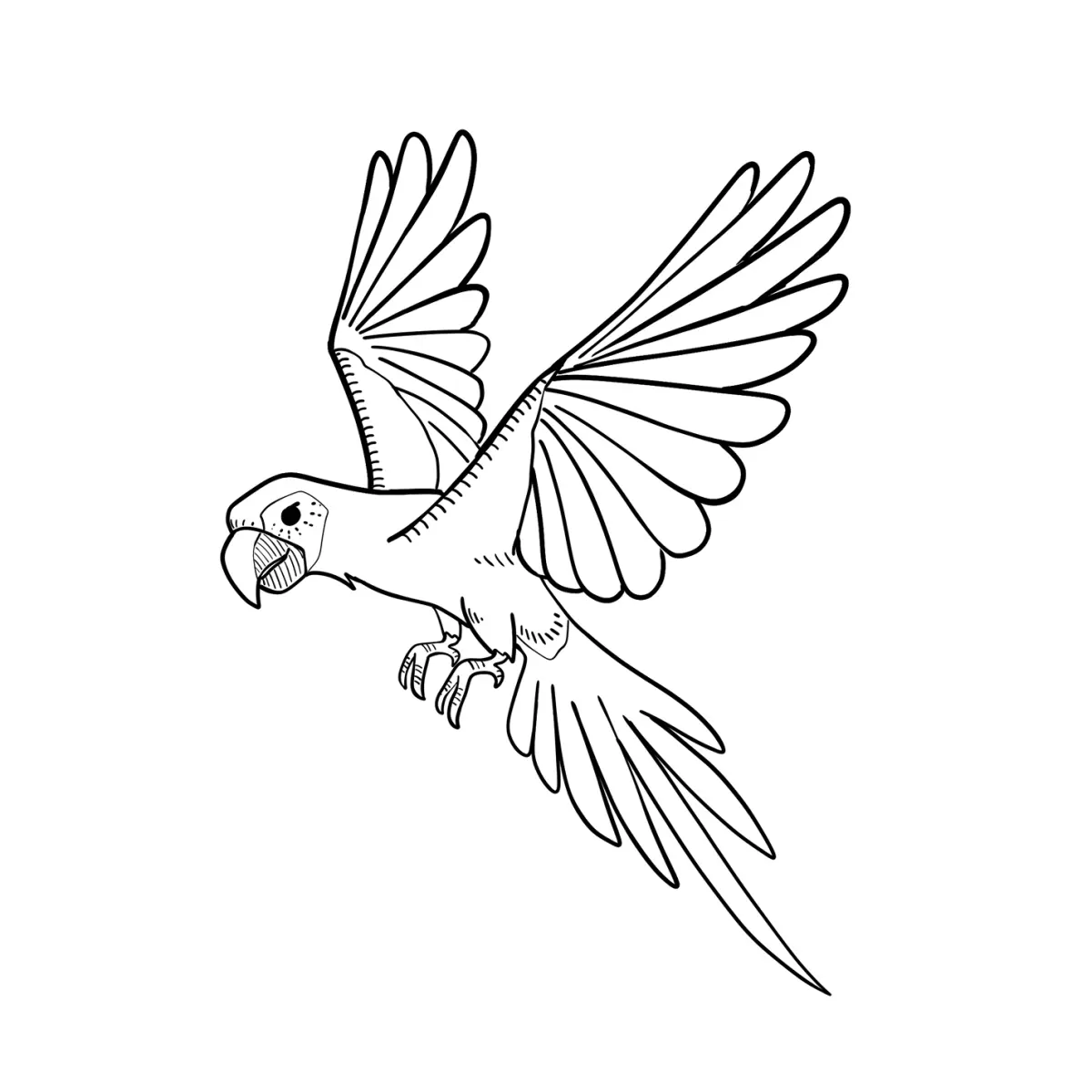
- Sketch two large, arched lines extending from the shoulders to represent the wing span.
How to draw an eagle head and beak
The eagle’s head is defined by its heavy brow ridge and sharp, curved beak. Draw a horizontal line across the middle of the head circle to guide the placement of the eye. Place the eye just below this line, giving it a piercing, forward-facing look. The brow should overhang the eye slightly, which provides the bird with its signature stern expression.
When drawing the beak, start from the center of the head circle and extend it outward. The upper mandible should curve downward into a sharp hook, while the lower mandible remains shorter and straighter. Add a small, oval-shaped nostril near the base of the upper beak. Keep the lines crisp and firm, as the beak is the focal point of the eagle's face.
- Keep the eye small and round with a dark, concentrated pupil.
- Extend the beak line back toward the eye to create the mouth gape.
- Add subtle shading under the brow to emphasize the depth of the eye socket.
How to render eagle feathers and texture
Feathers are not individual lines but rather overlapping layers that follow the contours of the body. Start by drawing small, U-shaped scales on the neck to suggest dense plumage. As you move toward the wings, transition into longer, thinner shapes that point away from the body. Avoid drawing every single feather, as this can make the drawing look cluttered and stiff.
Focus on grouping feathers into clusters to create a more natural, organic appearance. The primary flight feathers on the wingtips should be the longest and most distinct, fanning out like fingers. Use varied line weights to show depth, pressing harder on the underside of the wings where shadows naturally fall. This technique creates a three-dimensional effect that brings the bird to life.
Common mistakes when drawing eagles
A frequent error is making the beak appear too small or incorrectly shaped. The beak of an eagle is massive and powerful, taking up a significant portion of the head profile. Another common mistake is failing to capture the "shoulder" of the wing. The wing should originate high on the back, near the base of the neck, rather than from the middle of the torso.
Artists often struggle with the feet and talons, which are essential for showing the eagle's strength. Ensure the talons are curved and sharp, not straight or blunt. If the feet look like simple sticks, the entire drawing loses its predatory impact. Always check your reference images to ensure the talons are gripping or extended properly, as these appendages are vital for the eagle's survival.
- Avoid drawing perfectly symmetrical feathers, as natural plumage is always slightly irregular.
- Do not make the neck too thin; eagles have thick, muscular necks to support their heavy heads.
- Ensure the eye is placed high enough on the head to maintain the correct facial proportions.
Best shading techniques for eagle drawings
Shading is the final step to adding volume and realism to your eagle. Begin by identifying your light source and keeping the side of the bird facing the light relatively clean. Use a soft graphite pencil to apply cross-hatching or smooth transitions on the shadowed side of the body. Focus on the neck and the underside of the wings, as these areas usually hold the most shadow.
For the feathers, use short, quick strokes to mimic the texture of the plumage. Leave the tips of the feathers slightly lighter to catch the light, which adds a sense of sheen to the bird's coat. Finally, darken the pupil of the eye and the tip of the beak to create high-contrast highlights. This contrast draws the viewer's eye to the most important features, completing the majestic portrayal of the eagle.
Key facts
- Eagles possess a distinct brow ridge that gives them a stern, piercing expression.
- The beak is hooked and sharp, curving downward to facilitate tearing meat.
- Wingspan is significantly wider than the body length, often reaching up to 7 feet in species like the bald eagle.
- Talons are curved and powerful, designed for gripping prey rather than walking.
- Feathers on the head and neck are often shorter and smoother than the primary flight feathers.
- Use a reference image to study the complex layering of feathers, which overlap like shingles on a roof.
The bottom line
Drawing an eagle requires careful attention to the bird’s predatory anatomy, specifically the heavy brow ridge and the sharp, hooked beak. By focusing on the structural proportions of the head and the layering of primary feathers, you can capture the essence of this powerful raptor. Practice observing the way light hits the curved surfaces of the beak and talons to add depth and realism to your final sketch.
People also ask
What is the most common mistake when drawing an eagle's eye?
Many artists draw the eye too round, failing to account for the heavy, overhanging brow ridge. This ridge gives the eagle its signature intense, predatory gaze.
How do I make the feathers look realistic?
Avoid drawing every single feather individually, which can make the bird look stiff. Instead, group them into clusters or "feather tracts" to suggest volume and texture.
Should I start with the head or the body?
Start with a simple oval for the head and a larger, elongated shape for the body. Establishing these basic proportions first prevents the eagle from looking lopsided or distorted.
How do I draw the beak correctly?
The beak should be drawn as a triangle with a strong, downward-curving hook at the tip. Ensure the base of the beak aligns with the center of the eye.
What is the best way to depict the talons?
Treat the talons as thick, curved cylinders rather than flat shapes. Adding small, sharp triangles at the ends of these cylinders creates the appearance of lethal claws.
How do I convey the scale of the wings?
Draw the primary flight feathers as long, thin rectangles that fan out at the ends. Making these feathers much longer than the body helps emphasize the eagle's massive wingspan.
This answer was created with the help of AI research tools and reference sources. Spotted an error? Let us know — we correct mistakes quickly. See our editorial policy.