How big do slugs get?
Short answer
Slug sizes vary significantly, ranging from less than an inch to nearly three feet in length. While common garden species typically measure between one and four inches, specialized marine and terrestrial varieties can reach impressive dimensions. Factors such as species, environment, and food availability dictate the ultimate size of an individual slug.
On this page
How big do common garden slugs get?
Most slugs encountered in residential gardens and agricultural settings are relatively modest in size. The common grey field slug (Deroceras reticulatum), a frequent pest for gardeners, typically grows to about 1.5 to 2 inches long. Another familiar visitor, the large black slug (Arion ater), can reach lengths of 4 to 6 inches when fully extended. These creatures are highly elastic, allowing them to stretch their bodies significantly while moving or contract into a small, dense mound when threatened or dehydrated.
Gardeners often overestimate the size of these animals because they leave behind large, shimmering slime trails that can span several feet. While the slug itself may be small, its capacity to traverse garden beds makes it appear more substantial than it truly is. Understanding that these common varieties rarely exceed six inches helps in identifying them correctly and managing their presence in your flowerbeds or vegetable patches.
What is the largest slug in the world?
The title for the largest terrestrial slug belongs to the Kerry slug (Geomalacus maculosus) in Europe, but for sheer size, the Pacific banana slug (Ariolimax columbianus) is the true heavyweight of the forest floor. Found along the Pacific Coast of North America, these slugs commonly reach 6 to 8 inches in length. In exceptional cases, they have been recorded growing up to 10 inches long, making them the second-largest species of land slug globally.
Marine slugs, often referred to as sea slugs or nudibranchs, can dwarf their land-dwelling cousins. The black sea hare (Aplysia vaccaria) is a massive marine gastropod that can reach lengths of up to 30 inches and weigh nearly 30 pounds. Unlike garden slugs, these creatures live in aquatic environments where the buoyancy of the water supports their immense body mass, allowing them to achieve dimensions that would be physically impossible for a slug living on dry land.
How do slugs grow so large?
A slug’s growth is primarily determined by its species, genetics, and the quality of its habitat. Slugs are mollusks that lack a protective shell, which allows them to dedicate more energy toward soft tissue growth rather than calcifying a heavy exterior. In environments with high humidity and abundant decaying organic matter, slugs can feed continuously, leading to rapid maturation and larger final sizes.
Several factors influence the growth rate and final size of a slug:
- Moisture levels: Constant dampness prevents dehydration and allows for longer feeding periods.
- Food quality: Nutrient-rich vegetation or fungi accelerate growth cycles.
- Temperature: Moderate temperatures are ideal, as extreme heat forces slugs into dormancy.
- Population density: High competition for food can lead to stunted growth in crowded areas.
By maintaining a stable environment, slugs can reach their full genetic potential. If a habitat provides consistent safety from predators and a steady food supply, a slug will grow larger than one struggling in a harsh or dry landscape.
How to measure slugs accurately?
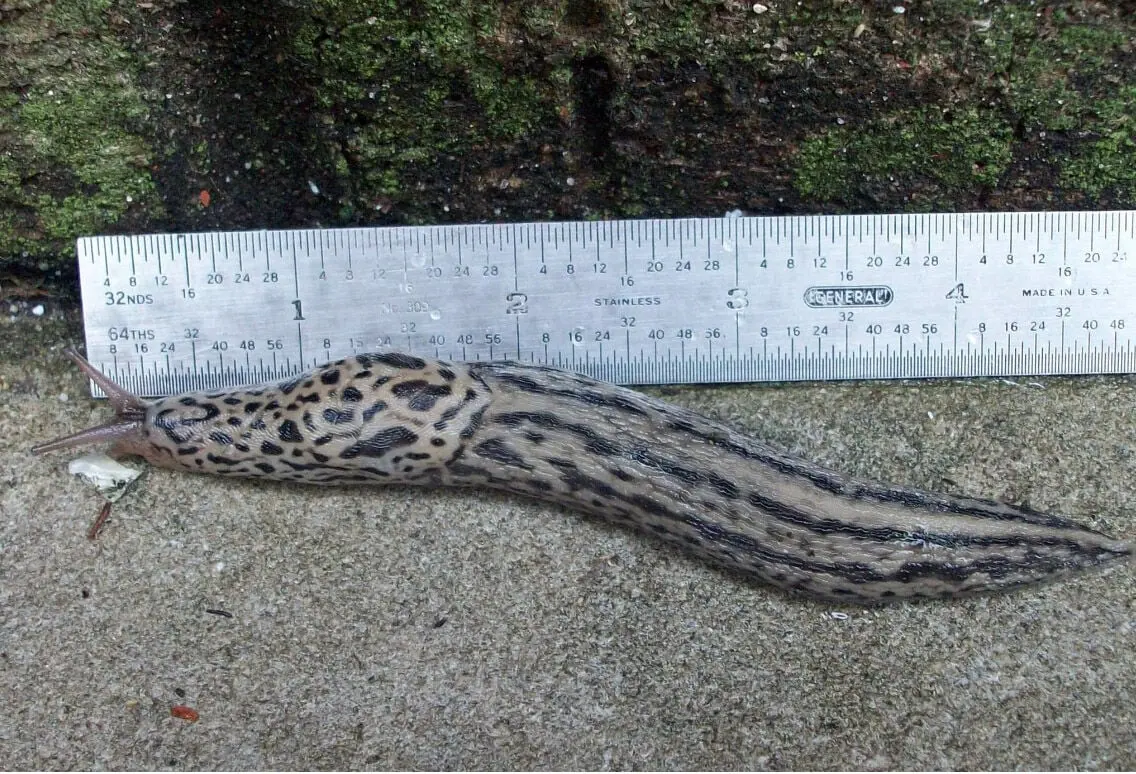
Measuring a slug is notoriously difficult because their bodies are constantly expanding and contracting. To get an accurate measurement, you must observe the animal while it is in its most relaxed, fully extended state. A slug that is frightened or disturbed will immediately retract its muscles, potentially reducing its length by more than half.
Follow these steps for a reliable measurement:
- Observe the slug in its natural environment without touching it.
- Wait for the animal to begin moving steadily across a flat surface.
- Place a ruler or a reference object near the path of the slug.
- Take a photograph from directly above to avoid perspective distortion.
- Compare the slug’s length to the reference object once it has passed.
Avoid picking up the slug to measure it, as the stress will cause it to ball up immediately. Using a non-invasive visual reference is the most effective way to document the size of these soft-bodied creatures without causing them harm or physical distress.
Common mistakes when identifying slug sizes?
One of the most frequent errors people make is confusing a slug's length with its mass. A slug might look thin and long when moving, but it can appear thick and heavy when stationary. Another mistake is assuming that all large slugs are the same species. Many people see a large, dark slug in their garden and assume it is an invasive species, when it may actually be a native variety that has simply found a perfect environment for growth.
Avoid these common pitfalls when observing slugs:
- Ignoring the difference between land slugs and sea slugs, which have vastly different size limits.
- Mistaking a retracted, bunched-up slug for a small species.
- Assuming that a long slime trail indicates the size of the slug that created it, as trails can be stretched over long distances.
- Failing to account for the "stretching" effect that occurs when a slug climbs over uneven surfaces.
By remaining patient and observing the slug over several minutes, you can gain a much more accurate understanding of its true size and species characteristics. Always remember that these animals are masters of disguise, using their flexible bodies to fit into tiny crevices during the day and expanding to explore the garden at night.
Key facts
- The largest land slug in the world is the Kerry slug (Geomalacus maculosus), which can reach lengths of up to 3 inches, while the Pacific banana slug (Ariolimax columbianus) can grow to nearly 10 inches.
- Most common garden slugs, such as the gray field slug, typically measure between 1 and 2 inches in length.
- Slugs are essentially snails that have evolved to lose their shells, allowing them to squeeze into tight crevices to hide from predators and heat.
- To estimate the size of a slug, observe it while it is moving; slugs can stretch their bodies significantly, often doubling their resting length.
- If you are managing slugs in a garden, avoid using salt, as it dehydrates the soil and harms beneficial insects alongside the slugs.
- A common mistake is misidentifying a slug's size because they appear larger when fully extended and much smaller when they contract into a protective ball.
The bottom line
While the size of a slug depends heavily on its specific species, most gardeners will encounter specimens between one and ten inches long. Factors like diet, humidity, and genetics dictate their growth, but they remain masters of contraction and expansion. Understanding that these creatures are highly adaptable helps in managing them effectively without resorting to harmful chemicals that disrupt your local ecosystem's natural balance.
People also ask
Do slugs grow larger in captivity than in the wild?
Generally, slugs do not grow larger in captivity. Their size is primarily determined by their species' genetics and the availability of high-quality food sources in their natural environment.
How fast do slugs grow to their adult size?
Most garden slugs reach maturity within a few months to a year, depending on the species and environmental temperature. Warmer, damp conditions often accelerate their growth rate by providing more active feeding periods.
Are giant slugs dangerous to humans?
Most giant slugs are not dangerous to humans if left alone. However, they can carry parasites like lungworms, so it is essential to wash your hands thoroughly after handling any slug.
Why do slugs vary so much in size?
Size variation is usually due to species differences, age, and nutritional intake. A well-fed slug in a resource-rich environment will consistently reach its maximum biological potential compared to one in a barren area.
How can I tell if a slug is fully grown?
You can often identify a mature slug by the presence of a developed genital pore or by its ability to reproduce. In many species, the mantle—the fleshy hump behind the head—becomes more pronounced in adults.
Do slugs shrink when the weather is dry?
Slugs do not shrink in the sense of losing mass, but they contract their bodies to conserve moisture. They may appear significantly smaller when they are dehydrated or trying to hide from the sun.
This answer was created with the help of AI research tools and reference sources. Spotted an error? Let us know — we correct mistakes quickly. See our editorial policy.