How big do lemurs get?
Short answer
Lemurs exhibit a massive range in size, spanning from the tiny Madame Berthe’s mouse lemur, weighing only 30 grams, to the indri, which can reach 9.5 kilograms. Because they are endemic to Madagascar, their physical diversity evolved to fill various ecological niches, resulting in significant differences in body mass and length.

On this page
How big are the smallest lemurs?
The smallest primates in the world are mouse lemurs, with the Madame Berthe’s mouse lemur (Microcebus berthae) holding the record for the tiniest body size. These nocturnal creatures weigh approximately 30 grams, which is roughly equivalent to a standard chicken egg. Their body length, excluding the tail, measures only about 9 centimeters, making them incredibly difficult to spot in the dense forests of Madagascar.
Despite their diminutive stature, these lemurs possess specialized adaptations that allow them to thrive in their environment. They rely on high-energy diets consisting of fruits, flowers, and insects to maintain their metabolism. Because they are so small, they are highly vulnerable to predators, which has influenced their behavior and habitat selection. Researchers often use specialized tracking equipment to study them, as their size makes them nearly invisible to the naked eye during nocturnal surveys.
How large do the biggest lemurs grow?
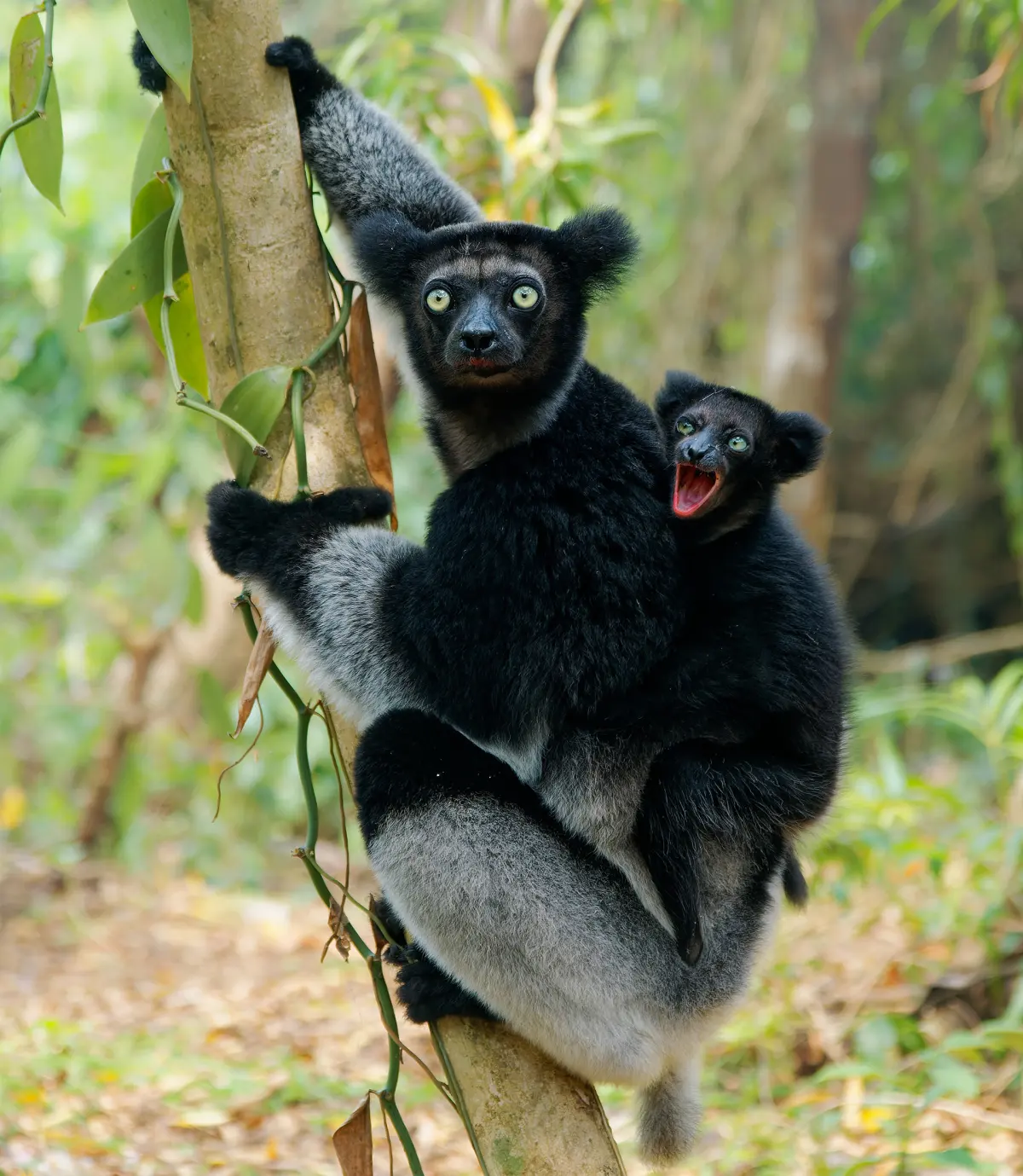
At the opposite end of the spectrum, the indri (Indri indri) stands as the largest living lemur species. An adult indri can weigh up to 9.5 kilograms and reach a height of nearly 70 centimeters when standing. Unlike many other lemur species, the indri has a very short, vestigial tail, which gives it a distinct, bear-like appearance. Their powerful hind legs allow them to leap significant distances between trees in the rainforest canopy.
The size of the indri is an evolutionary response to its specific diet and social structure. As leaf-eaters, they require a larger digestive tract to process fibrous plant material, which contributes to their substantial body mass. Their physical presence is further amplified by their famous, haunting vocalizations that can carry for several kilometers through the forest. When observing these animals, it is important to note:
- Indris are strictly arboreal and rarely descend to the forest floor.
- Their size makes them less agile than smaller lemurs but more powerful jumpers.
- Adult indris maintain stable family groups, which helps protect their territory.
Why does lemur size vary so much?
The extreme variation in lemur size is largely a result of adaptive radiation. When lemurs first arrived in Madagascar millions of years ago, they encountered few competitors, allowing them to evolve into diverse forms. Species that occupy different ecological niches have developed body sizes that optimize their survival. For instance, smaller lemurs often occupy the lower canopy and rely on stealth, while larger species like the sifaka or indri occupy the upper canopy and rely on strength.
Dietary habits also play a critical role in determining body size. Species that feed on high-quality, energy-dense foods like fruit can often afford to be smaller, while those that rely on low-quality foliage often require larger bodies to accommodate larger stomachs. This relationship between diet and morphology is a classic example of how environmental pressures shape animal evolution over time. Understanding these constraints helps scientists predict how climate change might affect the future distribution and survival of various lemur populations.
Common mistakes when identifying lemur sizes
One common mistake observers make is confusing tail length with total body size. Many lemur species, such as the ring-tailed lemur, possess tails that are significantly longer than their bodies. If you only look at the total length of the animal, you will likely overestimate its true mass. Always focus on the head-and-body length when trying to gauge the physical size of a primate, as the tail acts as a balance organ rather than a measure of bulk.
Another error involves assuming that all lemurs in a single genus are the same size. There are over 100 recognized species of lemurs, and even within the same genus, sizes can vary based on the specific island environment or local food availability. To accurately identify a lemur based on size, follow these steps:
- Observe the animal's posture and how it interacts with branches to estimate its weight.
- Check the tail-to-body ratio to avoid being misled by long, bushy appendages.
- Compare the animal to known local flora to establish a relative scale.
How to measure lemurs in the wild
Measuring lemurs in their natural habitat requires non-invasive techniques to ensure the animals remain undisturbed. Researchers typically use photogrammetry, which involves taking high-resolution photographs with a scale reference placed nearby. By analyzing these images later, scientists can calculate the animal's dimensions without the stress of capturing or handling them. This method is essential for monitoring the growth rates of young lemurs and tracking the health of adult populations.
If you are participating in a field study or simply observing wildlife, remember that safety and conservation are the top priorities. Never attempt to approach a lemur to gauge its size, as this can cause significant distress and disrupt their natural behaviors. Instead, utilize binoculars or long-range cameras to gather your data from a respectful distance. By following these ethical guidelines, you contribute to the ongoing efforts to protect these unique primates while gaining a better understanding of their physical diversity and biological requirements in the wild.
Key facts
- Lemurs range in size from the tiny Madame Berthe's mouse lemur, weighing about 30 grams, to the indri, which can weigh up to 9.5 kilograms.
- The indri is the largest living lemur, standing roughly 60 to 90 centimeters tall when measured from head to body.
- Most lemur species fall into the medium-size category, typically weighing between 1 and 4 kilograms.
- Size often correlates with diet; smaller lemurs usually eat insects and fruit, while larger species rely more on leaves.
- Avoid assuming all lemurs look like the ring-tailed lemur, as the group encompasses over 100 distinct species with vastly different physical builds.
- When observing lemurs in the wild, maintain a distance of at least 10 meters to prevent stress, as their small size makes them vulnerable to human disturbance.
The bottom line
Lemurs exhibit remarkable physical diversity, ranging from the world’s smallest primate, the mouse lemur, to the relatively large, vocal indri. While their sizes vary significantly based on their evolutionary niche and diet, most species are adapted for life in the trees of Madagascar. Understanding these size differences is essential for recognizing the unique biological requirements of these fascinating primates in their rapidly changing natural habitats.
People also ask
Are all lemurs small enough to be kept as pets?
No, lemurs are wild primates that require complex social structures and specific diets that cannot be replicated in a home. Keeping them as pets is illegal in many jurisdictions and is detrimental to their health and conservation.
Do male and female lemurs differ in size?
In most lemur species, males and females are roughly the same size. However, in some species, such as the ring-tailed lemur, females are slightly more dominant, though this social hierarchy does not necessarily result in significant physical size differences.
How long do lemurs live compared to their size?
Generally, larger lemur species like the indri or sifaka tend to have longer lifespans, often living 20 years or more in the wild. Smaller species, such as mouse lemurs, typically have shorter lifespans of around 5 to 10 years.
Does the lemur's tail length count toward its total size?
Yes, scientists often measure lemurs by both body length and tail length. For many species, the tail is longer than the body, serving as a vital tool for balance while leaping through trees.
Why are there so many different sizes of lemurs?
This diversity is a result of adaptive radiation, where lemurs evolved to fill various ecological niches on the island of Madagascar. Different sizes allow them to exploit specific food sources, such as tree sap, leaves, or insects, without competing with one another.
Can you identify a lemur species just by its size?
Size is a helpful indicator, but it is not enough for identification on its own. Experts use a combination of body size, tail length, fur coloration, and vocalizations to accurately distinguish between the many different species.
This answer was created with the help of AI research tools and reference sources. Spotted an error? Let us know — we correct mistakes quickly. See our editorial policy.