Does BC have daylight saving time?
Short answer
Yes, British Columbia observes daylight saving time, though with significant regional exceptions. Most of the province shifts clocks forward in March and back in November. However, the Peace River Regional District, the Regional District of East Kootenay, and parts of the Columbia-Shuswap region remain on Mountain Standard Time year-round.
On this page
Does all of British Columbia change their clocks?
While the majority of British Columbia follows the provincial standard of observing daylight saving time, the province is not entirely uniform. The majority of the population, including Metro Vancouver, Vancouver Island, and the Okanagan, participates in the biannual time shift. This synchronization aligns these areas with the Pacific Time Zone’s seasonal adjustments, which are designed to maximize daylight hours during the summer months.
However, specific regions have opted out of this practice entirely to maintain consistency with neighboring jurisdictions in Alberta or to suit local preferences. Residents living in these areas do not need to adjust their clocks, which can lead to confusion for travelers moving across provincial boundaries. It is essential to verify the specific time zone of your destination if you are traveling between regions like the Peace River or the East Kootenay.
When do the time changes happen?
The transition into and out of daylight saving time in British Columbia follows the North American schedule established by the federal government. In the spring, clocks are advanced by one hour, and in the autumn, they are set back to standard time. These shifts are intended to align waking hours more closely with the sun’s cycle, theoretically reducing electricity consumption for lighting.
- Spring Forward: On the second Sunday of March, clocks move from 2:00 a.m. to 3:00 a.m.
- Fall Back: On the first Sunday of November, clocks move from 2:00 a.m. to 1:00 a.m.
Most modern electronic devices, such as smartphones, computers, and smart televisions, handle these transitions automatically. However, manual clocks, kitchen appliances, and older vehicle dashboards will require your personal attention to ensure they reflect the correct local time after the shift occurs.
Why are there exceptions in British Columbia?
The regional exceptions found in British Columbia exist primarily due to economic and geographic integration with neighboring provinces. The Peace River Regional District, for example, maintains Mountain Standard Time year-round to stay aligned with the time zone used throughout most of Alberta. This facilitates smoother business operations, transportation logistics, and communication for residents who frequently interact with the Alberta economy.
Similarly, the East Kootenay region and parts of the Columbia-Shuswap region observe Mountain Standard Time to maintain proximity to the time zones used by their eastern neighbors. By choosing not to observe daylight saving time, these communities avoid the logistical friction that would arise if they were constantly shifting their clocks in and out of sync with the rest of the Rocky Mountain region. These decisions prioritize regional economic stability over provincial uniformity.
Common mistakes when dealing with time changes
Many residents experience frustration when they forget to update non-synchronized devices, leading to missed appointments or incorrect scheduling. One common mistake is assuming that all digital devices will update automatically, even when they are not connected to the internet or a cellular network. If a device lacks a network connection, it cannot receive the signal required to adjust its internal clock, meaning it will remain on the previous time.
- Failing to update manual wall clocks in homes and offices.
- Forgetting to reset timers on thermostats or irrigation systems.
- Miscalculating the time difference when traveling between the Lower Mainland and the Peace River region.
- Assuming that all businesses in a specific town will operate on the same time if that town sits near a border between time zones.
Always verify the time on your primary mobile device before relying on secondary clocks, especially if you are traveling to or from the interior regions of the province.
Will British Columbia ever stop changing clocks?
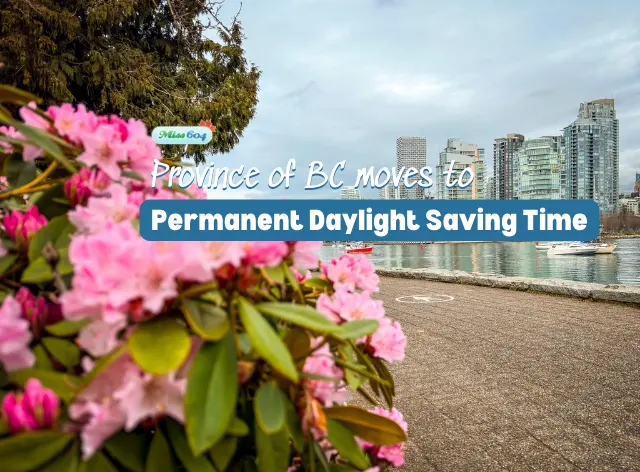
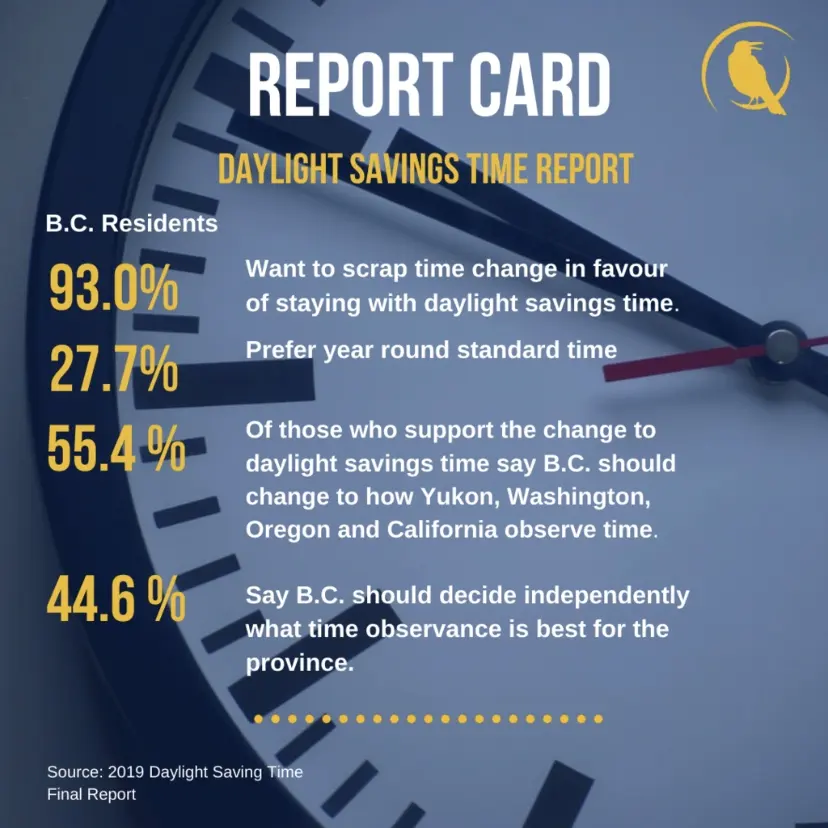
The provincial government has expressed a strong desire to end the practice of changing clocks twice a year. In 2019, the British Columbia government passed legislation to move the province to permanent daylight saving time. However, this change is contingent on the states of Washington, Oregon, and California also moving to permanent daylight saving time. This regional alignment is considered vital to ensure that the Pacific Northwest maintains a unified time zone for trade and travel.
Because the United States federal government has not yet passed the necessary legislation to allow states to adopt permanent daylight saving time, British Columbia remains in a holding pattern. Until the American West Coast jurisdictions receive federal authorization to make the switch, British Columbia will continue its current biannual schedule. Residents should remain prepared for the routine of moving their clocks forward and backward until a broader legislative consensus is reached across the entire Pacific coast region.
Key facts
- Most of British Columbia observes daylight saving time, moving clocks forward in spring and back in autumn.
- The province officially transitions to Pacific Daylight Time on the second Sunday in March.
- Clocks return to Pacific Standard Time on the first Sunday in November.
- Parts of the Peace River Regional District, including Dawson Creek and Fort St. John, remain on Mountain Standard Time year-round.
- Creston and the East Kootenay region also stay on Mountain Standard Time throughout the entire year.
- Legislation exists to end the practice, but the provincial government requires alignment with Washington, Oregon, and California before proceeding.
The bottom line
Most of British Columbia follows the practice of daylight saving time, shifting clocks twice a year to align with Pacific Time standards. While provincial legislation supports ending this cycle, the change remains contingent upon coordination with neighboring American states. Residents should remember to update manual clocks during the spring and autumn transitions, while keeping in mind that specific regions in the province remain on permanent standard time.
People also ask
Why do some parts of British Columbia not change their clocks?
Regions like the Peace River and parts of the Kootenays opted out of the biannual switch to maintain consistent daylight hours that align with their specific geographic and economic needs. These areas prefer the stability of a single time zone year-round.
When exactly do the clocks change in British Columbia?
Clocks shift at 2:00 a.m. local time on the designated Sundays in March and November. Most modern digital devices perform this adjustment automatically, but analog clocks require manual intervention.
What is the biggest mistake people make during the time change?
A common error is forgetting to adjust non-connected devices like wall clocks, oven timers, or older vehicle dashboards. This often leads to confusion regarding meeting times or store operating hours on the Sunday morning following the shift.
Is British Columbia planning to stop changing the time permanently?
The provincial government passed the Interpretation Amendment Act in 2019 to allow for permanent daylight saving time. However, implementation is paused until neighboring U.S. states pass similar federal legislation to ensure economic and travel synchronization.
How does the time change affect health and safety?
Research suggests that the sudden shift in sleep patterns can temporarily increase the risk of workplace accidents and traffic collisions. Experts recommend gradually adjusting your sleep schedule by 15 minutes each night in the days leading up to the change.
Does the time change affect international travel to or from British Columbia?
Yes, the timing of the shift in British Columbia may not align with the dates other countries switch their clocks. Travelers should verify local time zones in their destination to avoid missing flights or scheduled transportation.
This answer was created with the help of AI research tools and reference sources. Spotted an error? Let us know — we correct mistakes quickly. See our editorial policy.