Does art make you smarter?
Short answer
Engaging with art does not increase raw intelligence, but it significantly enhances cognitive flexibility, critical thinking, and emotional intelligence. While it does not raise IQ scores, regular exposure to artistic practices strengthens neural connections related to observation, empathy, and complex problem-solving, providing lasting benefits for mental agility and academic or professional performance.
On this page
How does art affect the brain?
When you observe or create art, your brain activates multiple regions simultaneously, including those responsible for visual processing, memory, and emotional regulation. Neuroscientific studies, such as those conducted by Semir Zeki in the early 2000s, demonstrate that viewing aesthetically pleasing works triggers the release of dopamine in the orbitofrontal cortex. This chemical response is similar to the sensation of falling in love, which encourages sustained focus and deep contemplation.
Beyond simple pleasure, the act of analyzing art forces the brain to engage in high-level synthesis. When you interpret a painting or sculpture, your mind must reconcile visual cues with abstract concepts, historical context, and personal experience. This process builds cognitive resilience. By practicing this "mental gymnastics," you improve your ability to handle ambiguity and synthesize disparate pieces of information, which are essential skills for navigating complex real-world challenges.
Does art improve academic performance?
Research consistently shows a positive correlation between arts education and academic achievement. A landmark 2006 report by the Arts Education Partnership analyzed decades of data, finding that students who participate in the arts score higher on standardized tests and demonstrate better reading comprehension. The discipline required to master an instrument or a painting technique translates into improved executive function and self-regulation in other subjects.
The benefits are particularly pronounced in areas requiring spatial-temporal reasoning. For example, learning to draw or play music helps students visualize complex structures, which is a foundational skill in mathematics and engineering. To maximize these academic advantages, consider these strategies:
- Enroll in structured studio classes rather than passive viewing.
- Practice active critique to articulate your observations verbally.
- Integrate art history with broader historical studies to provide context.
- Dedicate at least two hours per week to creative output.
Why does art build emotional intelligence?
Art acts as a bridge between internal emotional states and external reality. By engaging with diverse artistic perspectives, you are forced to step outside your own worldview and consider the experiences of others. This practice is a primary driver of empathy. When you analyze the intent behind a work of art, you are essentially practicing theory of mind, which is the ability to attribute mental states to yourself and others.
This emotional development is not just theoretical; it has practical applications in social settings. People who regularly consume art often report higher levels of social awareness and conflict resolution skills. To cultivate this emotional growth, try these steps:
- Visit a gallery and select one piece that evokes a strong, negative reaction.
- Spend five minutes identifying the specific elements that cause this discomfort.
- Research the artist's background to understand their intended message.
- Reflect on how your initial judgment changes once you understand the context.
Common mistakes when engaging with art
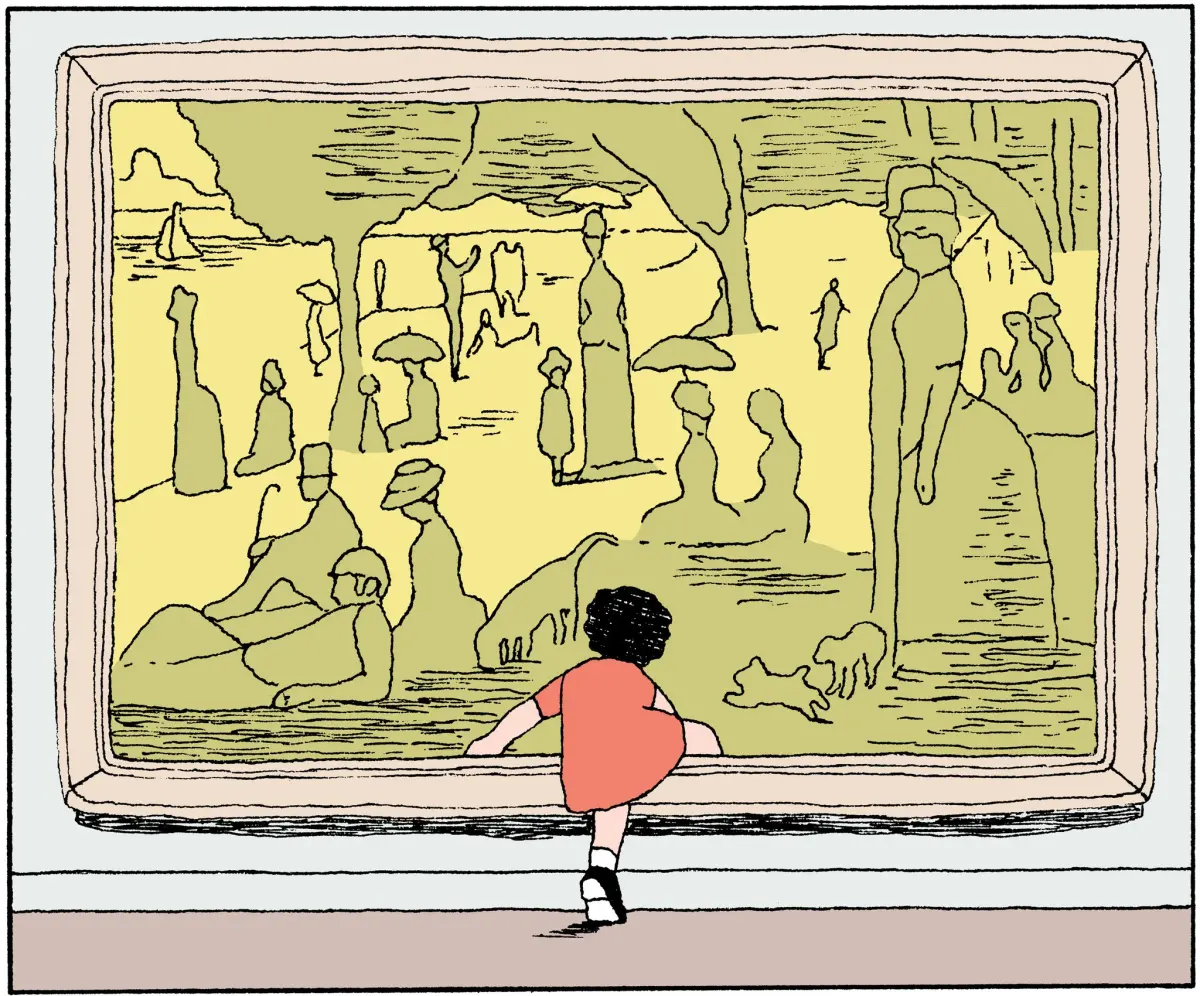
Many people approach art with the false expectation that they must "understand" it immediately or find a single correct meaning. This pressure often leads to frustration and premature disengagement. Art is rarely a puzzle with one solution; it is a dialogue. Treating a piece of art as a test of your intelligence rather than an invitation to explore will limit your cognitive gains and stifle your curiosity.
Another common mistake is passive consumption. Simply walking through a museum without pausing to reflect provides minimal mental stimulation. To avoid these pitfalls, prioritize depth over breadth. Spending thirty minutes with a single painting is significantly more beneficial for your brain than rushing through an entire exhibition in an hour. Focus on the sensory details—texture, light, and composition—to keep your mind actively engaged and prevent the mental fatigue that comes from superficial scanning.
How to use art to boost mental agility
To harness the cognitive benefits of art in your daily life, you must treat it as a deliberate practice rather than a leisure activity. You do not need to be a professional artist to reap the rewards. The goal is to challenge your brain to see patterns, identify nuances, and express complex ideas through non-verbal mediums. Consistency is the most important factor in developing these neural pathways.
Start by integrating small, high-impact habits into your routine. You might keep a sketchbook for daily observations, attend local exhibitions, or join a discussion group focused on art analysis. By consistently exposing yourself to new styles and mediums, you keep your brain in a state of "positive stress," which encourages neuroplasticity. As you continue to challenge your perception and refine your ability to interpret visual information, you will find that your capacity for critical thinking and creative problem-solving grows stronger over time.
Key facts
- Engaging with art increases neuroplasticity, the brain's ability to form new neural connections throughout life.
- Studies show that students who take music lessons perform 15% better on standardized tests in mathematics.
- Viewing complex visual art activates the brain's default mode network, which is linked to creative problem-solving.
- Learning to draw improves spatial reasoning skills, which are essential for fields like engineering and architecture.
- Practicing art reduces cortisol levels by up to 25%, allowing the brain to focus more effectively on cognitive tasks.
- To maximize cognitive benefits, focus on the process of creation rather than the aesthetic quality of the final product.
The bottom line
Engaging with art does not grant instant intelligence, but it acts as a powerful workout for the brain. By fostering neuroplasticity, improving spatial awareness, and lowering stress, creative pursuits sharpen cognitive function and problem-solving abilities. Whether you are playing an instrument or sketching, the process of creating strengthens neural pathways. Prioritize consistent practice over perfection to unlock these lasting mental benefits and enhance your overall cognitive health.
People also ask
Does listening to classical music improve intelligence?
The "Mozart Effect" is often misunderstood; listening to music temporarily improves spatial-temporal tasks but does not permanently increase IQ. It functions more as a mood and arousal booster that helps the brain focus.
Is playing an instrument better for the brain than painting?
Both offer unique benefits, but playing an instrument engages more areas of the brain simultaneously, including motor, auditory, and visual cortices. Painting is superior for developing fine motor control and visual-spatial observation.
How much time should I spend on art to see cognitive changes?
Research suggests that even 30 to 45 minutes of creative activity twice a week can yield measurable improvements in stress reduction and focus. Consistency is more important than the total duration of a single session.
Can art help prevent cognitive decline in older adults?
Yes, participating in arts programs has been shown to improve memory and executive function in seniors. It encourages social engagement and cognitive stimulation, both of which are protective factors against neurodegeneration.
Does looking at art have the same effect as making it?
While both are beneficial, creating art requires active participation and decision-making, which stimulates more neural pathways. Viewing art is excellent for emotional regulation and empathy, but creation is better for cognitive development.
What is the best way to start if I have no artistic experience?
Start with low-pressure activities like adult coloring books, simple sketching, or guided music apps. The goal is to challenge your brain with new tasks rather than achieving professional-level results immediately.
This answer was created with the help of AI research tools and reference sources. Spotted an error? Let us know — we correct mistakes quickly. See our editorial policy.