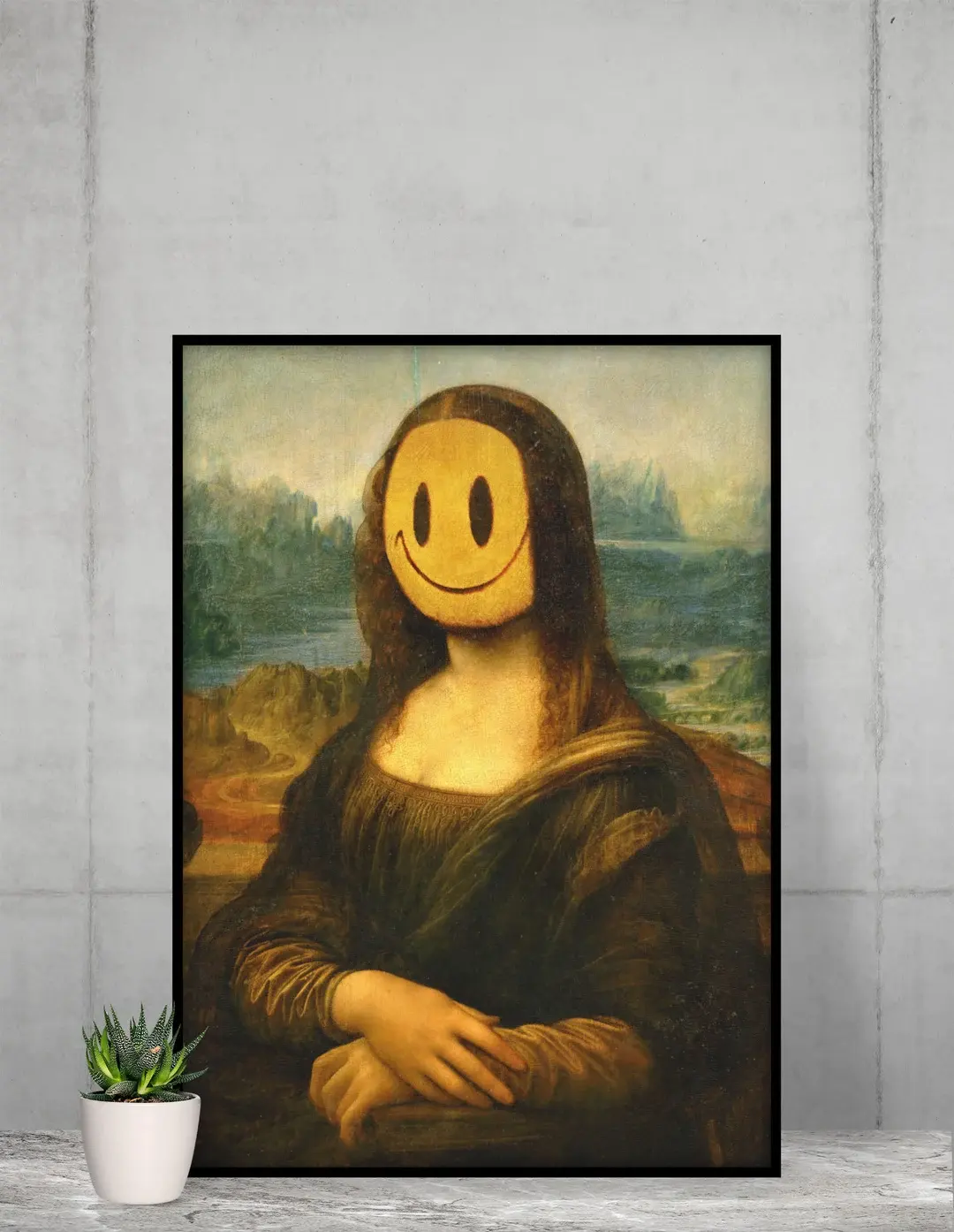
Why is the Mona Lisa smiling?
Short answer
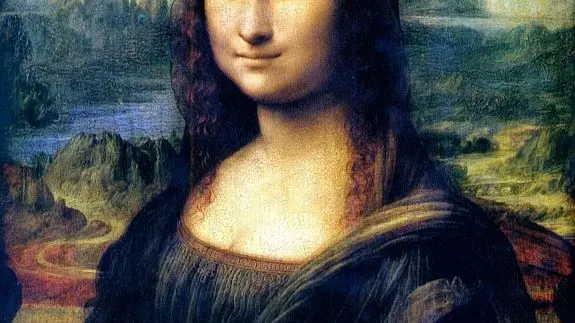
The Mona Lisa appears to smile because of Leonardo da Vinci’s mastery of sfumato, a technique involving subtle gradations of light and shadow. By blurring the corners of the subject's mouth and eyes, he created an optical illusion that makes her expression shift depending on where the viewer focuses their gaze.
On this page
Why does the Mona Lisa's expression change?
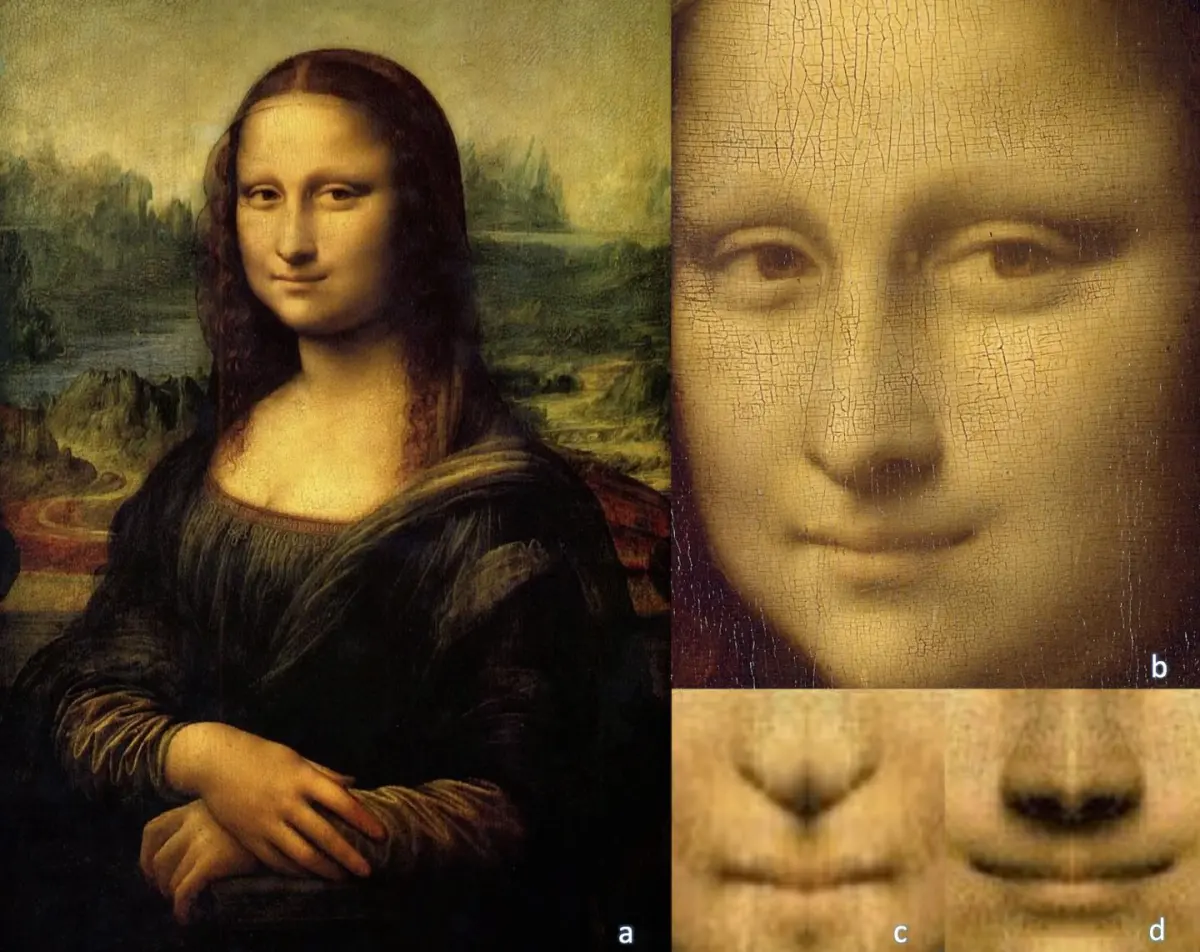
The elusive nature of the smile is primarily a result of Leonardo’s application of sfumato, which translates literally from Italian as "vanished" or "evaporated." Rather than using harsh outlines to define the subject’s features, Leonardo applied thin, translucent layers of oil paint to create soft transitions between colors and tones. This technique obscures the precise corners of Lisa Gherardini’s mouth, leaving the exact shape of her lips open to interpretation.
Because the human eye processes peripheral vision differently than central vision, the expression appears to fluctuate. When a viewer looks directly at the lips, the shadows are less pronounced, making the smile seem to fade. However, when the viewer shifts their focus to other parts of the face, such as the eyes or the landscape, the peripheral vision picks up the darker shading around the mouth. This creates the impression of a more pronounced, genuine smile that seems to appear and disappear in real time.
How do optical illusions affect the painting?
The perception of the smile is a classic example of low-spatial-frequency processing in the human visual system. Leonardo understood that the human eye is better at detecting fine details in high-contrast areas, but it struggles with subtle gradients. By intentionally painting the mouth with low-contrast, blurred edges, he ensured that the brain would "fill in" the missing information based on the viewer’s perspective.
This phenomenon is enhanced by the specific composition of the portrait. The painting relies on several key visual elements to trick the brain:
- The lack of eyebrows and eyelashes, which were likely lost to historical cleaning or were never painted, forces the eye toward the mouth.
- The high-contrast lighting on the cheekbones draws attention away from the lips, activating the peripheral visual effect.
- The atmospheric perspective of the background creates a sense of depth that keeps the viewer’s eyes moving across the canvas.
What is the history of the Mona Lisa?
Leonardo da Vinci began painting the portrait in Florence around 1503. It is widely believed to be a commission for Francesco del Giocondo, a wealthy silk merchant who wanted to celebrate the birth of their second son or the purchase of a new home. Leonardo worked on the panel intermittently for years, reportedly bringing it with him to France when he entered the service of King Francis I in 1516.
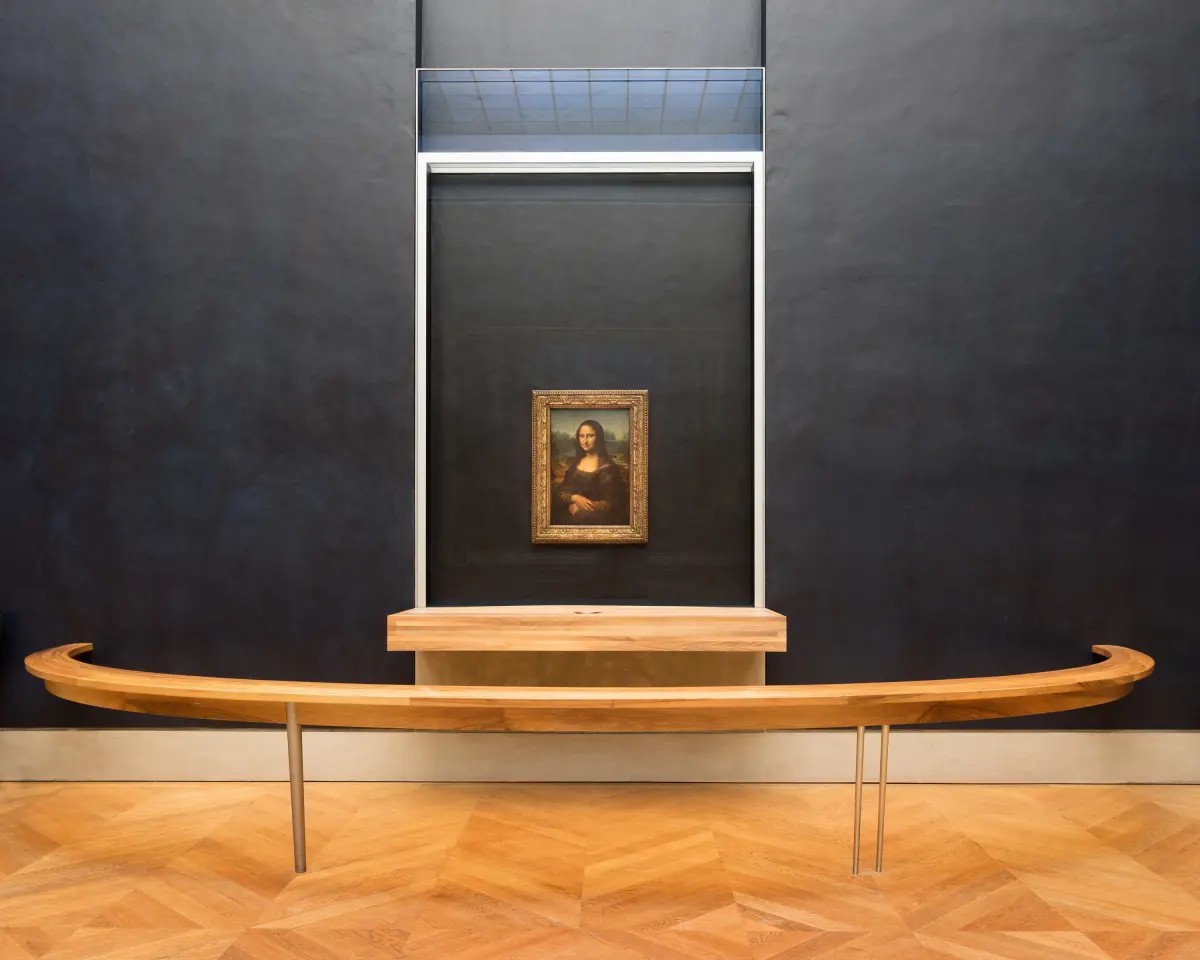
The painting remained in the French royal collection for centuries before eventually finding a permanent home in the Louvre Museum in Paris. Throughout the 19th and 20th centuries, its fame grew exponentially, fueled by its mysterious aesthetic and a high-profile theft in 1911. Today, it is protected behind bulletproof glass, which can sometimes distort the viewer's perception of the subtle paint layers. Despite the protective barriers, the fundamental technique of sfumato remains as effective today as it was five centuries ago.
How to view the Mona Lisa effectively?
To experience the shifting smile for yourself, you must manage your focus and distance from the work. Many visitors make the mistake of standing too close to the glass, which limits the ability to perceive the subtle transitions across the entire face. Instead, follow these steps to observe the optical effect:
- Stand at a distance of approximately six to eight feet from the painting to allow your eyes to take in the full composition.
- Focus your gaze directly on the subject's eyes for ten seconds to allow your peripheral vision to stabilize.
- Shift your gaze suddenly to the background landscape or the subject's hands, and observe how the mouth appears to curve upward.
- Avoid looking directly at the corners of the mouth for an extended period, as this will cause the sfumato effect to vanish.
Common mistakes when analyzing the smile
A frequent error in interpreting the painting is the assumption that the smile is a static, intentional "pose" captured by the artist. In reality, Leonardo was a scientist as much as an artist, and he spent years studying human anatomy, including the muscles of the face. He understood that a real smile involves subtle movements that are rarely symmetrical or fixed. By avoiding a rigid, defined grin, he captured the transitional moment of a human expression rather than a frozen mask.
Another mistake is over-analyzing the subject's identity to explain the expression. While historians have debated whether the woman is Lisa Gherardini, a self-portrait in disguise, or an idealized figure, the mystery of the smile is a technical achievement rather than a psychological one. Leonardo’s genius was not in painting a specific emotion, but in creating a technical framework that allows every viewer to project their own interpretation onto the canvas. The smile remains a masterpiece of ambiguity because it was designed to be incomplete.
Key facts
- Leonardo da Vinci began painting the Mona Lisa around 1503 and likely continued refining it until 1517.
- The smile appears to change based on where the viewer focuses due to the use of sfumato, a technique involving subtle gradations of light and shadow.
- Research suggests the expression is perceived as happy when the viewer looks at the eyes, but shifts to neutral or somber when looking directly at the mouth.
- The painting measures approximately 30 inches by 21 inches and is executed in oil on a poplar wood panel.
- Leonardo utilized low-spatial frequencies in the painting, which causes the smile to vanish when viewed with high-acuity central vision.
- To replicate this effect in art, avoid hard outlines and instead use soft, blurry transitions to blend skin tones into the surrounding shadows.
The bottom line
The Mona Lisa’s elusive smile is a deliberate optical illusion created through Leonardo da Vinci’s mastery of sfumato. By blurring the corners of the mouth and eyes, he ensured that the expression remains ambiguous and dynamic. The viewer’s own gaze dictates the perceived emotion, turning the portrait into an interactive experience. Ultimately, the smile is a technical triumph of light, shadow, and human perception.
People also ask
Where is the Mona Lisa currently located?
The painting is permanently housed in the Louvre Museum in Paris, France. It is protected behind bulletproof glass within the Salle des États.
Who is the woman depicted in the portrait?
Most historians identify the subject as Lisa Gherardini, the wife of a wealthy Florentine silk merchant named Francesco del Giocondo. This is why the painting is also known as La Gioconda.
Why does the Mona Lisa lack visible eyebrows?
High-resolution scans have revealed that Leonardo originally painted eyebrows and eyelashes. They likely faded over time due to centuries of over-cleaning and chemical degradation.
How much is the Mona Lisa worth?
While the painting is considered priceless, it was assessed for insurance purposes in 1962 at $100 million. Adjusted for inflation, that value would exceed $1 billion today.
Read the full answer →Has the painting ever been stolen?
Yes, an Italian handyman named Vincenzo Peruggia stole the portrait from the Louvre in 1911. It remained missing for two years before he was caught attempting to sell it in Florence.
Why is the background landscape so blurry?
Leonardo used atmospheric perspective, a technique that mimics how the air makes distant objects appear cooler and less distinct. This creates a sense of depth and mystery behind the sitter.
This answer was created with the help of AI research tools and reference sources. Spotted an error? Let us know — we correct mistakes quickly. See our editorial policy.