What techniques did Edward Hopper use?
Short answer
Edward Hopper utilized dramatic light and shadow, simplified architectural forms, and a deliberate sense of isolation to define his realist style. He mastered the use of long, horizontal compositions, muted color palettes, and cinematic framing to evoke psychological tension, often depicting solitary figures within stark, urban, or desolate American landscapes.
On this page
How did Edward Hopper use light and shadow?
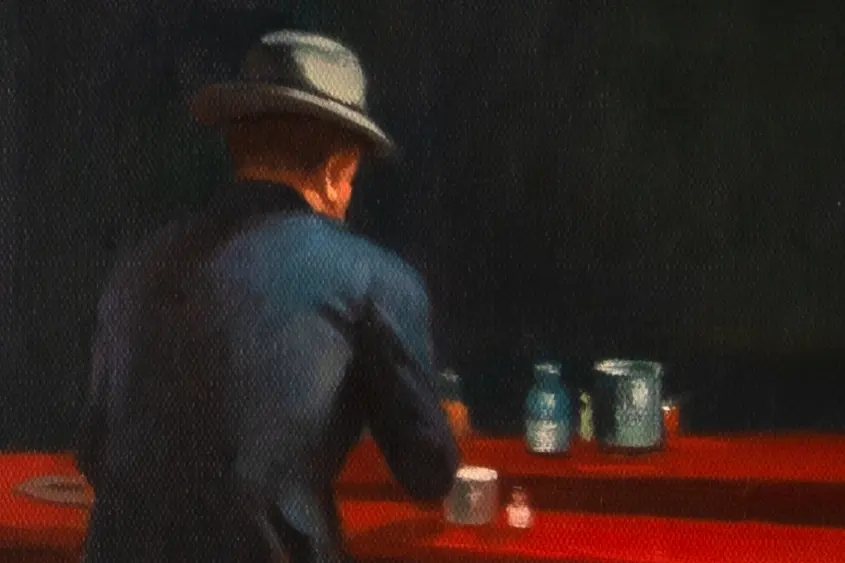
Hopper’s most recognizable technique is his masterful manipulation of light, which he used to create mood rather than merely illuminate a scene. He often employed a strong, directional light source—frequently sunlight streaming through a large window—to cast long, sharp-edged shadows across interior spaces. This high-contrast approach, reminiscent of film noir, serves to isolate his subjects and emphasize the emptiness of the surrounding environment. By balancing bright, flat areas of color with deep, dark recesses, he directed the viewer’s eye toward specific focal points, such as a solitary figure or a single object.
To replicate this effect in your own work, consider these technical steps:
- Identify a single, clear light source to ensure shadows remain consistent and logical.
- Use hard edges for shadows to heighten the sense of drama and structural clarity.
- Limit your color palette to allow the interplay of light and dark to carry the emotional weight of the image.
- Avoid over-blending your shadows, as Hopper preferred distinct, solid blocks of color that emphasize the geometry of the room.
What composition techniques did Edward Hopper use?
Hopper frequently utilized cinematic framing, often cropping his scenes to make them feel like a momentary glimpse into a larger narrative. He favored wide, horizontal canvases that allowed him to stretch architectural elements across the frame, creating a sense of distance between the viewer and the subject. By placing his figures off-center or behind glass windows, he established a voyeuristic perspective that heightens the feeling of detachment. This compositional strategy forces the viewer to wonder about the backstory of the scene, as the figures appear trapped in their own private, silent worlds.
When composing a scene in the style of Hopper, follow these guidelines:
- Establish a wide, stable base for your architecture to ground the scene.
- Use windows, doorways, or walls as "frames within frames" to isolate your subjects.
- Keep the foreground relatively clear to invite the viewer into the space while maintaining a psychological barrier.
- Experiment with negative space, allowing empty walls or floors to occupy significant portions of the canvas to emphasize silence and solitude.
Why did Edward Hopper use muted colors?
The color palette in Hopper’s work is intentionally restrained, relying on earthy tones, muted greens, ochres, and cool blues to convey a sense of melancholy. He rarely used vibrant or jarring colors, preferring shades that feel grounded in reality and period-appropriate for the mid-20th century. This choice prevents the work from feeling overly decorative, ensuring the focus remains on the psychological state of the subjects. By desaturating his colors, he successfully captured the dusty, sun-bleached atmosphere of urban storefronts and rural houses alike.
A common mistake is attempting to make the scene look too "clean" or bright. Hopper’s surfaces often show the wear of time, and his colors reflect this through subtle variations in tone. When mixing your paints, focus on creating harmonious, desaturated hues that feel lived-in. Avoid using pure, high-chroma colors straight from the tube, as they will disrupt the quiet, contemplative atmosphere that is essential to the Hopper aesthetic. Instead, mix your primary colors with complementary shades or grays to achieve the muted, somber quality characteristic of his most famous paintings.
How to paint architecture like Edward Hopper?
Hopper treated buildings as characters in his narratives, often simplifying their forms into clean, geometric shapes. He stripped away excessive ornamentation, focusing instead on the essential structural lines of American vernacular architecture, such as Victorian houses or urban diners. By emphasizing the verticality of windows and the horizontality of rooflines, he created a rhythm that mirrors the stillness of his figures. His architectural renderings are never cluttered; every wall and corner serves a purpose in defining the spatial boundaries of the scene.
To capture this architectural precision, focus on the following:
- Simplify complex structures into basic geometric prisms to maintain a sense of order.
- Pay close attention to the perspective lines, ensuring they lead the viewer’s gaze toward the focal point.
- Use flat washes of color to represent large surfaces, which emphasizes the solidity of the building.
- Ensure that the scale of the architecture feels slightly imposing relative to the human figures, which reinforces the theme of individual insignificance within the modern, built environment.
Common mistakes when painting in Hopper’s style?
A frequent error when attempting to emulate Hopper is the inclusion of too much detail or narrative clutter. Hopper’s strength lay in his ability to leave things unsaid; he provided just enough information to suggest a story without dictating the outcome. Adding too many props or overly expressive facial features on your subjects can ruin the ambiguity that makes his work so powerful. His figures are intentionally stoic, often looking away from the viewer or into the distance, which prevents the audience from forming an immediate, easy connection.
Another mistake is failing to account for the passage of time in the lighting. Hopper’s light often suggests a specific time of day, such as the harsh glare of noon or the long, dying light of late afternoon. If your lighting is inconsistent or lacks a clear direction, the scene will lose its cinematic tension. Always ensure your shadows align with a single, believable light source to maintain the realism of the space. By focusing on the interplay of light, shadow, and architectural simplicity, you can effectively capture the profound sense of stillness and introspection that defined Edward Hopper’s career.
Key facts
- Use a limited, muted color palette to create a sense of stillness and emotional detachment.
- Utilize dramatic, cinematic lighting to cast long, sharp shadows that emphasize architectural geometry.
- Simplify architectural forms into large, flat planes to focus the viewer's attention on the subject's isolation.
- Place subjects in transitional spaces like diners, hotel rooms, or offices to suggest a narrative without a clear resolution.
- Incorporate large, transparent glass windows to create a voyeuristic perspective that separates the viewer from the scene.
- Avoid cluttered backgrounds; keep compositions sparse to ensure every object carries significant psychological weight.
The bottom line
Edward Hopper’s mastery lies in his ability to transform mundane urban settings into profound psychological studies. By combining geometric precision, stark lighting, and a deliberate lack of narrative closure, he invites viewers to project their own emotions onto his solitary subjects. His work remains a timeless lesson in how simplicity and spatial tension can evoke deep feelings of introspection and universal human loneliness.
People also ask
Did Edward Hopper use live models for his paintings?
Yes, Hopper frequently used his wife, Josephine Nivison, as a model for almost all the female figures in his works. He also sketched himself to understand anatomy and poses when a model was not available.
How did Hopper achieve such realistic lighting effects?
Hopper studied the way sunlight interacts with interior spaces, often painting during specific times of day to capture the exact angle of light. He used thin glazes of oil paint to build up luminosity and depth on walls and floors.
What was the primary medium used by Edward Hopper?
While he was a prolific oil painter, Hopper was also a master of watercolor and printmaking. He often used watercolors for his landscapes and maritime scenes during his summer trips to Maine and Massachusetts.
Why are there so few people in Hopper's paintings?
The limited number of figures is a deliberate stylistic choice to emphasize themes of urban alienation and solitude. By placing one or two people in a vast, empty space, he highlights the individual's detachment from the modern world.
How did Hopper influence modern cinema?
Directors like Alfred Hitchcock and Martin Scorsese were heavily influenced by Hopper's cinematic framing and use of light. His ability to create tension through composition and environment directly informed the aesthetic of film noir.
Did Hopper belong to a specific art movement?
Hopper is generally associated with American Realism, though he resisted being labeled by any specific school. He focused on capturing the authentic experience of American life rather than adhering to the abstract trends of his era.
This answer was created with the help of AI research tools and reference sources. Spotted an error? Let us know — we correct mistakes quickly. See our editorial policy.