What is reflection of light?
Short answer
Reflection of light is the process where light waves strike a surface and bounce back instead of being absorbed or transmitted. This phenomenon occurs when light encounters an interface between two different media, such as air and a mirror. It is the fundamental mechanism that allows humans to perceive visible objects.

On this page
Why reflection of light happens
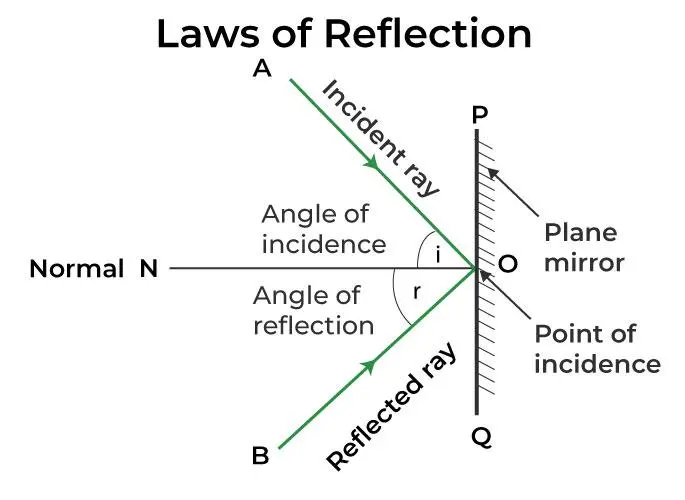
Reflection occurs because light travels as an electromagnetic wave. When these waves hit a boundary, such as a polished metal or a glass surface, the atoms in the material interact with the light's oscillating electric field. The electrons in the surface material absorb the energy and immediately re-emit it, sending the light back into the original medium. This behavior is governed by the law of reflection, which states that the angle of incidence always equals the angle of reflection.
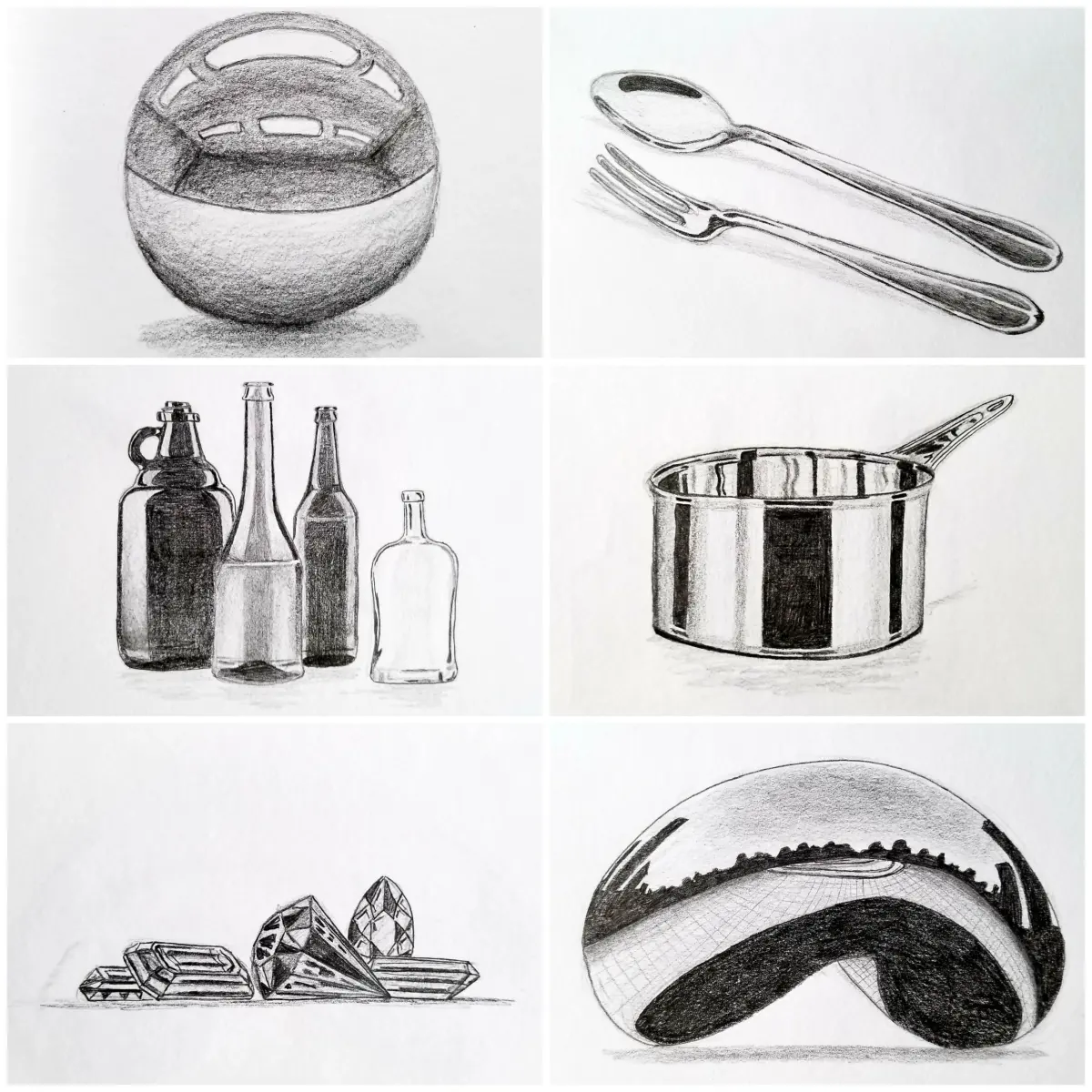
The nature of this reflection depends heavily on the surface texture. If the surface is perfectly smooth, like a high-quality silvered mirror, the light reflects in a single, predictable direction, creating a clear image. This is known as specular reflection. Conversely, if the surface is rough or uneven, the light rays scatter in many different directions. This is called diffuse reflection, which allows us to see non-shiny objects from various angles without the glare of a direct light source.
How light reflection works in mirrors
Mirrors are specifically engineered to maximize specular reflection. Most modern mirrors consist of a thin layer of silver or aluminum deposited onto the back of a sheet of glass. The glass serves primarily as a protective, transparent layer that keeps the metal coating from tarnishing or scratching. Because the metal surface is polished to a microscopic level of smoothness, it reflects nearly all incident light with minimal absorption.
When you look into a flat mirror, you see a virtual image that appears to be located behind the surface. This happens because your brain assumes light travels in a straight line. The light rays reflect off the mirror and enter your eyes, but your brain traces them backward to a point behind the glass. This simple geometry creates the illusion of depth, resulting in an image that is laterally inverted but otherwise identical in scale to the object being reflected.
- Light travels from an object to the mirror surface.
- The light strikes the mirror at a specific angle of incidence.
- The light reflects off the mirror at an identical angle of reflection.
- The human eye perceives the light as originating from behind the mirror.
Best ways to observe light reflection
You can observe the principles of reflection using simple household items. A common experiment involves using a laser pointer and a small hand mirror in a darkened room. By shining the laser at the mirror, you can clearly see the beam bounce off the surface and hit a wall. Adjusting the angle of the mirror will demonstrate how the reflected beam moves in accordance with the law of reflection.
Another way to visualize reflection is to look at the surface of a still lake or a polished floor. These surfaces act as mirrors because they are flat and smooth enough to maintain the orientation of incoming light rays. You will notice that the reflection is clearest when the light source is bright and the surface is undisturbed. If you create ripples in the water, the reflection becomes distorted because the light rays are being reflected at many different, changing angles.
- Use a flat, clean mirror for the sharpest images.
- Ensure the room is dark to see the path of light beams clearly.
- Use a white screen or wall to catch the reflected light.
- Avoid looking directly into high-powered laser beams.
Common mistakes when studying reflection
A frequent error is confusing reflection with refraction. While reflection involves light bouncing off a surface, refraction occurs when light passes through a transparent medium, such as water or glass, and changes speed and direction. Students often assume that all light hitting a surface is reflected, but in reality, some light is always absorbed as heat or transmitted through the material. The amount of reflection depends on the material's refractive index and its transparency.
Another mistake is believing that mirrors flip images vertically. Mirrors actually reverse the image along the axis perpendicular to the mirror surface, which is often perceived as a left-to-right reversal. If you hold a piece of text up to a mirror, the letters appear reversed horizontally, but the top of the letters remains at the top. Understanding this spatial orientation is critical for fields like optics, photography, and the design of periscopes or telescopes.
How to use reflection in everyday life
Reflection is a vital component of modern technology and safety. Architects use reflective surfaces to redirect natural sunlight into deep parts of buildings, reducing the need for artificial lighting. Similarly, road signs and safety vests are coated with retroreflective materials. These surfaces are designed to bounce light back directly toward the source—such as a car's headlights—making the object appear much brighter to the driver during nighttime conditions.
In the medical field, doctors use reflection to perform minimally invasive procedures. Endoscopes utilize fiber-optic cables that rely on total internal reflection to transmit light and images from inside the human body to an external monitor. By mastering the physics of how light bounces, engineers have created tools that allow us to see around corners, improve communication speeds, and enhance human vision. Understanding these principles allows for the continued innovation of optical devices used in everything from smartphones to deep-space telescopes.
Key facts
- Light travels in straight lines until it strikes a surface and bounces off, a process known as reflection.
- The law of reflection states that the angle of incidence always equals the angle of reflection relative to a perpendicular line called the normal.
- Specular reflection occurs on smooth surfaces like mirrors, creating clear images, while diffuse reflection happens on rough surfaces like paper.
- Visible light consists of electromagnetic waves with wavelengths ranging approximately from 380 to 750 nanometers.
- To see an object, light must reflect off that object and travel into your eyes to stimulate the retina.
- When positioning a mirror, remember that the image appears to be located behind the glass at the same distance the object is in front of it.
The bottom line
Reflection is the fundamental physical process where light waves bounce off surfaces rather than passing through them. By understanding the law of reflection and the difference between specular and diffuse surfaces, you can predict how light behaves in your environment. Whether you are adjusting a mirror or designing a workspace, controlling these light paths is essential for clarity, safety, and effective visual perception in everyday life.
People also ask
Why do mirrors reverse images left to right?
Mirrors do not actually swap left and right; they reverse the image along the axis perpendicular to the mirror surface. Because we mentally rotate ourselves to face the reflection, it creates the illusion of a horizontal flip.
What is the difference between reflection and refraction?
Reflection is the bouncing of light off a surface, while refraction is the bending of light as it passes through different materials. Reflection keeps light in the same medium, whereas refraction changes the light's speed and direction.
How do non-reflective coatings work on glasses?
These coatings use thin-film interference to cancel out reflected light waves. By layering materials with specific thicknesses, the reflected waves interfere destructively, allowing more light to pass through the lens.
Why can we see our reflection in water but not in concrete?
Water has a smooth surface that allows for specular reflection, which preserves the order of light rays to form an image. Concrete has a rough, irregular surface that scatters light in many directions, resulting in diffuse reflection.
What is total internal reflection?
This occurs when light traveling through a dense medium hits a boundary at a shallow angle and is reflected entirely back into the medium. This principle is the foundation for fiber-optic communication technology.
Can light be reflected by air?
Yes, temperature differences in the air can cause light to bend or reflect, creating phenomena like mirages. When hot air near the ground meets cooler air above, light rays reflect off the boundary, making the sky appear on the ground.
This answer was created with the help of AI research tools and reference sources. Spotted an error? Let us know — we correct mistakes quickly. See our editorial policy.