What is radial balance in art?
Short answer
Radial balance is a design principle where visual elements radiate outward from a central point. This arrangement creates a circular or sunburst effect, drawing the viewer’s eye toward the middle of the composition. It conveys a sense of harmony, focus, and movement, commonly appearing in nature, architecture, and decorative arts throughout history.
On this page
What is radial balance in art?
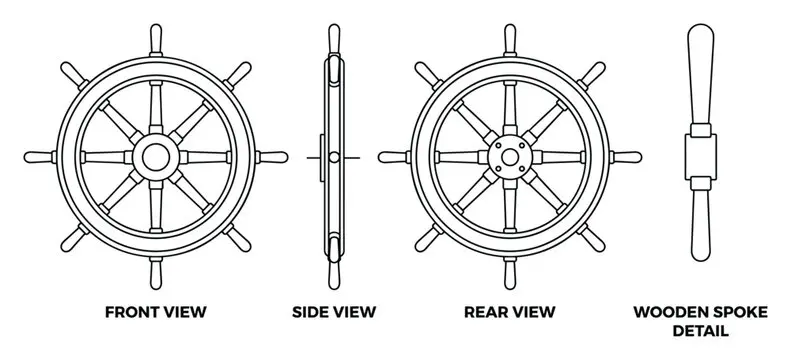
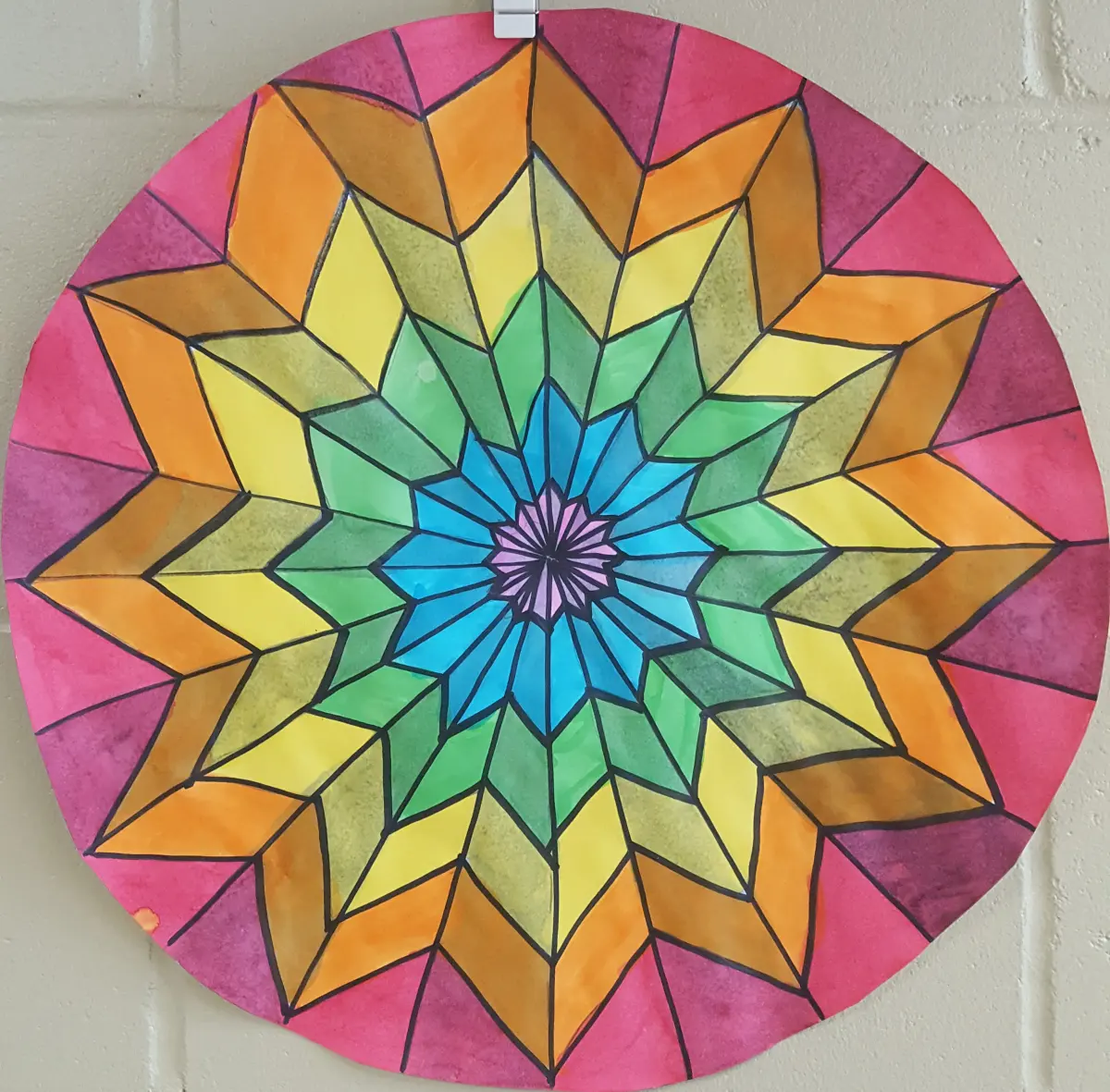
Radial balance is a specific type of symmetry where the visual weight of an artwork is distributed evenly around a central focal point. Unlike bilateral symmetry, which mirrors elements across a single axis, radial balance relies on a rotation around a core. Imagine a bicycle wheel or a blooming flower; the components extend from the center toward the outer edges, maintaining a consistent equilibrium. This technique is frequently used to establish a strong sense of unity and stability within a piece.
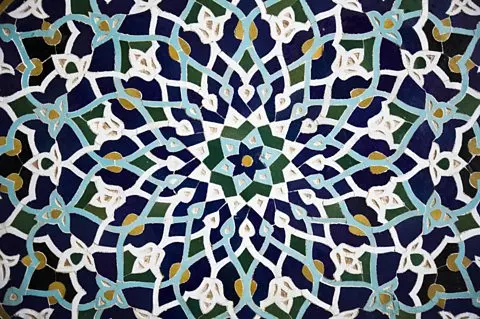
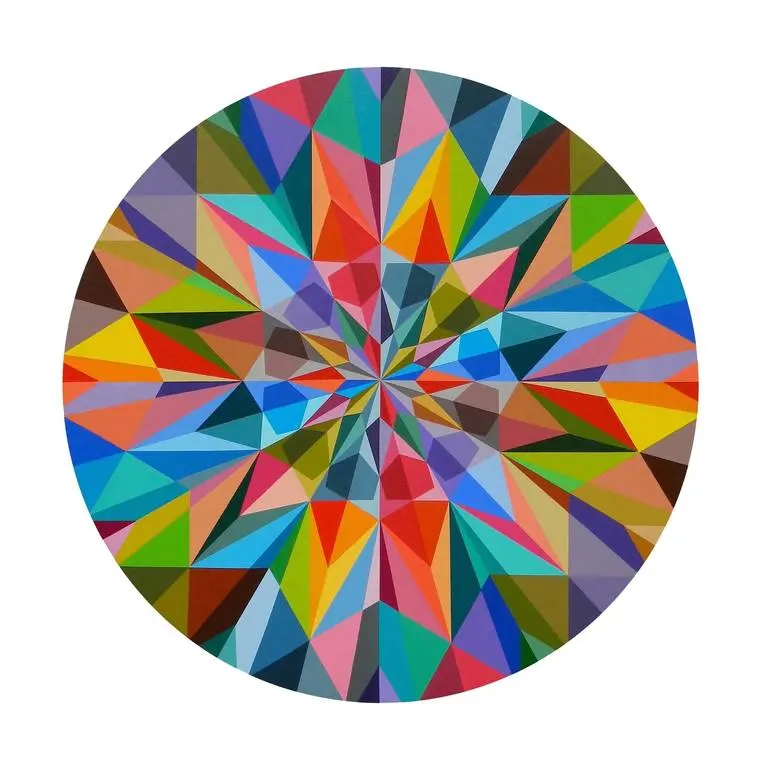
Artists employ this method to guide the viewer’s gaze directly to the center of the frame. By repeating shapes, colors, or textures in a circular pattern, the creator ensures that the eye travels around the composition before returning to the core. This creates a dynamic yet organized visual experience. Whether found in the intricate mandalas of Eastern traditions or the rose windows of Gothic cathedrals, radial balance serves as a fundamental tool for organizing complex visual information.
Where is radial balance found in nature?
Nature provides the most prominent examples of radial balance, serving as a primary inspiration for artists and designers. Biological structures often utilize this arrangement to maximize efficiency, such as the way petals are organized around the center of a daisy or the seeds are packed within a sunflower. These natural patterns are not merely aesthetic; they represent evolutionary success in growth and light absorption.
When observing the natural world, you can identify radial symmetry in several distinct areas:
- Marine life, such as starfish, sea anemones, and jellyfish.
- Botanical structures, including pinecones, tree rings, and citrus fruit slices.
- Meteorological phenomena, like the swirling patterns of hurricanes or the crystalline structure of snowflakes.
By studying these organic forms, artists learn how to replicate the inherent harmony found in the environment. The mathematical precision of a spiderweb or the concentric rings of a pebble dropped in water demonstrate how radial balance creates a natural, soothing aesthetic that is universally appealing to the human eye.
How to create radial balance in your artwork
Creating radial balance requires careful planning to ensure that the distribution of elements remains consistent. Start by identifying your central focal point, as this will serve as the anchor for every other element in your design. Once the center is established, you can begin to build your composition by radiating shapes outward.
Follow these steps to develop a balanced radial design:
- Draw a light horizontal and vertical line that intersects in the exact center of your canvas to create a guide.
- Choose a primary motif or shape that you intend to repeat throughout the composition.
- Rotate this motif around your center point, ensuring that the spacing between each repetition remains uniform.
- Add secondary elements or details to the outer layers, maintaining the same rotational symmetry to preserve the balance.
- Review the composition from a distance to ensure that no single side feels heavier or more cluttered than the others.
By using these steps, you can maintain control over the complexity of your design while ensuring that the final result feels intentional and cohesive.
Why is radial balance used in architecture?
Architects have utilized radial balance for centuries to create structures that feel monumental, grounded, and welcoming. By placing a central hall, dome, or courtyard at the heart of a building, designers create a natural gathering space that draws people inward. This layout is particularly common in religious architecture, such as the Pantheon in Rome or the Taj Mahal, where the symmetry reinforces a sense of spiritual perfection and divine order.
Beyond religious contexts, radial balance is used in urban planning to manage traffic and visual flow. Roundabouts and circular plazas utilize this principle to distribute movement evenly, preventing bottlenecks and providing a clear point of orientation for pedestrians and drivers. The visual weight of a circular structure provides a sense of permanence that rectangular buildings sometimes lack. By centering a design, architects provide a clear visual hierarchy, making large-scale spaces feel navigable and logically organized for the people who inhabit them.
Common mistakes when designing with radial balance
One of the most frequent errors in radial design is the failure to maintain consistent spacing between repeated elements. If the gaps between shapes vary, the composition loses its sense of equilibrium and begins to look distorted or chaotic. Another common issue is the over-complication of the outer edges, which can distract from the central focal point. When the periphery becomes too busy, the eye struggles to find a resting place, undermining the purpose of the radial arrangement.
To avoid these pitfalls, keep the following advice in mind:
- Avoid adding too many varying colors or textures, as these can disrupt the sense of unity.
- Ensure that the scale of your repeating shapes remains proportional to the distance from the center.
- Check your work frequently by flipping the canvas or stepping back to see if the weight is truly distributed.
By keeping the design simple and focusing on the relationship between the center and the periphery, you can create a piece that feels both sophisticated and balanced. Precision is the key to success in this art form, so take your time measuring and aligning your elements to achieve the desired effect.
Key facts
- Radial balance occurs when visual elements radiate outward from a central point, like the spokes of a wheel.
- It creates a strong sense of focus because the viewer’s eye is naturally drawn toward the center.
- This technique is commonly found in nature, such as in the symmetrical patterns of snowflakes, flowers, and starfish.
- To achieve radial balance, use a compass or a grid to establish a precise center point before placing your elements.
- Avoid placing your focal point off-center if you intend to create a classic, stable radial design.
- You can create radial balance using identical shapes or by varying the size and color while maintaining the same circular flow.
The bottom line
Radial balance is a powerful compositional tool that organizes visual elements around a central point, creating a sense of unity and movement. By directing the viewer’s attention to the core of an image, it establishes a harmonious and stable structure. Whether you are sketching a flower or designing a building, mastering this technique helps you create balanced, engaging works that feel naturally complete and intentional.
People also ask
How is radial balance different from symmetrical balance?
Symmetrical balance mirrors elements across a central axis, like a human face, while radial balance radiates from a single center point in all directions. Symmetrical designs are usually bilateral, whereas radial designs are circular.
Can radial balance be asymmetrical?
Yes, radial balance can be asymmetrical if the elements radiating from the center vary in size, color, or shape. As long as the visual weight remains balanced around the center point, the composition maintains its radial structure.
Where is radial balance most commonly used in architecture?
It is frequently seen in the design of rose windows in Gothic cathedrals, such as those at Notre-Dame de Paris. Architects also use it in the layout of domes and circular floor plans to create a sense of harmony.
Why do artists use radial balance in their work?
Artists use it to guide the viewer’s eye toward a specific center of interest. It provides a sense of completeness and order that is visually satisfying and easy for the brain to process.
What is the best way to practice radial balance?
Start by drawing a circle and dividing it into even segments, like a pizza. Place a simple shape or pattern in each segment to ensure the weight is distributed evenly around the center.
Does radial balance always have to be a perfect circle?
No, the overall shape of the artwork does not have to be a circle, but the arrangement of the elements must follow a circular path. You can have a square canvas with a design that radiates from the middle.
This answer was created with the help of AI research tools and reference sources. Spotted an error? Let us know — we correct mistakes quickly. See our editorial policy.