What is Kraków known for?
Short answer
Kraków is the historical heart of Poland, renowned for its remarkably preserved medieval architecture, the vast Main Market Square, and its profound cultural heritage. As the former royal capital, it houses the Wawel Castle complex and serves as a gateway to somber sites like Auschwitz-Birkenau and the Wieliczka Salt Mine.
On this page
What to see in Kraków Old Town
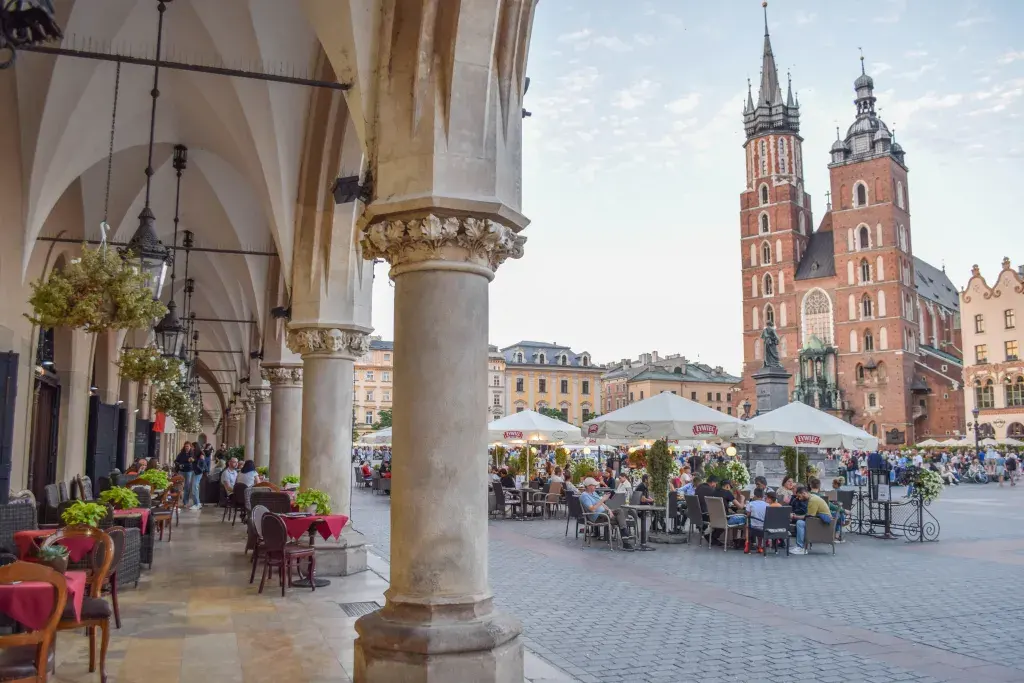
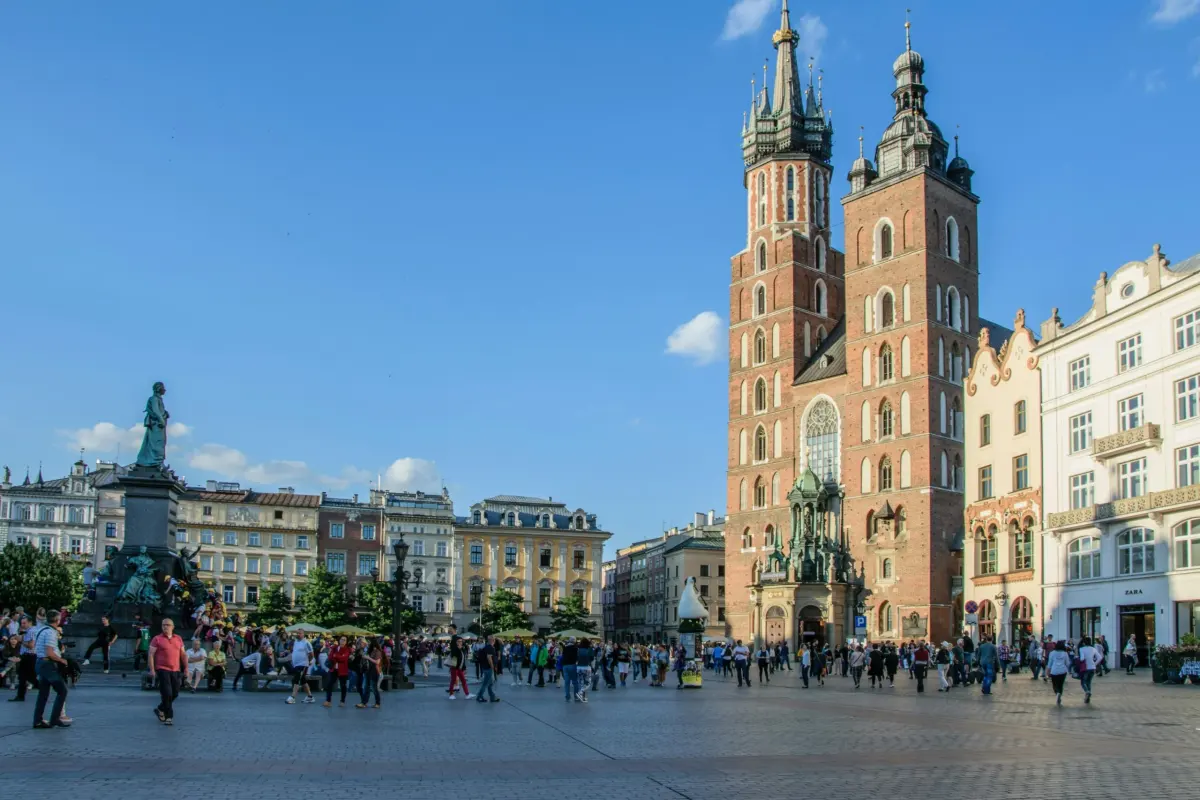
The Old Town, or Stare Miasto, is a UNESCO World Heritage site that survived World War II largely intact. Its centerpiece is the Main Market Square, one of the largest medieval town squares in Europe. Here, you can admire the Cloth Hall, a Renaissance-era trading hub that still functions as a marketplace for local crafts and amber jewelry. The Basilica of St. Mary towers over the square, famous for its intricate wooden altarpiece carved by Veit Stoss and the hourly trumpet call played from its taller spire.
Walking the Royal Route is the best way to orient yourself in the city. This path leads from the northern Barbican gate through the historic center and ends at the Wawel Royal Castle. Along the way, you will encounter:
- The Rynek Główny (Main Market Square)
- The Town Hall Tower
- The historic Jagiellonian University district
- Wawel Cathedral, where Polish monarchs are buried
How to visit Wawel Castle and Cathedral
Wawel Hill is the symbolic epicenter of Polish national identity. The site includes a royal palace, a cathedral, and the famous Wawel Dragon statue at the riverbank. The castle showcases a blend of Romanesque, Gothic, and Renaissance architecture, reflecting the centuries when Kraków served as the nation's capital. The cathedral is particularly significant as the coronation and burial site for generations of Polish kings and national heroes.
To ensure a smooth visit, follow these steps:
- Book your tickets online at least two weeks in advance, especially during the summer peak season.
- Choose a specific route, such as the State Rooms or the Royal Private Apartments, as tickets are sold per exhibition.
- Arrive at the ticket office or entrance gate 20 minutes before your scheduled time.
- Wear comfortable walking shoes, as the hill involves significant climbing and uneven cobblestones.
Best day trips from Kraków
Kraków serves as the primary base for visiting two of Poland’s most significant sites. The Wieliczka Salt Mine, located about 10 miles from the city, features an underground world of chapels, lakes, and statues carved entirely out of rock salt. It is a stunning feat of engineering that has been in operation since the 13th century. Additionally, the Auschwitz-Birkenau Memorial and Museum is located about 40 miles west. This site serves as a somber reminder of the Holocaust and requires a full day to visit respectfully.
When planning these excursions, consider the following logistical tips:
- Use the efficient local train network to reach Wieliczka in under 30 minutes.
- Book guided tours for Auschwitz well in advance, as visitor numbers are strictly capped.
- Always check weather forecasts, as the salt mine maintains a constant cool temperature regardless of the season.
- Avoid private taxis for long-distance trips; official rail or organized shuttle services are significantly more reliable and cost-effective.
Common mistakes when visiting Kraków
Many visitors underestimate the time required to explore the city’s depth. A common error is trying to cram both the salt mines and the city center into a single day, which leads to exhaustion and a superficial experience. Another frequent mistake involves ignoring the Kazimierz district. Once the center of Jewish life in Kraków, this neighborhood is now a vibrant area filled with independent galleries, atmospheric cafes, and historic synagogues. Skipping this area means missing the city’s most authentic and soulful atmosphere.
Furthermore, travelers often fail to prepare for the local dining culture. While international chains exist, you should prioritize traditional milk bars, or "bar mleczny." These government-subsidized eateries offer affordable, authentic Polish comfort food like pierogi, borscht, and cabbage rolls. Avoid restaurants located directly on the main square if you are on a budget, as prices are significantly inflated compared to side streets just three blocks away. Always carry a small amount of local currency, as some smaller shops may not accept cards.
Why Kraków is a cultural destination
Kraków is widely considered the intellectual capital of Poland, anchored by the Jagiellonian University, founded in 1364. This institution is one of the oldest in the world, having educated figures such as Nicolaus Copernicus and Pope John Paul II. The city’s cultural calendar is packed with events, ranging from the Jewish Culture Festival in summer to the famous Christmas market in December. The atmosphere is defined by a blend of academic rigor and a lively social scene that thrives in the city's countless basement jazz clubs.
The city’s resilience is also a major draw for history enthusiasts. Despite the trauma of the 20th century, the residents have meticulously restored their heritage, creating a living museum. Whether you are exploring the Oscar Schindler Enamel Factory, which documents the city under Nazi occupation, or simply sitting in a cafe on a rainy afternoon, the city offers a unique sense of continuity. It is a place where every street corner tells a story of survival, artistry, and intellectual pursuit that remains relevant to the modern world.
Key facts
- Kraków served as the capital of Poland from 1038 until 1596 and remains the country's cultural and intellectual heart.
- The Main Market Square, or Rynek Główny, is the largest medieval town square in Europe, measuring 40,000 square meters.
- Wawel Castle, perched on a hill overlooking the Vistula River, served as the residence for Polish kings for centuries.
- The city’s historic center is a UNESCO World Heritage site, featuring over 6,000 historic monuments and buildings.
- Kazimierz, the former Jewish quarter, is now a vibrant district known for its bohemian atmosphere, historic synagogues, and nightlife.
- When visiting, always validate your tram or bus ticket immediately upon boarding to avoid hefty fines from transit inspectors.
The bottom line
Kraków is a captivating blend of medieval history, somber reflection, and modern Polish energy. As the former royal capital, it offers an unparalleled density of historic architecture, including the grand Wawel Castle and the expansive Main Market Square. Whether you are exploring the poignant history of Kazimierz or enjoying the city's affordable culinary scene, Kraków provides a rich, accessible, and deeply rewarding experience for every traveler.
People also ask
Is it better to visit Kraków in the summer or winter?
Summer offers warm weather and lively outdoor cafes, while winter provides a magical atmosphere with traditional Christmas markets. Choose based on your preference for outdoor festivals or cozy, snow-covered historic architecture.
How many days are needed to see the main sights?
Three days is generally sufficient to explore the Old Town, Wawel Castle, and the Kazimierz district. If you plan to visit Auschwitz-Birkenau or the Wieliczka Salt Mine, allocate at least five days.
Is Kraków an expensive city for travelers?
Kraków is considered one of the most affordable major tourist destinations in Europe. Prices for high-quality dining, accommodation, and museum entries remain significantly lower than in cities like Paris or London.
What is the most iconic local food to try?
You must try pierogi, which are traditional Polish dumplings filled with meat, cheese, or fruit. Another staple is obwarzanek, a ring-shaped bread sold from blue street carts throughout the city.
Do I need to learn Polish to get around?
Most people working in the tourism industry, hotels, and restaurants speak excellent English. You will have no trouble navigating the city, though learning a few polite phrases in Polish is always appreciated.
What is the biggest mistake tourists make?
Many visitors fail to book tickets for the Wieliczka Salt Mine or Auschwitz-Birkenau weeks in advance. These sites have strict capacity limits, and tickets often sell out completely during peak tourist seasons.
This answer was created with the help of AI research tools and reference sources. Spotted an error? Let us know — we correct mistakes quickly. See our editorial policy.