What colors make yellow?
Short answer
Yellow is a primary color in traditional subtractive color theory, meaning it cannot be created by mixing other pigments. In the CMYK color model, yellow is a foundational ink used to produce other hues. On digital screens, yellow is created by mixing red and green light at full intensity.

On this page
Why can you not mix colors to make yellow?
In traditional art and color theory, yellow is classified as a primary color. This means it exists as a fundamental building block that cannot be derived from any combination of other pigments. If you attempt to mix red, blue, or green paints together, you will generally end up with a muddy brown or gray rather than a pure, vibrant yellow. This principle is central to the RYB (Red, Yellow, Blue) model historically taught in schools.
Because yellow is a primary color, it possesses a unique wavelength of light that sits between red and green on the visible spectrum. Pigments are subtractive, meaning they absorb certain wavelengths and reflect others. A yellow pigment is specifically formulated to absorb blue light while reflecting the wavelengths we perceive as yellow. Since you cannot subtract a primary color from a mixture to isolate a wavelength that is already "pure," you must start with a yellow pigment to achieve the color.
How do screens create yellow with light?
While you cannot mix pigments to make yellow, the rules change entirely when working with light. Digital displays, such as smartphones and computer monitors, use the RGB (Red, Green, Blue) color model. In this additive system, colors are created by combining beams of light rather than mixing physical substances. When red light and green light are projected onto the same spot at full intensity, the human eye perceives the resulting combination as yellow.
This process is fundamentally different from painting because it adds energy to the system instead of subtracting it. If you look closely at a digital screen with a magnifying glass, you will see tiny sub-pixels of red, green, and blue. By varying the intensity of these individual lights, the screen can simulate millions of colors. Yellow is simply the result of the brain interpreting the simultaneous stimulation of red and green light receptors in the eye.

How to use yellow in color mixing
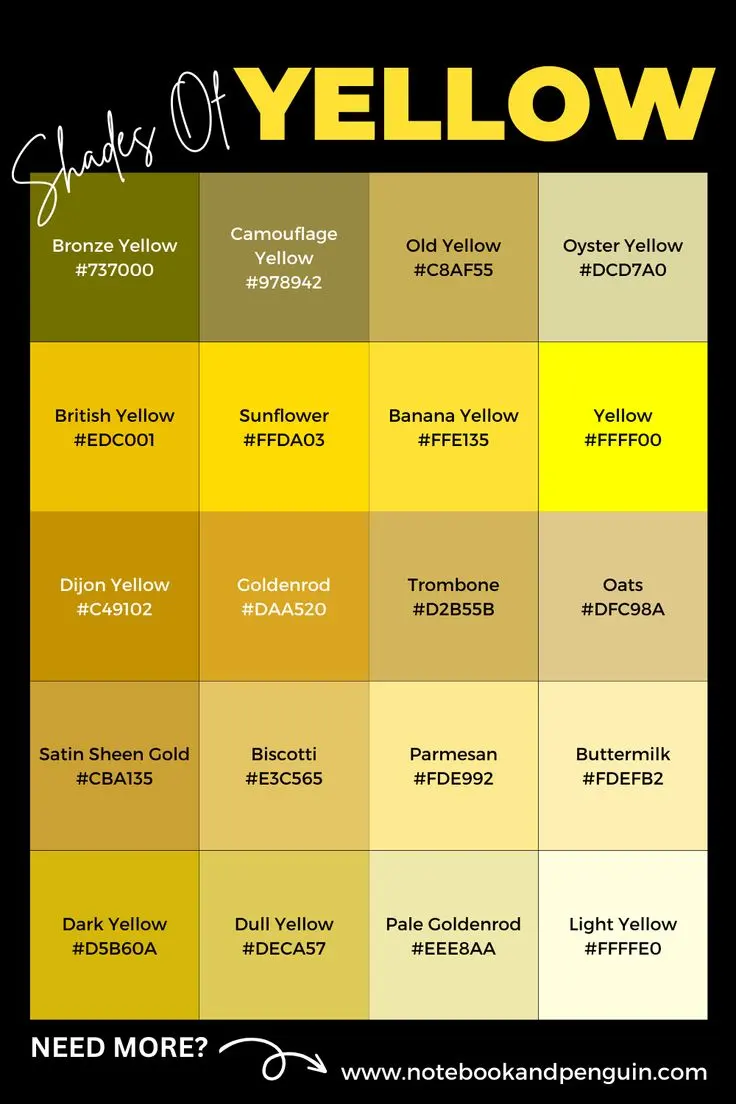
Even though you cannot create yellow from scratch, you can adjust the appearance of yellow pigments to create different shades. Artists often use yellow as a base and add small amounts of other colors to shift its temperature or intensity. Understanding these relationships helps in creating specific effects, such as sunny highlights or muted, earthy tones.
- Start with a pure primary yellow, such as Cadmium Yellow or Lemon Yellow.
- Add a tiny touch of white to increase the brightness and create a pastel yellow.
- Mix in a small amount of green to shift the yellow toward a lime or chartreuse hue.
- Incorporate a speck of red or orange to create a warm, golden, or amber color.
- Add a very small amount of purple or violet to neutralize the yellow, creating a muted ochre or tan.
Common mistakes when mixing colors with yellow
One of the most frequent errors beginners make is adding too much of a secondary color to their yellow base. Because yellow is naturally light and high-value, it is easily overpowered by darker colors like blue or red. Even a microscopic amount of dark pigment can shift a bright yellow into a dull, brownish-green or muddy orange, making it difficult to recover the original vibrancy.
Another common mistake is failing to account for color bias in pigments. Not all yellow paints are the same; some lean toward green (cool yellows), while others lean toward orange (warm yellows). If you try to mix a cool yellow with a cool blue, you will get a clean, bright green. However, if you mix a warm yellow with a cool blue, the presence of red in the warm yellow will interact with the blue to produce a dull, muddy gray.
- Always clean your brush thoroughly before dipping into your yellow paint to avoid contamination.
- Mix your darker colors into the yellow gradually, rather than adding yellow to a large pile of dark paint.
- Test your mixtures on a scrap piece of paper before applying them to your final project.
- Use a palette knife to mix colors to ensure a more thorough and even distribution of pigment.
Why yellow is essential in printing
In the world of commercial printing, yellow is one of the four essential inks used in the CMYK process. The letters stand for Cyan, Magenta, Yellow, and Key (black). By layering these four transparent inks in varying dot patterns, printers can reproduce a vast spectrum of colors on paper. Yellow acts as a vital component for creating greens, oranges, and various skin tones that would be impossible to replicate without it.
If a printer runs out of yellow ink, the entire color balance of a document will fail. Images will appear unnaturally blue or purple because the system lacks the ability to subtract the blue light that the yellow ink is supposed to absorb. This reliance on yellow as a primary component highlights its status as an irreplaceable element in both the physical world of printing and the theoretical framework of color science. Understanding that yellow is a starting point rather than a result is the key to mastering any creative endeavor involving color.
Key facts
- Yellow is a primary color in subtractive color mixing, meaning it cannot be created by mixing other pigments together.
- In light-based color theory (additive mixing), yellow is created by combining red and green light at full intensity.
- If you are painting, you must purchase yellow pigment directly, as mixing other colors will only result in mud or secondary hues.
- Printers use the CMYK model, where the "Y" stands for yellow, which is a pure ink used to produce a wide spectrum of colors.
- To lighten an existing yellow paint, add a small amount of white; adding black will turn it into an olive or mustard shade.
- Avoid mixing complementary colors like purple or violet into yellow, as this will neutralize the color and turn it brown.
The bottom line
In the world of physical pigments and painting, yellow is a fundamental primary color that cannot be synthesized by mixing other hues. While light-based displays can produce yellow by combining red and green wavelengths, painters must rely on pure yellow pigments. Understanding this distinction prevents the common mistake of attempting to create yellow through mixing, which typically results in dull, brownish, or unwanted secondary colors.
People also ask
Can I make yellow by mixing red and green paint?
No, mixing red and green paint will result in a muddy brown or gray color. Red and green are complementary colors that cancel each other out in the subtractive color model used for physical pigments.
How do digital screens create the color yellow?
Screens use the RGB model, which relies on light rather than ink. By emitting red and green light simultaneously at high intensity, the screen tricks the human eye into perceiving the color yellow.
Why does my yellow paint turn green when I mix it with blue?
Yellow is a primary color, while green is a secondary color made of yellow and blue. When you add blue to yellow, you are shifting the hue toward the green side of the color wheel.
What is the difference between primary and secondary colors?
Primary colors are the base pigments that cannot be created by mixing others, such as yellow, red, and blue. Secondary colors, like orange, green, and purple, are created by mixing two primary colors together.
Read the full answer →How can I make a brighter yellow?
You cannot create a brighter yellow through mixing because yellow is already a primary color. To achieve more vibrancy, you must use a high-quality, pure yellow pigment or a fluorescent yellow paint.
Does mixing yellow and white make a different color?
Mixing white into yellow creates a tint, which is a lighter, pastel version of the original yellow. It does not change the hue, but it does increase the value or lightness of the color.
This answer was created with the help of AI research tools and reference sources. Spotted an error? Let us know — we correct mistakes quickly. See our editorial policy.