How is marshmallow made?
Short answer
Marshmallows are created by whipping a hot sugar syrup with gelatin and air until the mixture becomes a stable, aerated foam. Traditionally made from the root of the Althaea officinalis plant, modern commercial production relies on corn syrup, sugar, water, and gelatin to achieve the signature light, spongy, and elastic texture.
On this page
How is marshmallow made in factories?
Commercial marshmallow production is a highly automated, continuous process designed to create uniform, shelf-stable confections. Manufacturers first dissolve sugar, corn syrup, and water, heating the mixture to a precise temperature to reach the "soft-ball" stage. This syrup is then pumped into a high-speed aeration chamber, often called a continuous aerator, where air or nitrogen is injected under pressure.
As the mixture is whipped, it transitions from a dense liquid into a light, stable foam. Gelatin, which has been hydrated separately, is folded into the mixture to provide structure and elasticity. The resulting "marshmallow rope" is extruded onto a conveyor belt dusted with a mixture of cornstarch and powdered sugar to prevent sticking. Once the rope cools and sets, a series of rotating blades cuts the product into individual pieces. These pieces are tumbled in a drum to remove excess starch before being packaged for distribution.
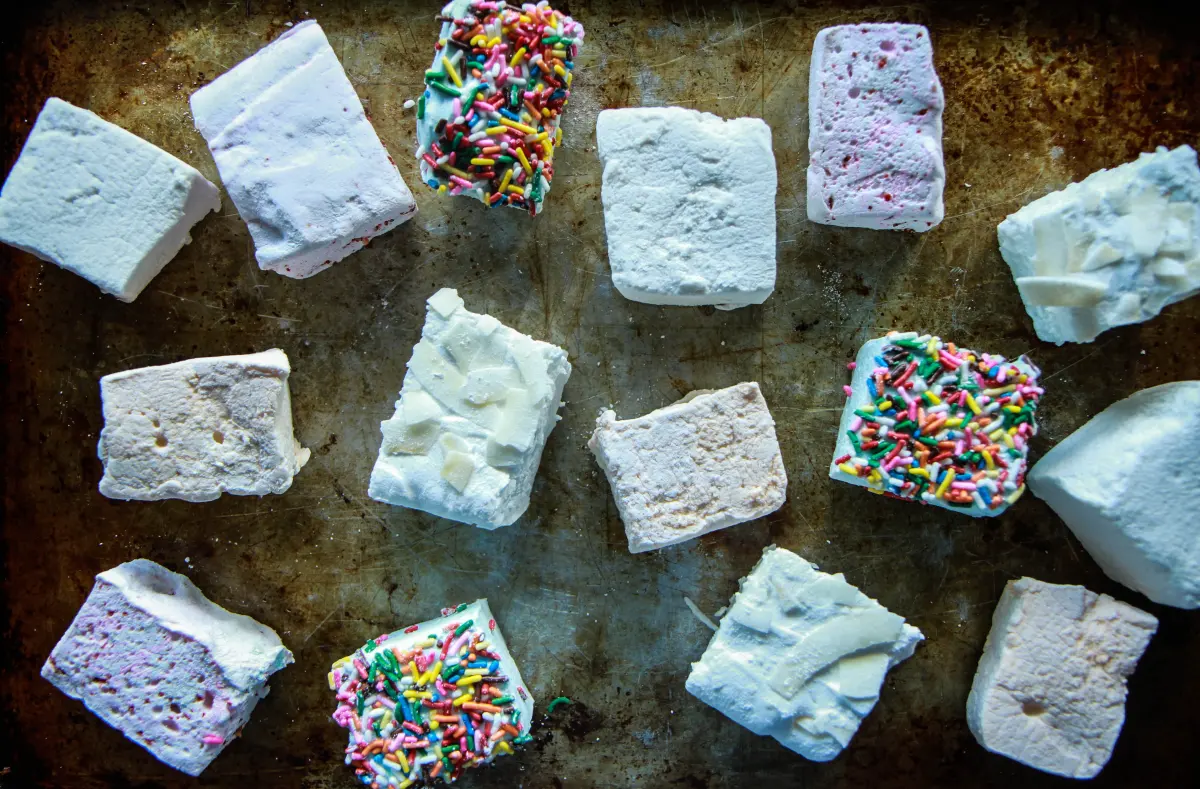
How to make homemade marshmallows
Making marshmallows at home is a rewarding culinary project that requires precision, particularly regarding temperature. You will need a candy thermometer to ensure the sugar syrup reaches exactly 240°F (115°C), which is essential for the proper texture. If the syrup is undercooked, the marshmallows will be runny; if overcooked, they will become hard and brittle.
- Bloom the gelatin in cold water for about 10 minutes until it becomes firm.
- Boil sugar, corn syrup, and water until the thermometer registers 240°F.
- Slowly pour the hot syrup into the gelatin while whisking on low speed.
- Increase the speed to high and whip for 10 to 12 minutes until the mixture is thick, glossy, and holds stiff peaks.
- Spread the mixture into a parchment-lined, greased pan dusted with a mix of powdered sugar and cornstarch.
- Let the marshmallow set uncovered for at least four hours or overnight before cutting.
Why does marshmallow texture change?
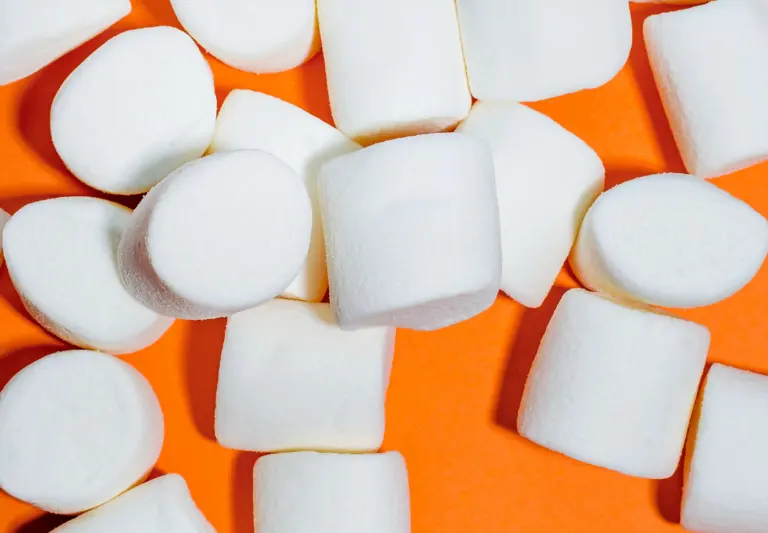
The unique texture of a marshmallow is the result of a complex foam structure where air bubbles are trapped within a gelatin-sugar matrix. Gelatin is a protein derived from collagen that forms a thermoreversible gel. This means the marshmallow is solid at room temperature but melts quickly when exposed to heat, such as over a campfire. The sugar syrup acts as a stabilizer, providing the necessary viscosity to hold the air bubbles in place while the gelatin sets.
If the marshmallow is exposed to humidity, it will absorb moisture from the air, causing the sugar to dissolve and the structure to collapse into a sticky mess. Conversely, if stored in a very dry environment, the marshmallow may lose moisture and become tough or chewy. Proper airtight storage is the best way to maintain the delicate balance between the aerated foam and the sugar-gelatin structure.
Common mistakes when making marshmallows
The most frequent error in marshmallow production is failing to properly bloom the gelatin. If the gelatin is not fully hydrated before the hot syrup is added, it may form clumps, resulting in a grainy texture rather than a smooth, uniform foam. Another common mistake is rushing the whipping process. The mixture must achieve "stiff peaks," meaning the foam stands straight up without drooping when the whisk is lifted. If you stop whipping too early, the internal structure will be weak and unable to hold its shape once cut.
- Adding flavor extracts or food coloring too early, which can deflate the foam.
- Using a pan that is too large, resulting in thin, flat marshmallows.
- Failing to grease the knife or cutter, which leads to jagged, uneven edges.
- Cutting the marshmallows before they have fully set, causing them to lose their square shape.
How long do marshmallows last?
Homemade marshmallows are preservative-free and generally have a shorter shelf life than mass-produced versions. When stored in an airtight container at room temperature, they typically remain fresh for about two to three weeks. To maximize longevity, keep them in a cool, dark place away from direct sunlight and moisture. If you notice the marshmallows becoming excessively sticky or developing an off-smell, they have likely begun to degrade or absorb environmental moisture.
For long-term storage, you can freeze marshmallows for up to three months. Place them in a freezer-safe bag with extra dusting of cornstarch to prevent them from sticking together during the freezing process. When you are ready to use them, thaw them at room temperature for an hour. While freezing may slightly alter the texture, they remain perfectly suitable for hot cocoa or roasting over a fire. Always discard any marshmallows that show signs of mold, as the high sugar content can encourage bacterial growth if the environment is not kept strictly dry.
Key facts
- Modern marshmallows are primarily composed of sugar, water, and gelatin, which provides the signature airy, chewy texture.
- The original marshmallow confection was derived from the Althaea officinalis plant, which contains a mucilaginous sap used as a thickener.
- Commercial production uses a continuous aeration process, whipping air into a hot sugar syrup to create a foam that is then extruded.
- Gelatin must be hydrated in cold water before being added to the hot syrup to ensure a smooth, lump-free consistency.
- Marshmallows are typically dusted with a mixture of cornstarch and powdered sugar to prevent them from sticking to surfaces and each other.
- To avoid a grainy texture, ensure all sugar crystals are completely dissolved during the initial boiling stage before adding the gelatin.
The bottom line
Creating marshmallows at home is a rewarding process that relies on the precise balance of sugar syrup and hydrated gelatin. By whipping air into the mixture and allowing it to set, you transform simple ingredients into a light, airy confection. Mastering the temperature and the dusting process is essential for achieving a professional texture that is perfectly chewy, non-sticky, and ready to enjoy in various culinary applications.
People also ask
Can you make marshmallows without gelatin?
Yes, agar-agar or carrageenan can be used as plant-based alternatives to gelatin. These seaweed-derived thickeners require different boiling temperatures and setting times to achieve the correct structure.
Why do my homemade marshmallows turn out tough?
Toughness is usually caused by over-whipping the mixture or using too much gelatin. Ensure you follow precise measurements and stop whipping once the mixture reaches a thick, marshmallow-like consistency.
How long do homemade marshmallows last?
Homemade marshmallows remain fresh for about two to three weeks when stored in an airtight container at room temperature. Avoid refrigerating them, as the humidity can cause them to become sticky or deflate.
What is the purpose of the cornstarch and sugar coating?
This mixture, often called "dusting powder," creates a dry barrier on the exterior of the sticky marshmallow foam. It prevents the pieces from adhering to the knife during cutting and keeps them from clumping in storage.
Can I add flavorings to the marshmallow mixture?
You can add extracts like vanilla, peppermint, or fruit flavors once the mixture has finished whipping. Stir them in gently at the very end to ensure the flavor is evenly distributed without collapsing the foam.
Why are store-bought marshmallows so white?
Commercial manufacturers often use food-grade whitening agents like titanium dioxide to achieve a bright, uniform appearance. Homemade versions are typically off-white or cream-colored due to the natural hues of the sugar and gelatin.
This answer was created with the help of AI research tools and reference sources. Spotted an error? Let us know — we correct mistakes quickly. See our editorial policy.