How do you make a wire sculpture?
Short answer
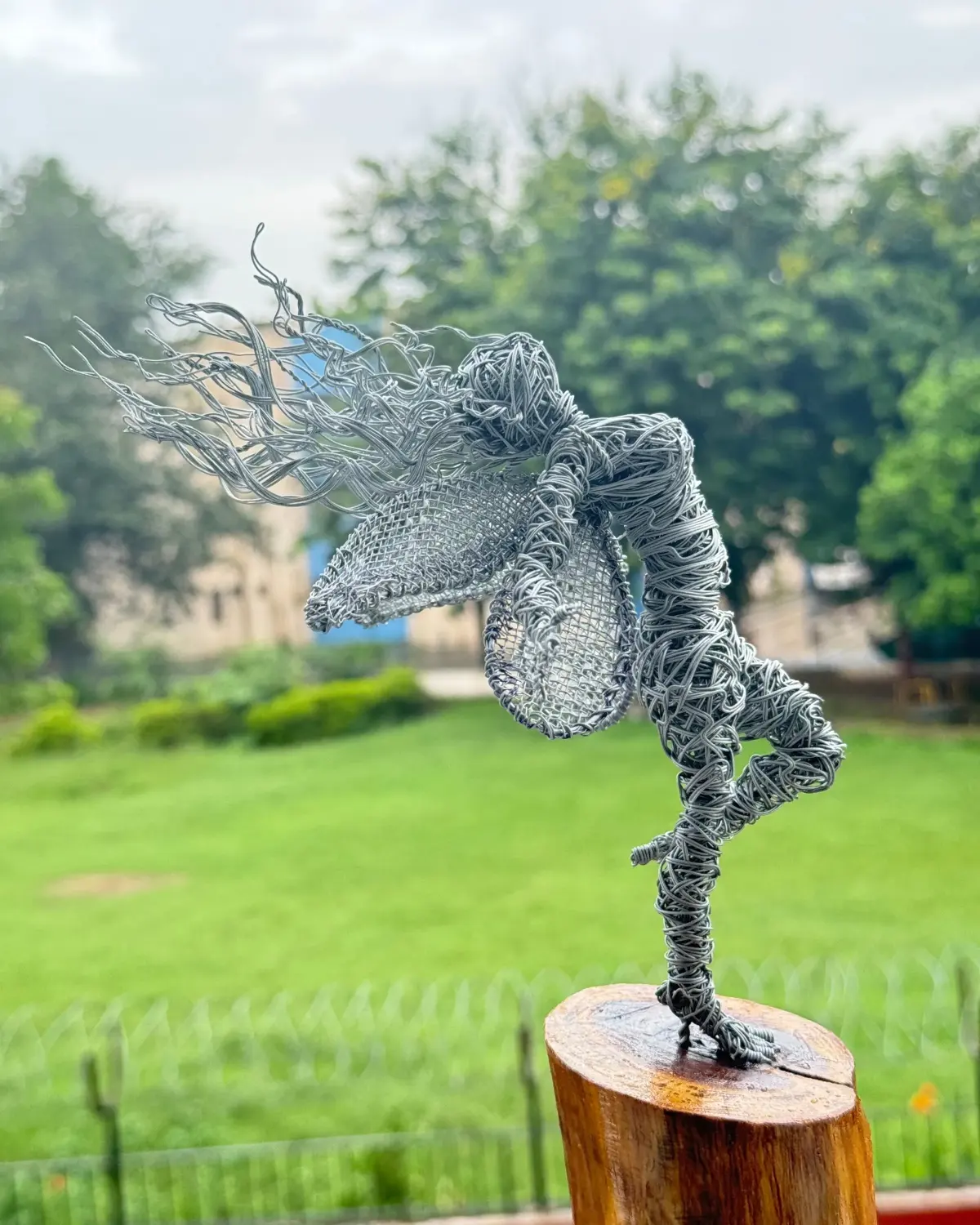
Wire sculpture is the art of creating three-dimensional forms by bending, twisting, and connecting metal wire. You begin by selecting a malleable material, such as aluminum or copper, and using pliers to shape it into a frame. By layering wire or wrapping it tightly, you build volume, texture, and structural integrity.
On this page
What materials are best for wire sculpture?
Choosing the right wire is the most critical decision for a beginner. The "gauge" of the wire determines its thickness; lower numbers indicate thicker, stiffer wire, while higher numbers indicate thinner, more flexible wire. For structural skeletons, 12-gauge or 14-gauge aluminum wire is ideal because it holds its shape well but remains easy to bend by hand. For intricate details or wrapping, 20-gauge to 24-gauge copper or artistic craft wire offers the necessary pliability.
Aluminum is generally preferred for beginners because it is lightweight and does not rust. Copper is beautiful and develops a rich patina over time, but it is significantly harder to manipulate and requires more force. Steel wire is another option, though it is very rigid and often requires heavy-duty tools to cut or shape. Always ensure your wire is "dead soft" or "half-hard" rather than "full-hard" to ensure ease of movement during the creative process.
- Aluminum wire: Best for large structures and beginners.
- Copper wire: Excellent for delicate details and jewelry-scale work.
- Steel wire: Recommended for permanent, heavy-duty outdoor installations.
- Brass wire: Offers a gold-like finish but is prone to tarnishing.
How to prepare for your first wire sculpture
Before bending any metal, it is helpful to sketch your intended design on paper at the actual size of the finished sculpture. This provides a reference point to check your proportions as you build. You should also gather essential tools, including needle-nose pliers for tight bends, wire cutters for trimming, and round-nose pliers for creating loops or curves. A sturdy workspace, such as a wooden board with nails driven into it, can act as a jig to hold your wire in place while you work.
Safety is paramount when working with wire. Always wear safety glasses when cutting wire, as the ends can snap back or fly off with significant force. Keep your workspace clear of scrap wire, which can be sharp and cause injury if stepped on or handled carelessly. By organizing your tools and preparing a clear plan, you reduce frustration and ensure that your creative process remains focused on the artistic construction rather than struggling with basic logistics.
Step-by-step guide to building a wire form
Creating a sculpture follows a logical progression from the internal skeleton to the outer skin. By building a strong foundation, you ensure the final piece remains stable and does not sag under its own weight.
- Construct the armature: Create a simple outline of your subject using a single, continuous piece of thick wire to define the main proportions.
- Add structural support: Use additional lengths of wire to reinforce the limbs or main body, twisting them securely around the armature.
- Develop volume: Wrap thinner wire around the skeleton to create muscle mass or surface texture, varying the direction of the wraps to mimic form.
- Refine details: Use needle-nose pliers to pinch ends, tuck in sharp edges, and create final aesthetic flourishes like facial features or surface patterns.
Avoid the temptation to rush the armature phase. If the base structure is weak, the entire sculpture will wobble, making it impossible to add delicate details later without distorting the overall shape.
Common mistakes when making wire sculptures
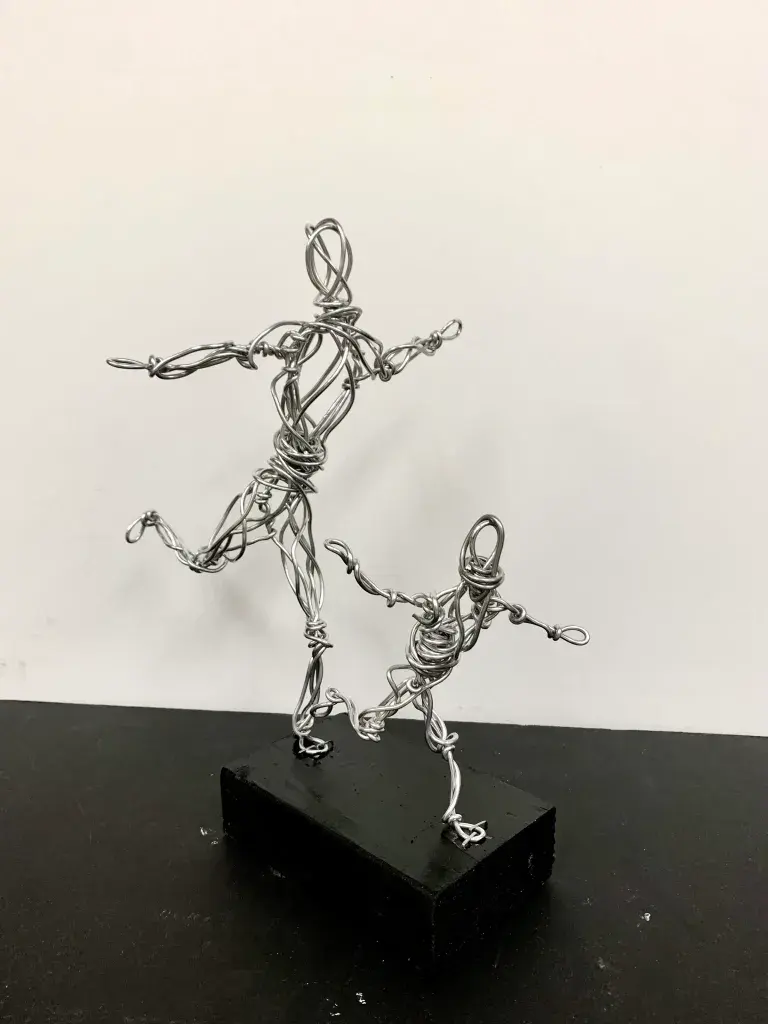
One of the most frequent errors is failing to secure wire connections properly. If joints are loose, the sculpture will lack structural integrity and may fall apart during handling. Always wrap the ends of your wire tightly around the existing frame at least three times to create a permanent bond. Another common issue is overworking the wire. Bending the same spot back and forth repeatedly causes "work hardening," which makes the metal brittle and likely to snap. If you make a mistake, it is often better to cut a new piece of wire rather than attempting to straighten a kinked section.
Beginners also often struggle with sharp, exposed wire ends. These can snag clothing or cause scratches. Use your pliers to tuck the ends of the wire into the interior of the sculpture or curl them into small, rounded loops. This not only makes the piece safer to handle but also provides a more professional, finished appearance. Finally, avoid using wire that is too thin for the size of the sculpture, as it will lack the tension needed to support its own weight.
How to finish and display your sculpture
Once the physical construction is complete, you may choose to treat the surface of your sculpture. While many artists appreciate the raw industrial look of exposed metal, others prefer to paint their work. If you choose to paint, use a metal primer first to ensure the pigment adheres properly to the surface. Clear acrylic sprays can also be applied to copper or brass sculptures to prevent oxidation and maintain a bright, metallic shine for years to come.
Displaying your wire sculpture effectively requires consideration of light and shadow. Because wire is a linear medium, it casts striking, complex shadows on the wall behind it. By positioning a spotlight or a focused lamp at an angle, you can project a secondary "drawing" of your sculpture onto the wall, effectively doubling the visual impact of your work. Ensure that your base is balanced so the sculpture does not tip, and consider mounting it on a wooden plinth or a stone base for added stability and a gallery-quality presentation.
Key facts
- Aluminum wire is the most beginner-friendly material because it is soft, lightweight, and does not rust.
- Use needle-nose pliers to create sharp bends and round-nose pliers to form consistent loops or curves.
- Wear safety glasses when cutting wire to prevent sharp metal ends from springing toward your eyes.
- Annealed steel wire is popular for professional sculptures because it is flexible yet holds its shape under tension.
- Start your sculpture by sketching a simple line drawing on paper to use as a full-scale template.
- Avoid over-twisting the wire, as repeated bending causes metal fatigue and eventual breakage.
The bottom line
Creating a wire sculpture is an accessible art form that transforms simple linear materials into complex three-dimensional objects. By selecting the appropriate gauge, utilizing basic pliers, and following a pre-drawn template, you can construct stable and expressive figures. Focus on structural integrity through proper twisting and anchoring techniques to ensure your work remains durable. With patience and practice, wire becomes a versatile medium for creative expression.
People also ask
What gauge of wire is best for beginners?
A 16-gauge or 18-gauge wire is ideal because it is thick enough to hold a structure but flexible enough to bend by hand. Thinner wires like 24-gauge are better for delicate details or wrapping.
How do you join two pieces of wire together?
You can join pieces by twisting the ends around each other using pliers or by using a small dab of two-part epoxy. Mechanical connections, such as creating a hook and loop, are often more durable than adhesives.
Can wire sculptures be left outdoors?
Only if you use non-corrosive materials like stainless steel, aluminum, or copper. Ferrous metals like iron or standard steel will oxidize and rust quickly when exposed to moisture.
What is the purpose of an armature?
An armature acts as the internal skeleton for a sculpture, providing the primary support for the outer layers. It is essential for larger or heavier figures to prevent them from collapsing under their own weight.
How do I hide the sharp ends of the wire?
You can tuck the ends back into the sculpture, cover them with a small amount of epoxy putty, or use a metal file to smooth the edges. Always ensure the ends are tucked inward to prevent scratching surfaces.
Do I need a soldering iron to make wire art?
Soldering is optional and primarily used for jewelry or complex structural joints in copper or silver wire. Most decorative wire sculptures rely on tension and mechanical wraps rather than heat-based bonding.
This answer was created with the help of AI research tools and reference sources. Spotted an error? Let us know — we correct mistakes quickly. See our editorial policy.