How do you draw rain?
Short answer
Drawing rain requires capturing the illusion of motion and light through varying line weights, angles, and transparency. By focusing on the direction of the wind, the density of the droplets, and the interaction between water and surfaces, you can create a convincing atmospheric effect that conveys both depth and environmental mood.
On this page
How to draw realistic rain lines
The most effective way to represent rain is through a series of diagonal, parallel strokes that follow a consistent trajectory. To begin, determine the direction of the wind; if the air is still, draw vertical lines, but if there is a breeze, tilt your lines at a 15 to 30-degree angle. Use a sharp pencil or a fine-liner pen to maintain thin, crisp marks that suggest the speed of falling water. Avoid drawing every single drop, as this creates a cluttered and static image. Instead, focus on the rhythm of the lines, spacing them unevenly to mimic the natural, chaotic distribution of a storm.
- Determine the wind direction to set the angle of your strokes.
- Use light, intermittent pressure to create lines of varying lengths.
- Group lines together in clusters to suggest heavier downpours.
- Leave small gaps between strokes to imply the flickering nature of falling water.
- Add a few horizontal dashes near the ground to represent splashing.
How to add depth and perspective
Rain is a three-dimensional phenomenon, and your drawing must reflect this by layering elements. Objects in the foreground should have darker, thicker, and more widely spaced rain lines, while background rain should be thinner, lighter, and more densely packed. This technique, known as atmospheric perspective, helps the viewer distinguish between the immediate environment and the distance. When drawing rain against a landscape, ensure the lines pass over distant hills or buildings to unify the scene. If you are working in color, use cooler, desaturated blues and grays for the rain, which helps the water recede visually into the background of your composition.
- Foreground: Use bold, long, and dark lines to emphasize proximity.
- Mid-ground: Utilize medium-weight lines with moderate spacing.
- Background: Apply light, short, and closely grouped lines to create a hazy effect.
- Horizon line: Fade the rain lines as they approach the horizon to increase the sense of vastness.
How to show rain hitting surfaces
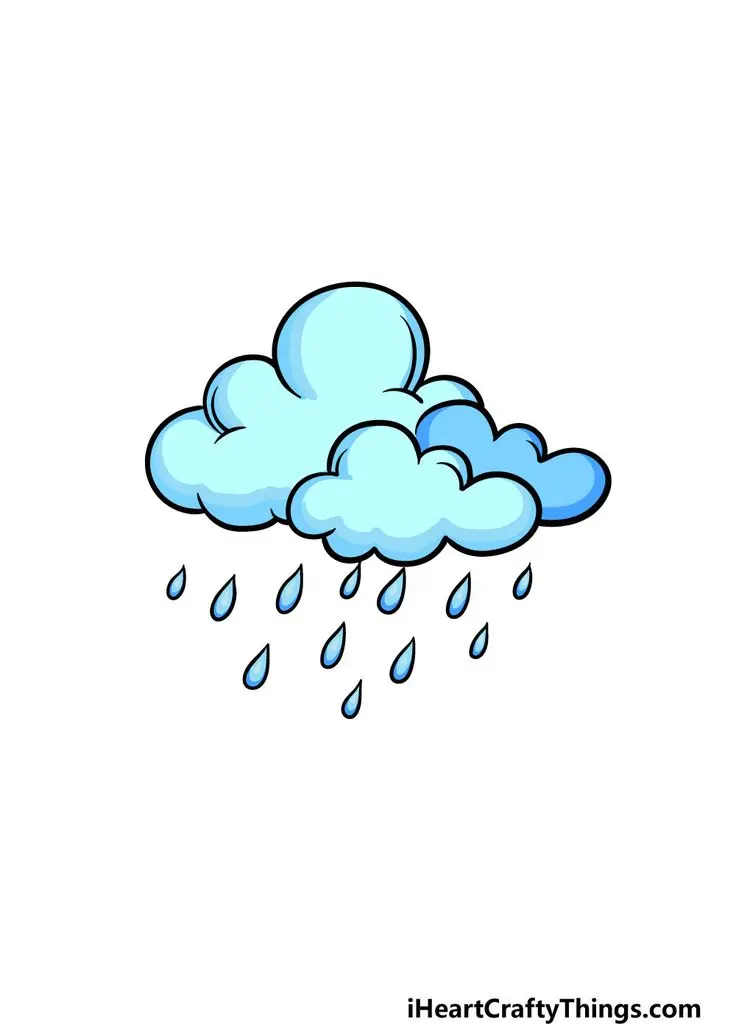
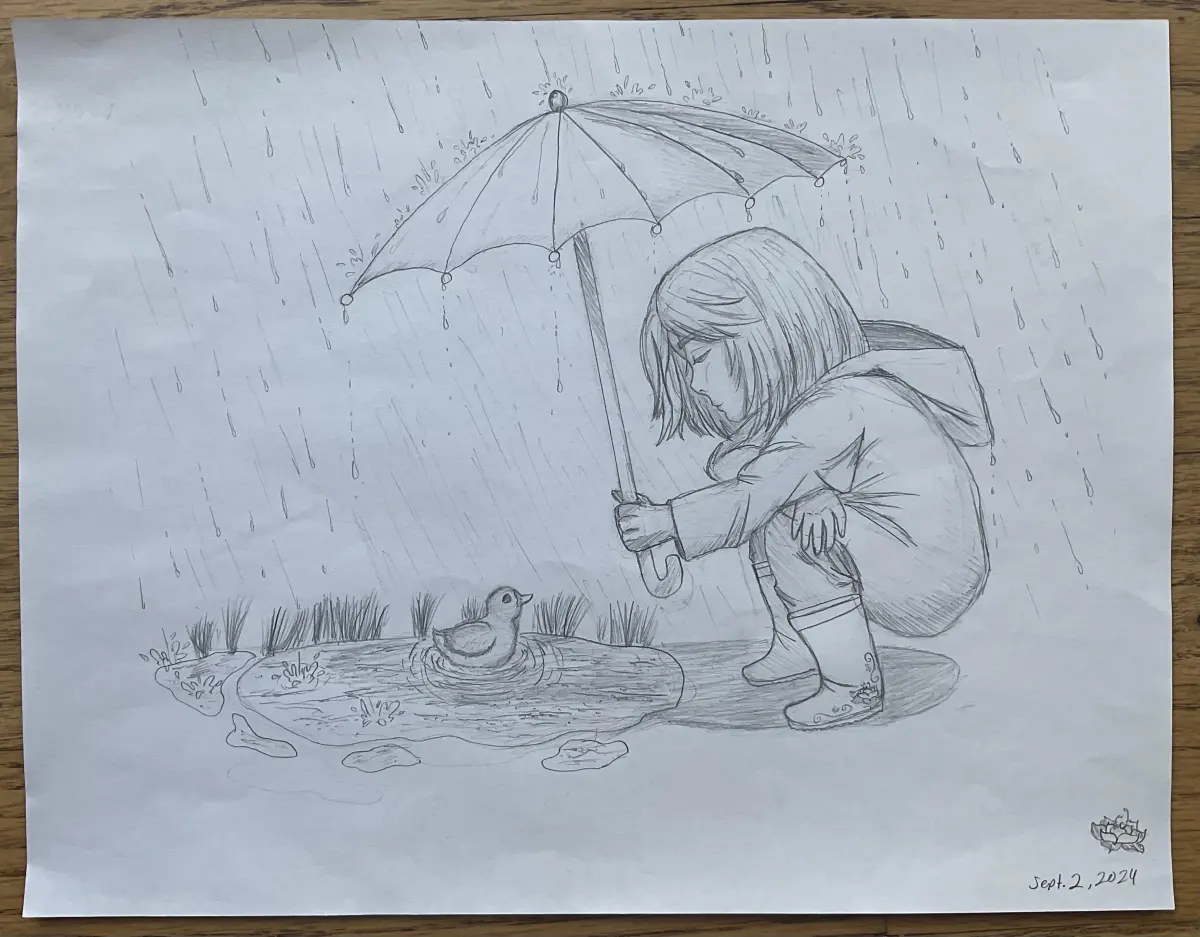
Rain is defined by how it interacts with the world around it, particularly when it strikes solid ground. When droplets hit a hard surface like pavement or a roof, they create small, circular splashes or bursts of energy. Draw these as small, flattened ovals or "v" shapes at the base of your rain lines. On water surfaces, such as a pond or a puddle, represent the impact with concentric circles that ripple outward. These details provide context for the viewer, grounding the rain in a physical space rather than letting it look like a series of floating lines suspended in a vacuum.
Avoid drawing perfect, uniform circles, as natural splashes are irregular and asymmetrical. Instead, focus on the spray pattern, which typically ejects upward and outward from the point of impact. By adding these subtle indicators of contact, you transform a simple pattern of lines into a dynamic, living environment that feels wet and tactile.
What are the best tools for drawing rain
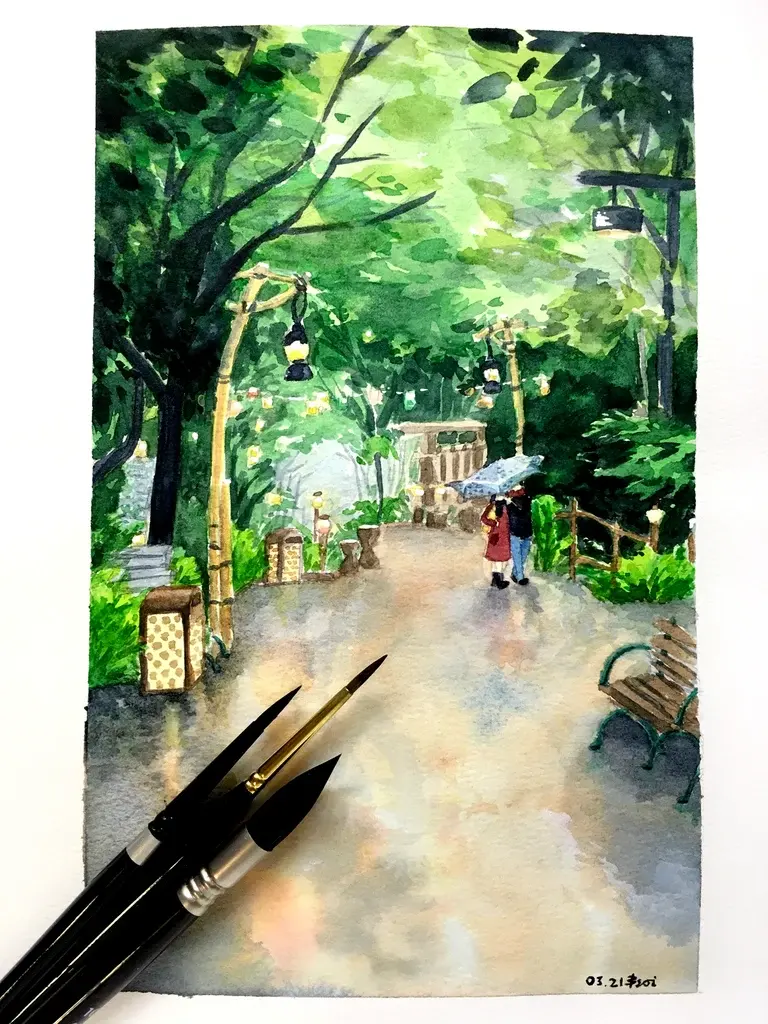
The choice of medium significantly affects the final appearance of your rain. Graphite pencils are excellent for beginners because they allow for easy erasure and subtle value adjustments, which are crucial for creating the transparency of falling water. For a more dramatic, high-contrast look, ink pens are superior, as they produce clean, sharp lines that pop against the paper. If you prefer a painterly approach, watercolors are the ideal choice; you can use a "wet-on-dry" technique to layer thin, translucent washes of blue-gray over your subject matter. This mimics the way rain obscures the view, creating a soft, ethereal quality that is difficult to replicate with dry media.
- Graphite pencils: Best for soft, atmospheric, and misty rain effects.
- Fine-liner pens: Ideal for sharp, heavy, and intense storm scenes.
- White gel pens: Essential for adding highlights to dark surfaces or creating "glint" on droplets.
- Watercolor: Perfect for capturing the overall mood and color temperature of a rainy day.
Common mistakes when drawing rain
A frequent error is drawing rain lines that are too uniform or perfectly parallel, which makes the scene look like a cage rather than weather. Nature is unpredictable, so vary the length, thickness, and spacing of your lines to avoid a rigid, mechanical appearance. Another common mistake is failing to account for the background; if your rain is too opaque, it will hide the subject of your drawing entirely. Always ensure that the underlying scene remains visible through the rain, even if it is slightly blurred. Finally, ensure your rain lines do not intersect with each other at awkward angles, as this breaks the illusion of a single, unified wind direction. By maintaining consistency in the angle of your strokes, you will create a cohesive and believable atmosphere.
Key facts
- Rain is best represented by diagonal lines that follow the direction of the wind.
- Varying the length and thickness of the lines creates a sense of depth and perspective.
- Use a light gray or blue pencil to suggest the soft, translucent quality of falling water.
- Adding small, horizontal dashes at the base of your lines creates a "splash" effect upon impact.
- Avoid drawing perfectly parallel lines, as natural rain is chaotic and irregular in its distribution.
- Leave small gaps between lines to prevent the drawing from looking like a solid wall of lead.
The bottom line
Drawing rain effectively requires capturing the chaotic, rhythmic nature of falling water through varied line work. By utilizing diagonal strokes, atmospheric perspective, and subtle splashes, you can create a convincing sense of weather on the page. Remember to avoid rigid, parallel lines, as natural rain is irregular. With practice, these simple techniques will help you transform a static scene into a dynamic, rain-swept environment.
People also ask
Should I draw rain lines as solid or dashed?
You should use a mix of both to imply speed and motion. Dashed lines often suggest lighter, faster rain, while longer, solid lines can represent a heavy downpour.
How do I show rain hitting a surface?
Draw small, curved "V" shapes or horizontal ellipses at the point of impact. These shapes simulate the ripples and splashes that occur when raindrops strike the ground or a puddle.
What colors work best for drawing rain?
Cool tones like slate blue, light gray, or even a soft violet work best. Avoid using pure black, which can make the rain look like harsh scratches on the paper.
How do I make rain look like it is falling from a distance?
Use thinner, lighter lines in the background and thicker, darker lines in the foreground. This technique, known as atmospheric perspective, helps the viewer distinguish between layers of space.
Is it better to draw rain with a pen or a pencil?
Pencils are generally better for beginners because they allow you to smudge or erase lines to soften the effect. Pens create high-contrast marks that are excellent for stylized, graphic-novel-style illustrations.
How can I make the rain look like it is falling at an angle?
Tilt all of your rain lines at the same consistent angle across the entire page. If you draw them at different angles, the rain will look disjointed and unnatural.
This answer was created with the help of AI research tools and reference sources. Spotted an error? Let us know — we correct mistakes quickly. See our editorial policy.