Why can't I draw what I see?
Short answer
You struggle to draw what you see because your brain prioritizes symbolic shortcuts over raw visual data. Instead of observing shapes, edges, and light, your mind relies on stored mental icons—like a cartoonish eye or a letter-shaped nose. You must learn to bypass these labels to perceive the actual geometry of reality.
On this page
Why does drawing what I see feel so difficult?
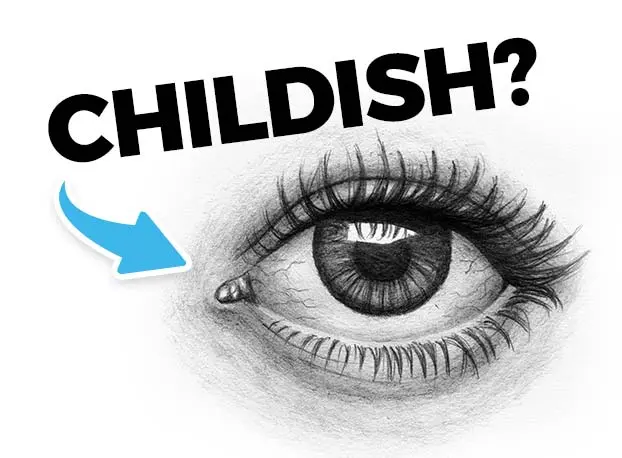
The primary reason you cannot draw what you see is that your brain is an efficiency machine. When you look at a face, your brain quickly identifies "eye," "nose," and "mouth" to save energy, replacing the complex, unique reality of those features with simplified, symbolic icons. You are essentially drawing your memory of an object rather than the object itself. This cognitive shortcut is vital for daily survival, but it is the enemy of realistic drawing.
To overcome this, you must learn to "turn off" the left hemisphere of your brain, which is responsible for naming and labeling objects. When you stop seeing a "chair" and start seeing a collection of intersecting lines, angles, and negative spaces, your drawing ability will improve instantly. This shift in perception is often described as moving from symbolic representation to observational accuracy. It requires conscious effort to ignore what you think you know about an object and focus entirely on the visual evidence presented to your eyes.
How to train your brain to see like an artist
Training your brain to perceive visual data requires practice in isolating components of an image. You must learn to look for relationships between objects, such as how one line aligns with another or how a shadow creates a specific shape. This process is about breaking down the complex whole into manageable, abstract parts that your brain cannot easily categorize as a familiar symbol.
- Practice contour drawing by tracing the edges of an object without looking at your paper.
- Observe negative space, which is the empty area surrounding your subject, rather than the subject itself.
- Use a viewfinder or a simple cardboard frame to isolate a small portion of a scene to reduce visual clutter.
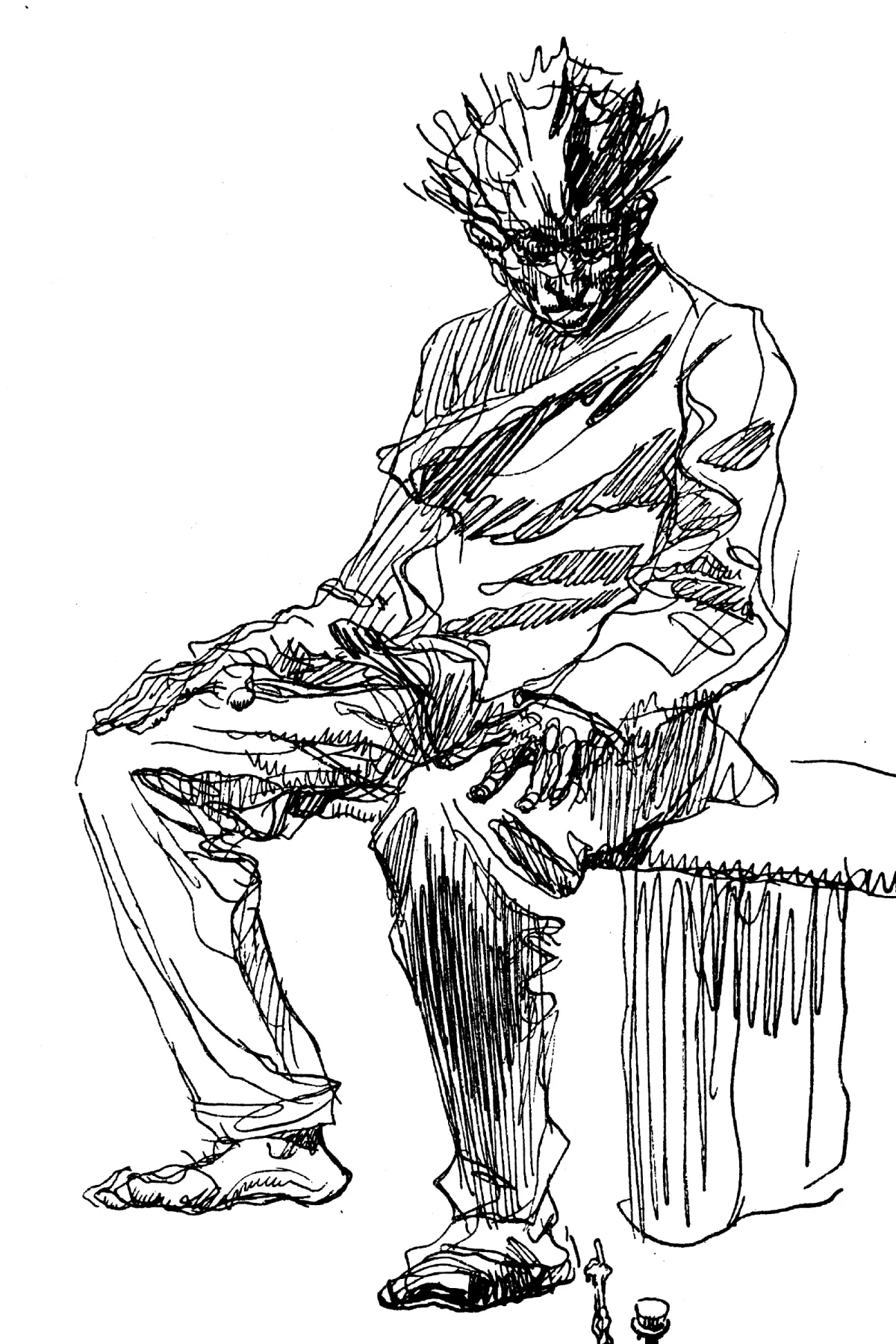
- Turn your reference image upside down to force your brain to process lines and shapes instead of recognizable symbols.
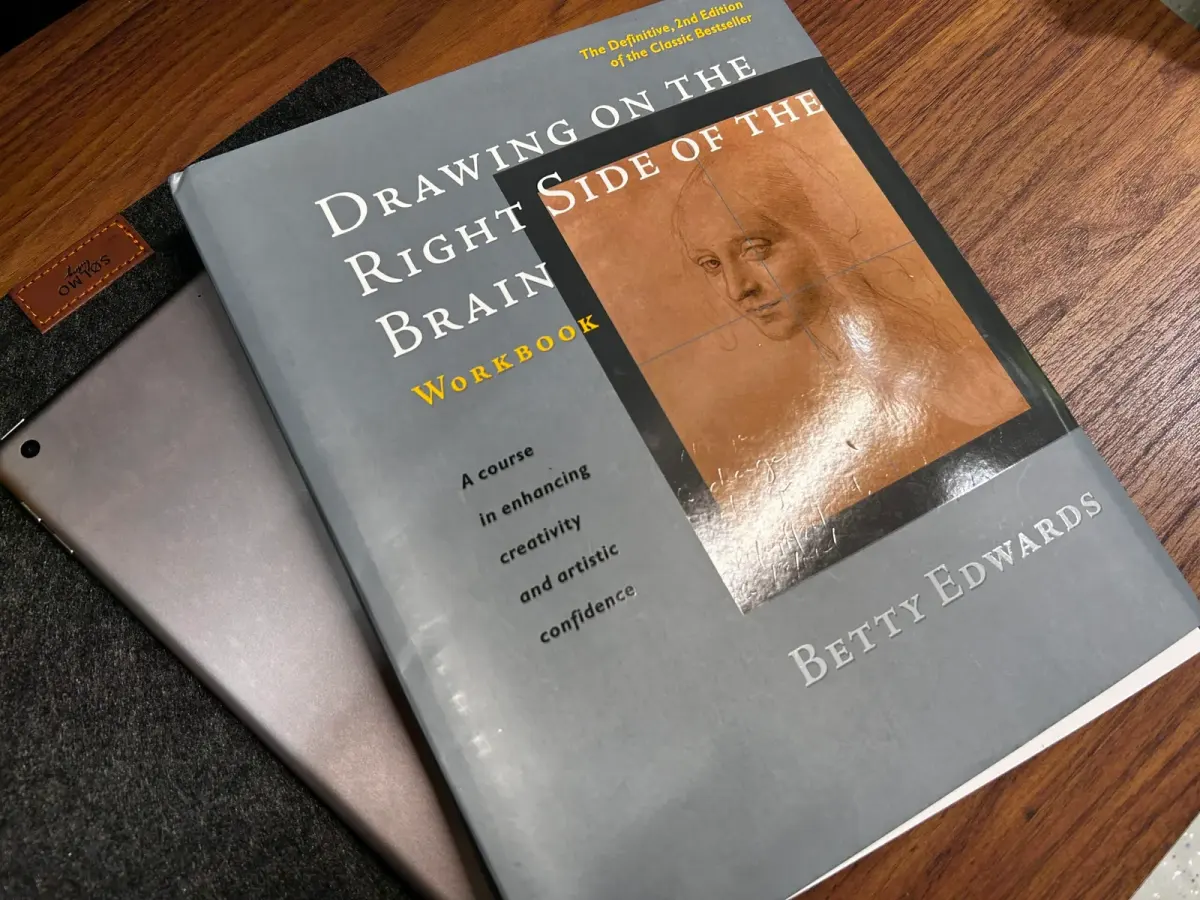
By focusing on these mechanical aspects of sight, you bypass the brain's tendency to simplify. This technique, popularized by researchers like Betty Edwards in the 1970s, teaches you to trust your eyes over your internal dictionary.
Common mistakes when drawing from observation
Many beginners make the mistake of drawing too quickly, assuming they understand the shape before they have truly observed it. Another frequent error is failing to check proportions against a fixed point. If you start drawing a head and realize the chin is too long, it is often because you stopped comparing the length of the nose to the height of the forehead. You must constantly measure and adjust your work as you go.
- Assuming you know what an object looks like without looking at it.
- Neglecting the light source, which causes flat, unconvincing results.
- Focusing on details like eyelashes or textures before establishing the basic structure.
- Holding the pencil too tightly, which restricts the fluidity of your hand movements.
- Drawing from a single, static angle without moving your head to verify perspective.
Avoiding these pitfalls requires patience and a willingness to erase and redraw. Perfection is not the goal; accuracy in observation is the foundation of all realistic art.
Best tools and techniques for beginners
You do not need expensive materials to improve your observational skills. A simple graphite pencil, a soft eraser, and a sketchbook are sufficient to start. The most important tool is your "sighting" stick, which can be any straight object like a knitting needle or a clean paintbrush. You use this to measure angles and proportions in the real world, translating those measurements onto your paper to ensure your drawing remains accurate.
When starting, focus on these fundamental steps to build your confidence:
- Establish the "gesture" or the overall flow of the subject with light, loose lines.
- Identify the "envelope," which is the outer boundary of the object.
- Measure the height-to-width ratio of your subject using your sighting stick.
- Map out the darkest shadows first to create a sense of three-dimensional form.
By following this sequence, you build a solid structure before worrying about the finer details. This methodical approach ensures that your drawing remains grounded in reality rather than drifting into abstract guesswork.
How long does it take to learn to draw?
Learning to draw is a cumulative process rather than a destination. While some individuals may see significant improvements within a few weeks of daily practice, mastering the ability to translate three-dimensional space onto a two-dimensional surface takes years of consistent effort. The speed of your progress depends entirely on how often you engage in "active seeing," which is the practice of observing the world with the intent to understand its physical construction.
Do not be discouraged by slow results, as the brain is physically rewiring its visual processing pathways during this time. Treat every drawing as a data-gathering exercise rather than a test of talent. If you dedicate just twenty minutes a day to drawing simple objects like a coffee mug or a piece of fruit, you will notice a profound change in your visual perception within six months. The key is to remain curious about the mechanics of light and shadow, as this persistence will eventually allow you to draw anything you see with genuine clarity and confidence.
Key facts
- The brain prioritizes symbolic representation, forcing you to draw what you "know" about an object rather than its actual visual shape.
- Drawing accurately requires shifting from the left hemisphere of the brain, which labels objects, to the right hemisphere, which processes spatial relationships.
- Use "negative space" by focusing on the shapes of the gaps between objects to bypass your brain's tendency to simplify forms.
- Hold a pencil at arm’s length to measure proportions, comparing the height of one object against the width of another to ensure accuracy.
- Squinting at your subject helps simplify complex details into broad values of light and shadow, preventing you from getting lost in minutiae.
- Practice "blind contour drawing" by tracing the edges of an object with your eyes without looking at your paper to improve hand-eye coordination.
The bottom line
The inability to draw what you see is a failure of perception, not a lack of talent. Your brain naturally filters visual data into simple symbols, ignoring true proportions and angles. By learning to measure, observing negative space, and silencing your internal labeling system, you can train your eyes to see reality objectively. Consistent, deliberate practice will eventually bridge the gap between your vision and your hand.
People also ask
Why do my drawings look flat?
Drawings often lack depth because they fail to utilize a full range of values from deep black to bright white. Incorporating a light source and shading the side of an object away from that light creates the illusion of three-dimensional volume.
Read the full answer →Should I use a grid to help me draw?
Grids are an excellent tool for beginners to break a complex image into manageable, smaller squares. By focusing on one square at a time, you reduce the cognitive load of trying to render the entire subject at once.
How long does it take to learn to draw realistically?
Proficiency is a matter of deliberate practice rather than innate talent, typically requiring hundreds of hours of focused observation. Most students see significant improvement after consistent daily sessions of 30 minutes over the course of several months.
Why are my proportions always wrong?
Proportions look off when you rely on memory instead of objective measurement. Always compare the relative sizes of different parts of your subject using a consistent unit of measurement, such as the width of an eye or the length of a finger.
Is it better to draw from life or from a photograph?
Drawing from life is superior for training your brain to perceive depth and color, as photographs flatten images and distort perspective. Start with simple still-life objects to build a foundation before attempting more complex subjects.
What is the most common mistake beginners make?
The most frequent error is rushing to add detail before establishing the basic structure and proportions of the subject. Always sketch the "big shapes" first, ensuring the overall composition is correct before refining specific textures or features.
This answer was created with the help of AI research tools and reference sources. Spotted an error? Let us know — we correct mistakes quickly. See our editorial policy.