What is an optical illusion?
Short answer
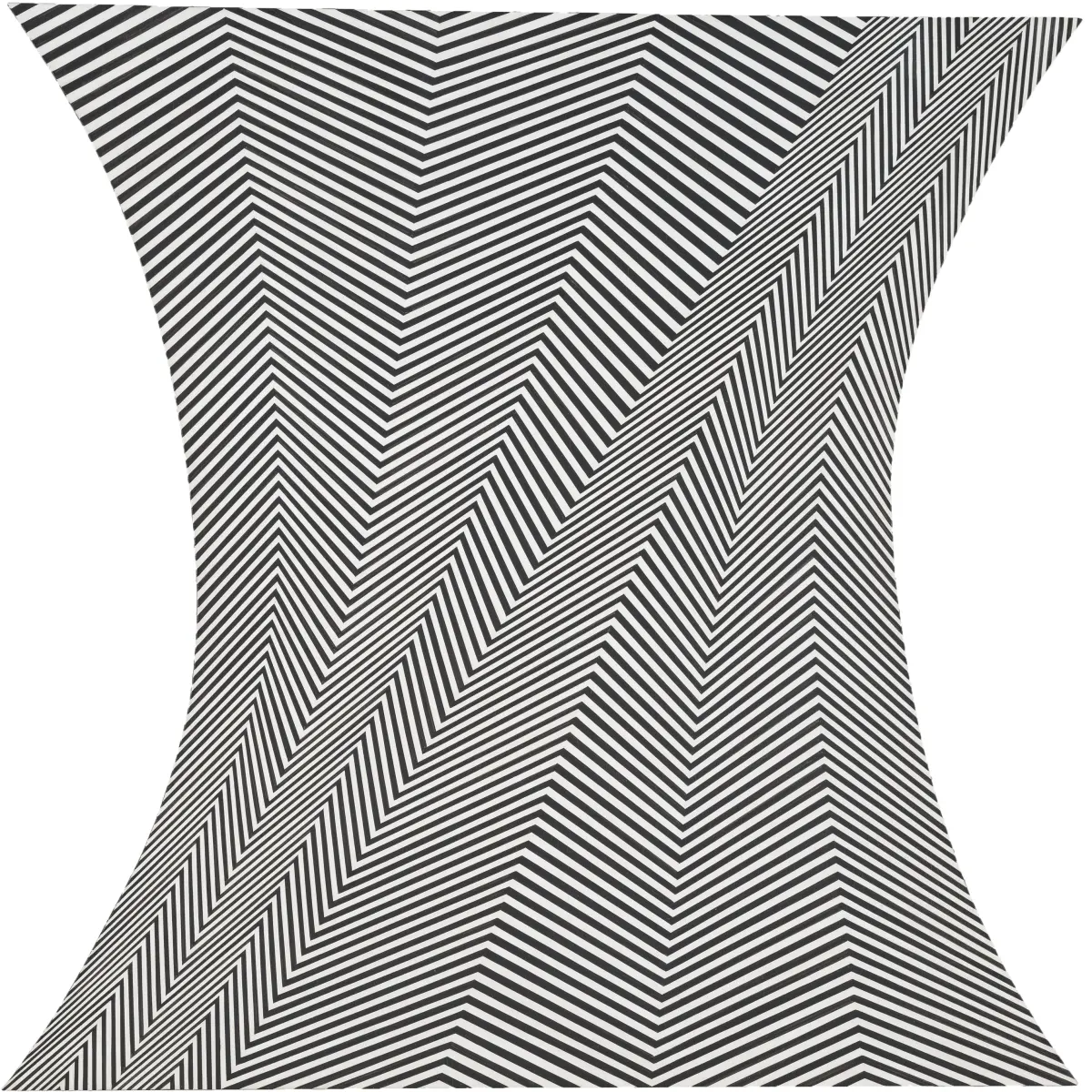
An optical illusion is a visual experience that differs from objective reality. It occurs when the brain misinterprets sensory information gathered by the eyes, leading to perceptions of movement, color, or shape that do not exist. These phenomena reveal the complex shortcuts and assumptions the human visual system uses to process the world.
On this page
Why do optical illusions happen?
Optical illusions occur because the human brain is an active interpreter rather than a passive camera. When light hits the retina, the brain receives incomplete or ambiguous data. To make sense of this, the brain relies on past experiences, evolutionary expectations, and contextual cues to "fill in the gaps." This process, known as top-down processing, is usually efficient, but it can be tricked by specific patterns that defy standard environmental logic.
The brain prioritizes speed over absolute accuracy. It assumes that light comes from above, that objects retain their size regardless of distance, and that edges are continuous. When an image is designed to violate these deep-seated assumptions, the brain struggles to reconcile the input. The resulting conflict between what the eyes see and what the brain expects creates the illusion. This demonstrates that vision is a cognitive construction rather than a direct reflection of physical reality.
How to categorize optical illusions
Researchers generally divide illusions into three primary categories based on the mechanism that triggers the misperception. Understanding these distinctions helps in identifying why a specific image appears to behave in a certain way.
- Literal illusions: These create images that are different from the objects that make them, such as the famous "Rubin’s Vase" where a viewer sees either two faces or a vase.
- Physiological illusions: These are effects on the eyes and brain caused by excessive stimulation of a specific type, such as brightness, color, or movement. A classic example is the "afterimage" seen after staring at a high-contrast pattern.
- Cognitive illusions: These occur when the brain makes unconscious inferences based on knowledge of the world, such as the "Müller-Lyer illusion," where lines of identical length appear different due to arrowheads pointing inward or outward.
How to create your own illusions
Creating a simple illusion is an excellent way to understand visual perception. You can begin by experimenting with geometric shapes and high-contrast colors to manipulate depth and perspective.
- Draw two identical parallel lines on a piece of paper.
- On the first line, draw small arrows pointing outward at both ends.
- On the second line, draw small arrows pointing inward at both ends.
- Observe how the second line appears significantly shorter than the first, even though they are mathematically identical.
To refine your results, use a ruler to ensure your measurements are precise. The illusion relies entirely on the contrast between the shapes surrounding the lines. If the lines are not perfectly parallel or identical in length, the effect will be diluted, leading to a common failure in the experiment.
Common mistakes when analyzing illusions
A frequent error is assuming that an illusion is merely a "trick" or a failure of the eye. In reality, the eyes are functioning perfectly; the confusion happens in the visual cortex of the brain. Another mistake is failing to control for lighting and viewing distance. Many illusions, particularly those involving perspective, are highly sensitive to the angle at which they are viewed.
- Do not assume that everyone perceives an illusion the same way. Individual differences in brain wiring and cultural background can influence how one interprets ambiguous images.
- Avoid viewing illusions on low-resolution screens. The pixelation can interfere with the fine lines and gradients required to trigger the brain's misinterpretation.
- Do not spend too long staring at a single image. Prolonged exposure can lead to fatigue, causing the brain to stop processing the image correctly and potentially leading to headaches or eye strain.
Best ways to study visual perception
If you are interested in the science behind these phenomena, start by studying the work of 19th-century pioneers like Hermann von Helmholtz. He was one of the first to argue that perception is a process of unconscious inference. Modern cognitive psychology continues to build on these foundations by using neuroimaging to track which parts of the brain activate when an illusion is presented.
You can also visit interactive science museums that feature "Ames rooms" or "tilted houses." These physical environments allow you to experience how perspective distortion works in three dimensions. By walking through these spaces, you can feel the physical sensation of the illusion, which provides a much deeper understanding than looking at a flat image on a screen. Engaging with these concepts demonstrates that our reality is a constant negotiation between external stimuli and internal mental models, proving that what we see is rarely the whole story.
Key facts
- Optical illusions occur when the brain misinterprets visual information, creating a perception that differs from objective reality.
- The Müller-Lyer illusion demonstrates how arrowheads at the ends of lines can make identical line lengths appear different.
- Afterimages occur when photoreceptors in the retina become fatigued after staring at a high-contrast image for 20 to 30 seconds.
- Peripheral vision is less detailed than central vision, which often leads the brain to "fill in" gaps with incorrect visual data.
- To test your own depth perception, hold a finger at arm's length and close one eye, then switch eyes to see the object "jump."
- Avoid judging the size of objects based solely on their background, as the Ebbinghaus illusion proves context drastically alters perceived scale.
The bottom line
Optical illusions are fascinating demonstrations of the gap between physical reality and human perception. By analyzing how our brains interpret light, contrast, and depth, we gain insight into the limitations of our visual system. While these effects can be deceptive, they are essential tools for understanding neuroscience. Remember that your eyes provide the data, but your brain ultimately decides what you see, often favoring speed over precision.
People also ask
Why do some people not see certain optical illusions?
Perception varies based on individual cognitive processing, past experiences, and cultural background. Some illusions rely on specific learned patterns that not every brain interprets the same way.
How do 3D movies create the illusion of depth?
These films use stereopsis, presenting two slightly different images to each eye simultaneously. The brain merges these perspectives to simulate a three-dimensional environment.
Are optical illusions a sign of a brain disorder?
No, they are a normal byproduct of how the human visual system processes complex light signals. They reveal how the brain prioritizes efficiency over perfect accuracy.
What is the difference between an optical illusion and a hallucination?
An optical illusion is triggered by an external physical stimulus that tricks the eyes. A hallucination occurs internally without any external visual input.
Can optical illusions be used to treat vision problems?
Yes, vision therapists use specific patterns to help train the eyes to work together. This can improve conditions like strabismus or lazy eye through controlled visual stimuli.
Do animals experience optical illusions?
Research suggests that many animals, including birds and fish, perceive illusions similar to humans. This indicates that these perceptual quirks are fundamental to how brains process visual input.
This answer was created with the help of AI research tools and reference sources. Spotted an error? Let us know — we correct mistakes quickly. See our editorial policy.