How do you draw a snake step by step?
Short answer
Drawing a snake involves creating a fluid, S-shaped guideline to establish the body's posture before adding volume and scale details. By focusing on the tapering width of the torso and the distinct shape of the head, you can construct a realistic or stylized serpent that appears dynamic and naturally coiled.
On this page
How to sketch the basic shape of a snake
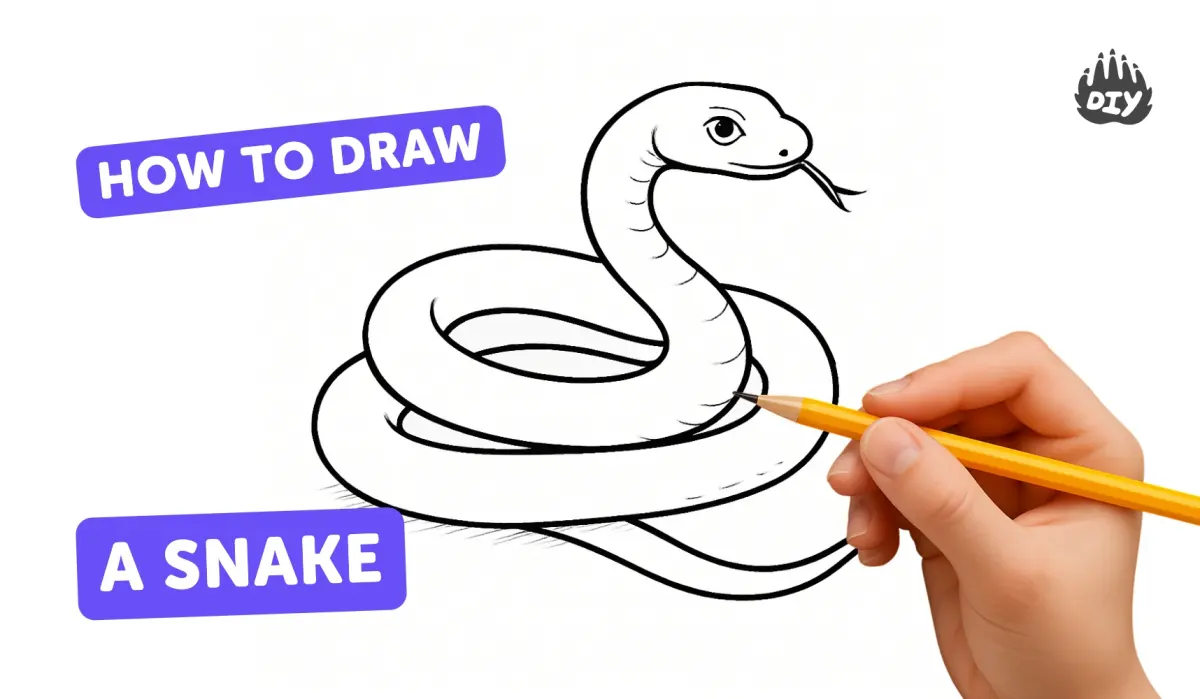
The foundation of a convincing snake drawing is the gesture line. Start by drawing a light, flowing "S" or "C" curve on your paper to represent the snake's spine. This line dictates the movement and energy of the creature. Do not worry about details yet; focus entirely on the rhythm of the curve.
Once the spine is set, build the body's volume by drawing two parallel lines trailing the spine. Ensure the body is thickest in the middle and tapers gradually toward the tail. The head should be wider than the neck, creating a distinct transition. Use these steps to establish your structure:
- Draw a light, loose "S" curve as your guide.
- Outline the body by drawing a ribbon-like shape around the curve.
- Add a rounded or triangular shape at the top for the head.
- Taper the tail to a fine, sharp point at the end.
How to draw a realistic snake head
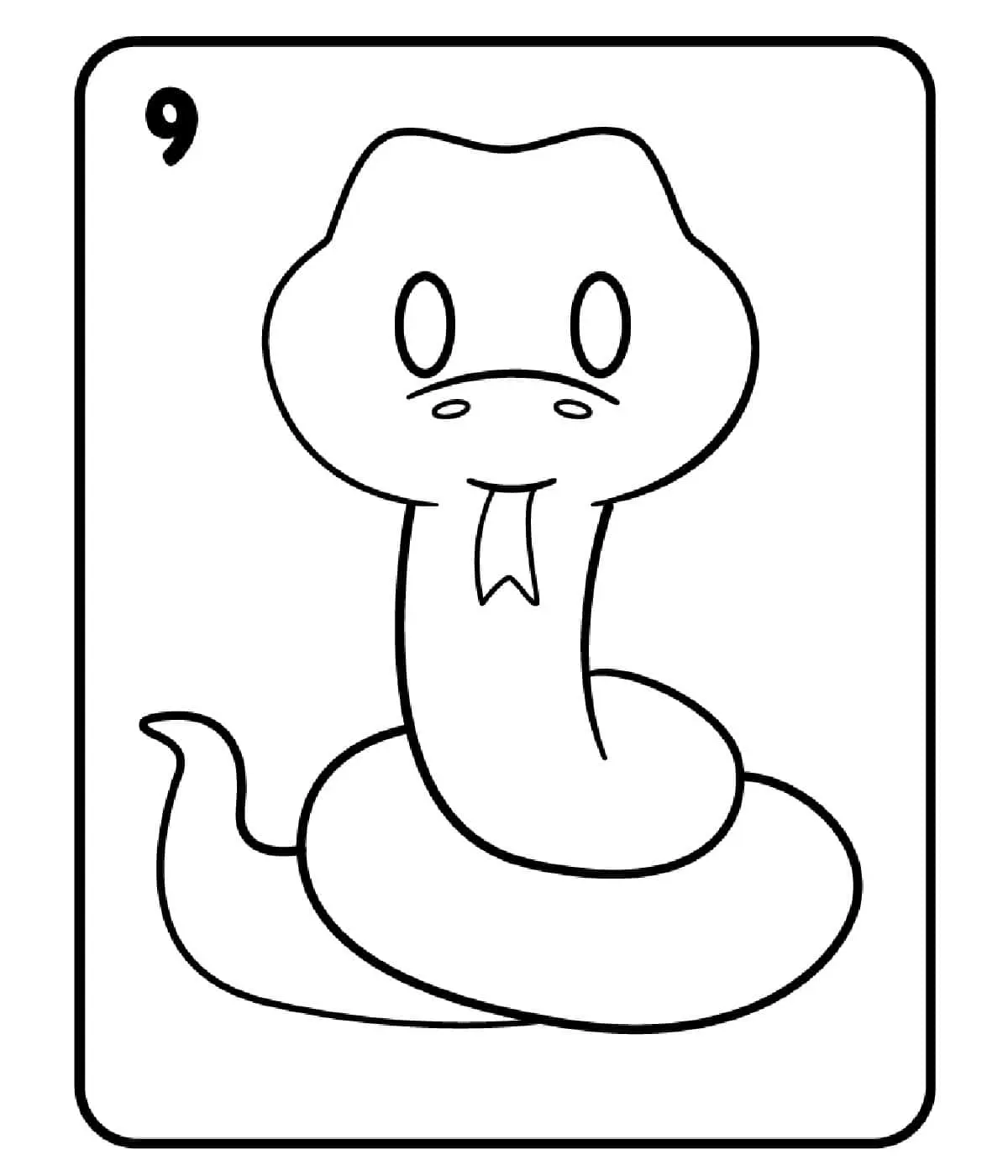
The head is the focal point of the drawing and requires careful attention to anatomical landmarks. Most snakes have a flattened, triangular, or oval head shape depending on the species. Start by sketching a simple oval, then define the jawline and the position of the eyes. Snakes lack external ears, so focus on the nostril placement near the snout.
When detailing the face, remember that the eyes are typically positioned on the sides of the head to provide a wide field of vision. Add a small, vertical slit for the pupil if you are drawing a viper, or a round pupil for many colubrids. The mouth should follow the line of the jaw, often curving slightly upward to suggest a smirk or a strike. Use these guidelines for facial features:
- Place the nostrils near the very front of the snout.
- Draw a small, V-shaped tongue flickering out to add life.
- Keep the eye placement consistent with the angle of the head.
Best tools for drawing snake scales
Texture is what transforms a simple outline into a realistic serpent. For beginners, a graphite pencil with a range of hardness, such as an HB for sketching and a 2B for shading, is ideal. Use a fine-liner pen if you prefer high-contrast, clean lines. Avoid drawing every single scale individually, as this often makes the drawing look stiff or cluttered.
Instead, suggest the texture of scales by focusing on the light and shadow across the body. Use a cross-hatching technique to build depth where the snake's body curves away from the light source. On the belly, draw horizontal lines that span the width of the underbelly, as these scutes are wider and flatter than the dorsal scales. This contrast between the fine back scales and the broad belly plates creates a professional, three-dimensional effect that mimics biological reality.
Common mistakes when drawing snakes
One frequent error is failing to maintain consistent body width. Beginners often make the snake look like a uniform tube, forgetting that a snake's body naturally compresses and stretches. If the snake is coiled, the parts of the body that are pressed against the ground should appear slightly flattened, while the parts that arch upward should remain rounded.
Another common mistake is neglecting the perspective of the coils. When one part of the body passes behind another, ensure you erase the overlapping lines to show depth. If you leave the lines intact, the snake will look like a tangled knot rather than a solid, singular form. Always check that the tail tapers consistently; a tail that ends abruptly or remains too thick will look unnatural and distract from the overall flow of the composition.
How to add dynamic movement to your drawing
To make your snake look active, incorporate tension into the curves of the body. A snake that is moving will have tighter, more irregular curves compared to a resting snake. You can also vary the thickness of the body to show muscles flexing. If the snake is preparing to strike, draw the front third of the body in a tight, spring-like coil, while the rest of the body remains anchored to the ground.
Background elements can also enhance the sense of movement. Adding subtle shadows beneath the coils suggests that the snake is physically occupying space on a surface. You might also draw the snake interacting with its environment, such as wrapping around a branch or slithering through tall grass. These additions provide context and ground the creature in a believable setting, making the final illustration feel dynamic and alive rather than static.
Key facts
- Snakes are primarily defined by their elongated, limbless bodies, which allow for a fluid, S-shaped movement pattern.
- When drawing a snake, start by sketching a loose, winding "S" or "8" shape to establish the spine and overall posture.
- Use overlapping circles or ovals along the guideline to create the body's volume, ensuring the segments taper toward the tail.
- A snake's head is typically wider than its neck; draw a rounded triangle or diamond shape to distinguish the skull from the body.
- Scale patterns are best represented by drawing a cross-hatched grid or staggered "U" shapes rather than individual circles.
- Avoid drawing the snake as a perfectly straight line, as natural movement always involves curves and varying thickness.
The bottom line
Drawing a snake effectively relies on establishing a fluid, curved skeleton before adding volume and detail. By using an "S" or "8" shape as a foundation, you create a realistic sense of movement. Focus on tapering the tail, defining the head, and applying scale textures consistently along the body's contours. With practice, these simple geometric steps transform into a dynamic, lifelike representation of the reptile.
People also ask
How do I make a snake look realistic rather than like a cartoon?
Focus on the taper of the body and the texture of the scales. Real snakes have a distinct transition from the head to the neck, and their scales change size and shape depending on the section of the body.
Should I draw the eyes before or after the scales?
It is best to draw the head and eye placement first to establish the snake's focus. Once the head is defined, you can work backward along the body to ensure the scales align with the curve of the spine.
What is the best way to draw a snake's tongue?
Draw a thin, "Y" or "V" shaped line extending from the mouth. Keep the tongue very narrow and pointed to maintain the anatomical accuracy of a forked organ.
How do I show the snake coiling on itself?
Use the "S" curve method but overlap the segments. When one part of the body passes behind another, erase the intersecting lines to create the illusion of depth and three-dimensional space.
Do all snakes have the same scale patterns?
No, patterns vary significantly by species, ranging from diamond-shaped markings on rattlesnakes to solid or striped colors on garter snakes. Researching a specific species will help you achieve a more authentic look.
Why does my snake drawing look stiff?
Stiffness usually occurs when the curves are too uniform or the body width remains constant. Vary the thickness of the body to reflect the natural muscle distribution and ensure the curves are asymmetrical.
This answer was created with the help of AI research tools and reference sources. Spotted an error? Let us know — we correct mistakes quickly. See our editorial policy.