What happens in the brain when you draw?
Short answer
Drawing engages a complex network involving the visual cortex, the parietal lobe for spatial awareness, and the motor cortex for physical execution. As you draw, the brain shifts from analytical left-brain processing to intuitive, holistic right-brain observation, strengthening neural pathways that enhance hand-eye coordination, cognitive focus, and memory retention through visual encoding.
On this page
How does the brain process drawing?
When you begin to draw, your brain initiates a sophisticated sensory-motor loop. The visual cortex in the occipital lobe first captures external data, identifying edges, shadows, and textures. Simultaneously, the parietal lobe calculates spatial relationships, determining how objects sit in three-dimensional space. This information is then relayed to the motor cortex, which coordinates the precise muscle movements required to translate these observations onto paper.
This process is not merely mechanical; it is a form of deep cognitive engagement. By forcing the brain to slow down and observe details, drawing shifts your mental state toward a flow-like condition. During this time, the prefrontal cortex—the area responsible for executive function—often quiets down, allowing for more fluid, intuitive decision-making. This transition helps reduce stress and improves long-term focus by requiring the brain to reconcile what the eye sees with what the hand executes.
Why does drawing improve memory?
Drawing acts as a powerful mnemonic device because it requires "elaborative encoding." When you draw an object, you are forced to analyze its structure, proportions, and unique characteristics rather than just glancing at it. This active engagement creates multiple neural pathways associated with the object, making it significantly easier to recall later compared to simply reading about it or taking a photograph.
Research in cognitive psychology suggests that the act of drawing integrates motor memory with visual memory. This dual-encoding process strengthens the hippocampal activity responsible for memory formation. To maximize this benefit, consider these strategies:
- Sketch the object from multiple angles to understand its volume.
- Label the parts of your drawing to reinforce verbal and visual associations.
- Use different drawing speeds to engage both fine and gross motor skills.
- Focus on the negative space around the object to challenge your spatial reasoning.
How to train your brain to draw better
Improving your drawing ability is essentially a process of "re-wiring" how your brain interprets visual data. Most beginners struggle because their brains rely on symbolic representations—drawing what they think an object looks like rather than what they actually see. To overcome this, you must train your brain to bypass these mental shortcuts and focus on raw visual information like lines, angles, and light values.
- Practice "blind contour" drawing by tracing an object’s edges without looking at your paper.
- Flip your reference image upside down to force your brain to see abstract shapes instead of recognizable symbols.
- Dedicate ten minutes daily to sketching simple geometric forms to build muscle memory.
- Experiment with different drawing tools to understand how pressure changes the neural feedback loop between your hand and the brain.
Common mistakes when learning to draw
The most frequent error is the "symbolic trap," where the brain substitutes a simplified, stored icon for the complex reality of the subject. For example, when drawing an eye, many people draw an almond shape with a circle inside, ignoring the subtle folds of the eyelid or the way light reflects off the cornea. This happens because the brain prefers efficiency over accuracy, categorizing information to save energy.
Another common mistake is rushing the observation phase. Many learners start drawing lines before they have truly analyzed the proportions of the subject. To avoid this, spend twice as much time looking at your subject as you do looking at your paper. By slowing down, you allow your brain to build a more accurate mental map, which prevents the frustration of having to constantly erase and redraw. Consistency is more important than duration; shorter, frequent sessions are more effective for neural development than one long, exhausting practice.
Best exercises for brain health through art
Engaging in artistic activities like drawing provides significant neuroprotective benefits, particularly as we age. It encourages neuroplasticity, the brain's ability to form new connections, which can help maintain cognitive sharpness. By regularly challenging yourself with new subjects—such as complex architectural structures or intricate botanical details—you force your brain to solve novel problems, which keeps the neural networks active and resilient.
To integrate drawing into a brain-healthy routine, focus on these specific activities:
- Perspective drawing: This forces the brain to calculate vanishing points and depth, which is excellent for spatial intelligence.
- Observational sketching: Drawing from life rather than photos requires the brain to process depth and parallax, which are absent in two-dimensional images.
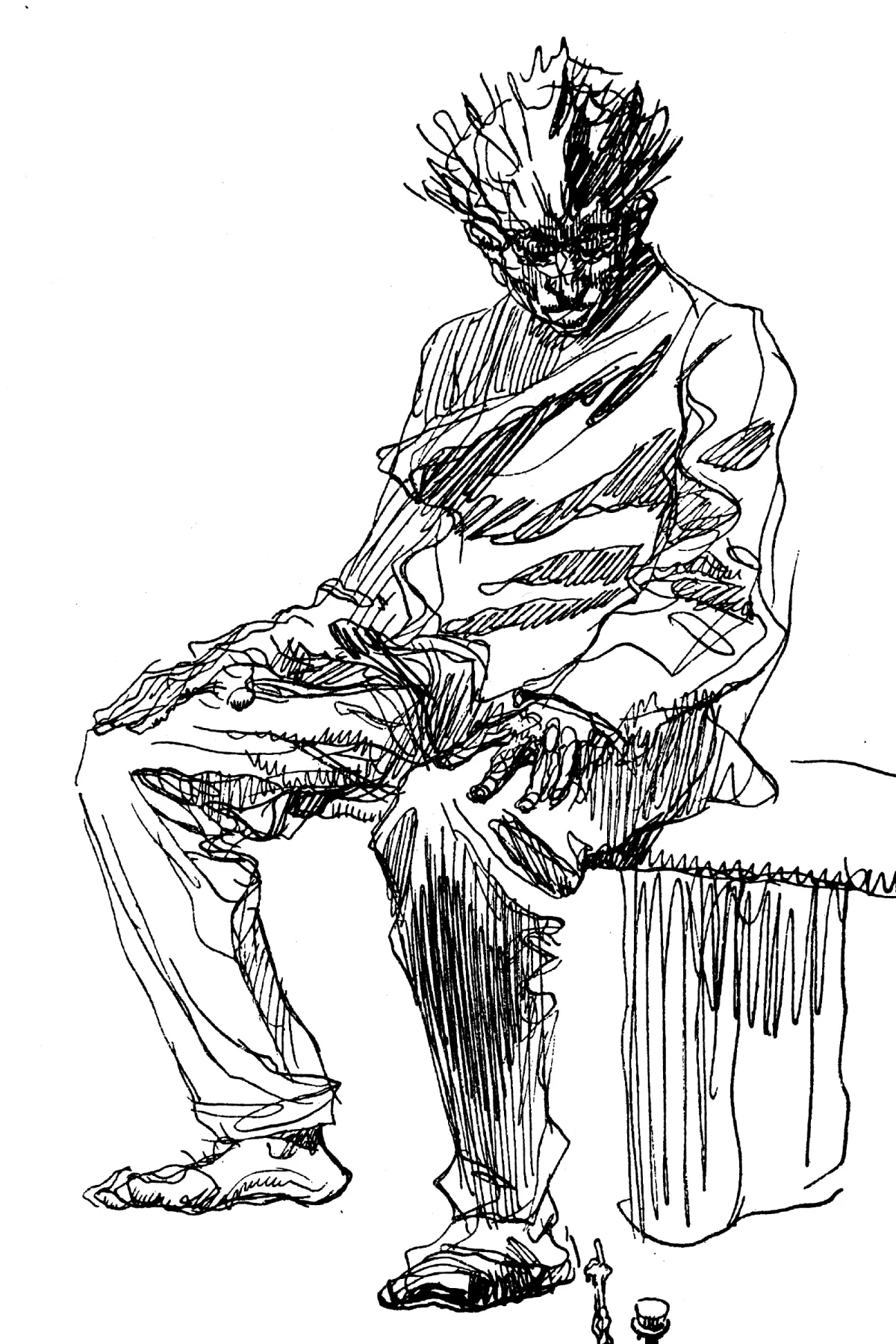
- Gesture drawing: Quick, timed sketches of moving subjects help improve rapid visual processing and decision-making skills.
- Shading exercises: Focusing on light and shadow helps the brain refine its ability to perceive contrast, which is essential for visual clarity and depth perception in everyday life.
Key facts
- Drawing activates the motor cortex, which controls the precise hand movements required to translate visual information onto paper.
- The parietal lobe acts as the brain’s spatial processor, helping you judge distances, angles, and proportions while you draw.
- Engaging in drawing increases blood flow to the prefrontal cortex, the area responsible for focus, planning, and complex decision-making.
- Studies show that drawing improves memory retention by forcing the brain to process visual details more deeply than passive observation.
- To improve accuracy, practice "blind contour drawing" where you look only at the subject, not your paper, to force hand-eye coordination.
- Avoid the common mistake of drawing what you "think" an object looks like rather than observing the actual light and shadow patterns.
The bottom line
Drawing is a powerful cognitive exercise that bridges the gap between visual perception and motor control. By engaging the parietal and prefrontal cortex, the act of sketching forces your brain to analyze the world with greater precision. Whether you are a beginner or an expert, regular drawing strengthens neural connectivity, improves memory, and fosters a meditative state, making it a highly effective tool for mental clarity.
People also ask
Does drawing improve overall intelligence?
While drawing does not increase IQ, it enhances cognitive flexibility and spatial reasoning skills. It trains the brain to perceive the world in terms of shapes, light, and structure.
Is drawing better for the brain than coloring?
Drawing is more cognitively demanding than coloring because it requires the brain to create original structures and compositions. This active creation stimulates more neural pathways than the passive act of filling in existing lines.
Can drawing help reduce stress?
Yes, the repetitive, rhythmic nature of drawing can induce a "flow state" that lowers cortisol levels. This meditative focus shifts the brain away from ruminative thoughts and into a calm, present-moment awareness.
Why do I struggle to draw what I see?
The brain often relies on "symbolic shorthand," preferring to draw a simplified icon of an object rather than its true form. Overcoming this requires suppressing the brain's desire to label objects and focusing strictly on visual data.
Does drawing help with aging brains?
Engaging in creative tasks like drawing helps maintain neuroplasticity, which is the brain's ability to reorganize itself by forming new neural connections. This can help preserve fine motor skills and cognitive sharpness as you age.
How long should I practice to see brain benefits?
Even 15 to 20 minutes of daily sketching is sufficient to improve hand-eye coordination and observational skills. Consistency is more effective for neural development than long, infrequent sessions.
This answer was created with the help of AI research tools and reference sources. Spotted an error? Let us know — we correct mistakes quickly. See our editorial policy.