Who was Johann Sebastian Bach?
Short answer
Johann Sebastian Bach (1685–1750) was a German composer and musician of the Baroque period. Renowned for his intellectual depth, technical command, and artistic beauty, he synthesized styles from across Europe. His vast body of work, including the Brandenburg Concertos and The Well-Tempered Clavier, remains a foundational pillar of Western classical music.
On this page
Who was Johann Sebastian Bach?
Johann Sebastian Bach was born in Eisenach, Germany, into a family of professional musicians. Orphaned by age ten, he was raised by his older brother, Johann Christoph, who provided his initial training in organ and keyboard performance. Bach spent his professional life primarily in Germany, serving as a church organist, concertmaster, and eventually the cantor at St. Thomas Church in Leipzig.
Though he was highly respected during his lifetime as a virtuoso organist and improviser, his compositions were often considered old-fashioned by the time of his death. It was not until the mid-19th century, particularly following the revival of his St. Matthew Passion by Felix Mendelssohn, that his work was fully recognized as the pinnacle of Baroque music. Today, he is widely regarded as one of the greatest composers in history.
What are his most famous works?
Bach’s catalog is vast, encompassing over 1,000 known compositions. His output covers nearly every musical form of his era, excluding opera. His works are characterized by complex counterpoint, where multiple independent melodic lines weave together to create a harmonious whole.
Key works include:
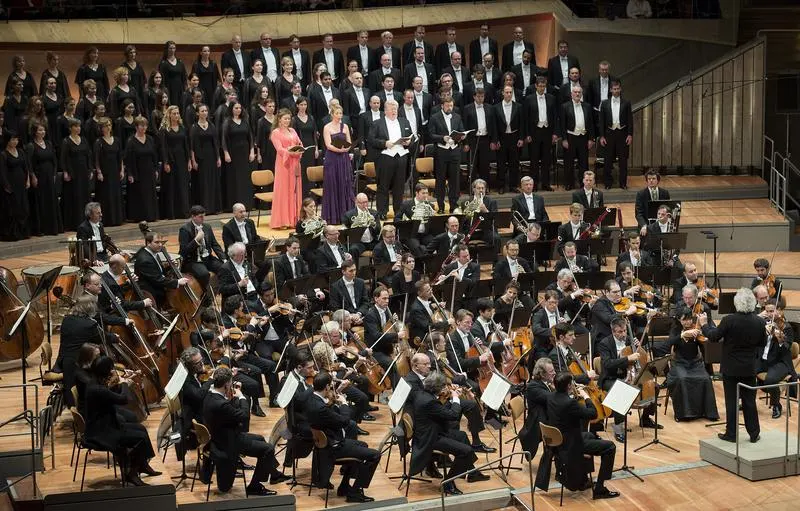
- The Brandenburg Concertos: A set of six orchestral works that showcase his mastery of instrumental color.
- The Well-Tempered Clavier: A collection of preludes and fugues in all 24 major and minor keys.
- The Goldberg Variations: A monumental set of keyboard variations based on a single aria.
- Mass in B Minor: A profound choral work that represents the culmination of his religious music.
- The Cello Suites: Six unaccompanied suites that remain the standard repertoire for the instrument.
How to start listening to Bach?
For those new to his music, the complexity of his counterpoint can sometimes feel overwhelming. It is best to begin with works that emphasize clear, melodic lines before moving into his dense choral or fugal compositions. Listening to different interpretations—such as those played on modern pianos versus period-accurate harpsichords—can also provide a deeper appreciation for his versatility.
- Begin with the "Air on the G String" from Orchestral Suite No. 3 for a gentle introduction.
- Listen to the Cello Suite No. 1 in G Major to hear how he creates harmony with a single instrument.
- Explore the Brandenburg Concertos to understand his orchestral brilliance.
- Graduate to the Toccata and Fugue in D Minor to experience his dramatic organ writing.
- Finally, engage with the Goldberg Variations to appreciate his structural genius.
Why is his music still important?
Bach’s influence on subsequent generations of composers is immeasurable. Figures such as Wolfgang Amadeus Mozart, Ludwig van Beethoven, and Johannes Brahms all studied his scores to refine their own understanding of harmony and structure. His music functions as a masterclass in musical logic, proving that intense technical rigor can coexist with profound emotional expression.
Beyond classical music, his influence extends into jazz, film scoring, and even modern pop production. His ability to organize musical time and space remains a benchmark for excellence. By establishing the rules of functional harmony that dominated Western music for centuries, he provided a framework that continues to be taught in music theory classrooms globally today.
Common mistakes when studying Bach
A frequent error for students is attempting to play his keyboard works with excessive pedal usage. On the modern piano, the sustain pedal can turn his crisp, distinct counterpoint into a muddy wash of sound. It is essential to focus on articulation and finger independence to ensure that every voice in the texture remains audible and distinct.
Another mistake is ignoring the dance origins of his instrumental suites. Many of his movements, such as the Allemande, Courante, or Gigue, were based on popular social dances of the 18th century. Understanding the specific rhythmic character and physical movement of these dances is vital to performing the music with the correct vitality and lilt. Always prioritize the clarity of the lines over sheer speed or volume to truly capture the intended spirit of his compositions.
Key facts
- Johann Sebastian Bach was a German composer and musician born in 1685 in Eisenach and died in 1750 in Leipzig.
- He is considered the master of the Baroque style, famous for his complex use of counterpoint and harmonic organization.
- Bach wrote over 1,000 compositions, including the Brandenburg Concertos, The Well-Tempered Clavier, and the Mass in B Minor.
- To listen to his music effectively, start with the Cello Suites or the Goldberg Variations to appreciate his melodic clarity.
- A common mistake is assuming his music is only for religious services; while he wrote sacred cantatas, he also composed significant secular chamber music.
- When studying his scores, focus on the independent voices, as Bach’s brilliance lies in how multiple melodies weave together simultaneously.
The bottom line
Johann Sebastian Bach remains a foundational figure in Western classical music, bridging the transition from the Baroque era to later stylistic developments. His unparalleled mastery of counterpoint, harmony, and structural organization created a legacy that continues to influence composers and performers today. By studying his vast catalog, listeners and musicians alike gain a deeper understanding of the mathematical beauty and emotional depth inherent in musical composition.
People also ask
Did Bach achieve fame during his own lifetime?
Bach was highly respected as an organist and keyboard virtuoso, but he was not widely famous as a composer during his life. His music was considered old-fashioned by the time he died, and he did not gain widespread international acclaim until the "Bach Revival" of the 19th century.
How many children did Johann Sebastian Bach have?
Bach fathered 20 children across two marriages, though only 10 survived into adulthood. Several of his sons, including Carl Philipp Emanuel and Johann Christian, became influential composers in their own right.
What instruments did Bach play?
Bach was primarily a master of the organ and the harpsichord. He was also proficient on the violin and the viola, which informed his intricate understanding of string writing.
What is the significance of the "Well-Tempered Clavier"?
This collection of preludes and fugues in all 24 major and minor keys revolutionized music theory. It demonstrated the practical utility of a new tuning system that allowed instruments to be played in any key without needing to be retuned.
Was Bach a religious person?
Bach was a devout Lutheran who viewed music as a form of worship. He frequently signed his manuscripts with the abbreviation "S.D.G." for Soli Deo Gloria, meaning "To God alone the glory."
Why is Bach’s music considered difficult to play?
His compositions require extreme technical precision and the ability to maintain independent musical lines in each hand. Performers must balance complex polyphony while maintaining a consistent rhythmic pulse, which demands years of rigorous practice.
This answer was created with the help of AI research tools and reference sources. Spotted an error? Let us know — we correct mistakes quickly. See our editorial policy.