What is a protagonist?
Short answer
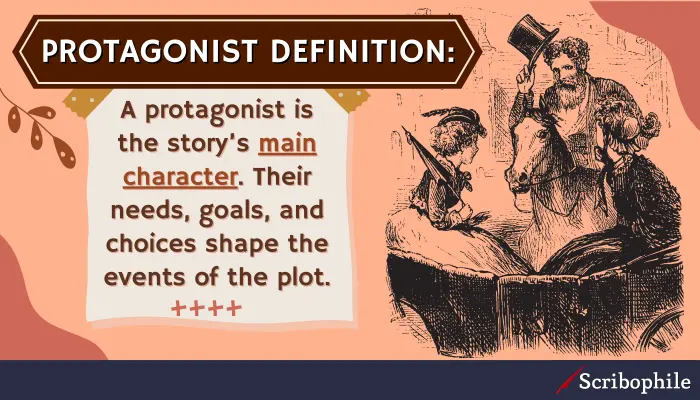
A protagonist is the central character of a narrative who drives the plot forward through their actions and decisions. They are the primary focus of the story, often facing significant challenges or internal conflicts. While they are frequently the hero, they do not necessarily have to be morally virtuous or likable.
On this page
What defines a protagonist?
The protagonist serves as the anchor for the audience's experience. They are the individual whose goals, desires, and obstacles dictate the progression of the story. Whether the narrative is a novel, a film, or a play, the protagonist is the person around whom the plot revolves. Without a protagonist, a story often lacks a clear trajectory or emotional resonance, as there is no central perspective through which the audience can engage with the unfolding events.
It is a common misconception that the protagonist must be a "good guy" or a traditional hero. While many protagonists are heroic, the term refers strictly to their functional role in the story, not their moral character. An anti-hero, such as Walter White in Breaking Bad or Humbert Humbert in Lolita, acts as the protagonist because the story follows their journey and choices, even if those choices are ethically reprehensible. Their role is to provide the narrative engine, regardless of their personal virtues.
How to identify the protagonist
Identifying the protagonist is usually straightforward, but complex narratives can sometimes obscure this role. To determine who holds this position, look for the character who makes the most significant choices and experiences the most profound transformation. The protagonist is typically the one who initiates the primary action and bears the brunt of the narrative's central conflict.
- Track who has the most "screen time" or page count dedicated to their perspective.
- Identify the character who has a clear, driving goal that they actively pursue.
- Observe who faces the most significant obstacles that prevent them from achieving their desires.
- Note which character undergoes the most substantial internal or external change by the conclusion of the story.
- Determine whose success or failure defines the resolution of the main plot.
If you are struggling to find the protagonist, ask yourself whose journey is being told. If the narrative follows multiple characters, look for the one who acts as the catalyst for the major plot developments.
Why protagonists need a clear goal
A compelling protagonist must have a specific motivation that propels them through the narrative. This goal provides the structure for the story, giving the character a reason to act and a standard against which their progress can be measured. Without a clear objective, a character often appears passive, drifting through events rather than shaping them. A strong goal creates tension, as the audience waits to see if the protagonist will succeed or fail.
Motivation can manifest in several ways, ranging from external objectives to internal needs. Consider these common types of protagonist motivations:
- The quest for a physical object or treasure.
- The desire to overcome a personal flaw or past trauma.
- The need to survive a dangerous or life-threatening situation.
- The pursuit of justice, revenge, or a moral cause.
- The search for identity, belonging, or truth.
When a protagonist lacks a clear goal, the narrative often feels aimless. Even in stories focused on character studies, the "goal" might be internal, such as finding peace or accepting a difficult truth.
Common mistakes when writing a protagonist
Many writers inadvertently weaken their stories by creating protagonists who are too passive or perfect. A passive protagonist is one who lets things happen to them rather than making things happen. This lack of agency makes it difficult for the audience to invest in the character's journey. Conversely, a "Mary Sue" or "Gary Stu"—a character who is flawless and faces no real consequences—lacks the vulnerability required to make their struggles feel real or meaningful.
Another frequent error is failing to provide the protagonist with a significant flaw. A flaw is essential because it creates the potential for growth and conflict. If a character is perfect, they have nowhere to go, and their victory feels unearned. To avoid these pitfalls, ensure your protagonist is:
- Proactive: They must make choices that drive the plot forward.
- Flawed: They should have weaknesses that hinder their progress.
- Vulnerable: They must have something to lose if they fail.
- Transformative: They should be a different person at the end than they were at the beginning.
How the protagonist relates to the antagonist
The relationship between the protagonist and the antagonist is the foundation of narrative conflict. The antagonist is the force or person that opposes the protagonist's goals. This opposition is what creates the drama; the harder the antagonist makes it for the protagonist to succeed, the more compelling the story becomes. The conflict does not always have to be a physical battle; it can be an ideological clash, a competition, or a struggle against a social system.
The most effective stories often feature an antagonist who is just as motivated and capable as the protagonist. When the antagonist is formidable, the protagonist’s eventual success—or tragic failure—is much more satisfying. Remember that the antagonist is the hero of their own story, operating from a set of beliefs that directly contradicts those of the protagonist. By pitting these two forces against each other, you create the friction necessary to sustain a reader's attention from the opening scene to the final resolution of the story.
Key facts
- The protagonist is the central character who drives the narrative forward and undergoes the most significant change.
- They are not necessarily "good" or heroic; they are simply the person the audience follows through the story.
- Every protagonist needs a clear, active goal that motivates their actions throughout the plot.
- A common mistake is creating a passive protagonist who merely reacts to events rather than initiating them.
- The protagonist often faces an "inciting incident" early in the story that disrupts their life and forces them into action.
- You can identify the protagonist by asking whose perspective the story centers on and who faces the primary conflict.
The bottom line
The protagonist serves as the essential engine of any narrative, acting as the primary lens through which the audience experiences the plot. By establishing a clear goal and forcing the character to overcome obstacles, writers create a compelling arc of transformation. Whether a hero or an antihero, the protagonist must remain active and driven, ensuring that their choices dictate the direction and ultimate outcome of the story.
People also ask
Is the protagonist always the hero of the story?
No, the protagonist is simply the main character. If the character is morally flawed or acts as a villain, they are often called an antihero, but they remain the protagonist if the story follows their journey.
Can a story have more than one protagonist?
Yes, stories can feature multiple protagonists, such as in an ensemble cast. This is common in television shows or novels where different viewpoints are given equal weight to develop the plot.
How does a protagonist differ from an antagonist?
The protagonist is the character pursuing a goal, while the antagonist is the force or person standing in their way. The antagonist does not have to be a person; it can be an environment, a society, or an internal flaw.
Does the protagonist have to be a human being?
No, protagonists can be animals, robots, or even personified objects. As long as the character has a clear motivation and undergoes a transformation, they can serve as the narrative anchor.
What is the difference between a protagonist and a narrator?
A narrator tells the story, while a protagonist is the character the story is about. Sometimes these roles overlap, as in a first-person narrative, but they are distinct functions in storytelling.
Why must a protagonist change during the story?
The protagonist’s internal growth, known as a character arc, provides emotional resonance for the reader. Without change, the protagonist’s journey often feels stagnant and lacks a satisfying conclusion.
This answer was created with the help of AI research tools and reference sources. Spotted an error? Let us know — we correct mistakes quickly. See our editorial policy.